Clearing a Leicester lot for what comes next
Leicester runs along the French Broad River valley and back into the ridges of western Buncombe County, roughly twelve miles northwest of downtown Asheville NC. A significant share of the housing stock out here is manufactured — single-wides from the 1970s and 1980s on family property along US-63 and its hollows, double-wides that have sat on the same block piers for three decades. When those homes need to go — to make room for a new build, to settle a family estate, to free a lot that has been spoken for by something better — removal means more than calling a hauler.
The real work is a sequence: assess whether the home can travel intact or needs to come down in place, pull the permits and clear the title, disconnect utilities, execute the haul or demolition, and leave a grade that the lot's next use can actually work with. That last piece — what the lot looks like when the crew drives away — shapes every decision that comes before it. Leicester properties on steep hollow grades or tight private lanes have different constraints than flat river-bottom parcels, and the removal plan has to account for the terrain before the first permit application goes in.
When the home rolls out — and when it doesn't
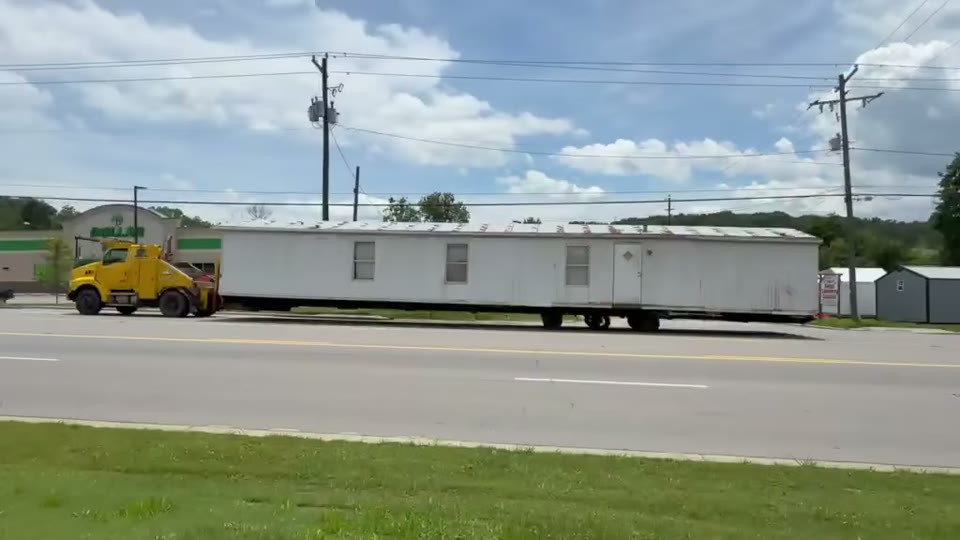
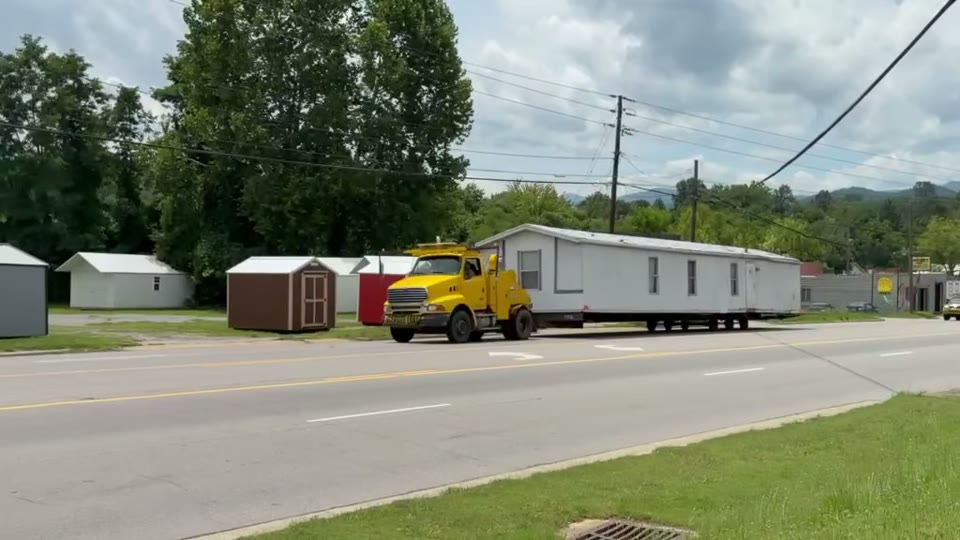
A mobile home that can still be hauled intact typically leaves Leicester at a lower cost than one that has to be sectioned and demolished. An intact removal keeps the structure whole, opens the door to resale or donation at the destination, and produces less debris to sort and haul off site. Whether that outcome is achievable comes down to three things: the home's structural condition, the site's access constraints, and whether the home qualifies for a legal road move.
Transport on North Carolina public roads requires an oversize/overweight permit from NCDOT, governed by Publication MH-2. That permit covers the haul route, any escort requirements on mountain roads through western Buncombe County, and split-and-reconnect logistics for double-wides. A home with rotted subfloor, a shifted frame, or sections of collapsed roof won't pass a pre-move structural assessment — and a home that breaks apart on NC-63 through Leicester represents a considerably worse outcome than a controlled on-site demolition. The Leicester mobile home movers page covers what a permitted intact relocation looks like from initial site survey through final delivery.
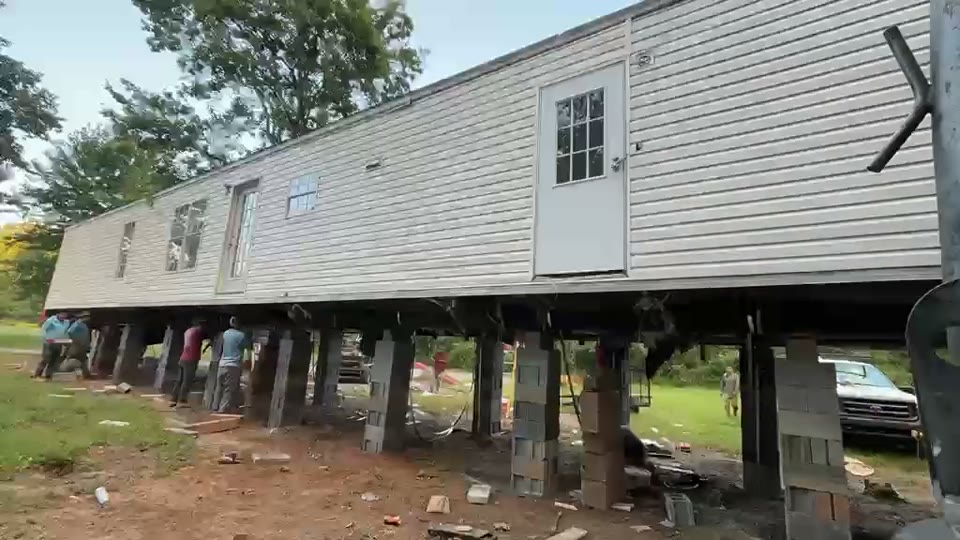
When the home cannot be moved intact, the job becomes a demolition and removal project: section the structure, sort materials between landfill and recyclable streams, and haul everything off site. Older manufactured homes — particularly those built before federal code standards took effect — may contain materials that require specific handling before demolition begins. The EPA's guidance on construction and demolition waste applies to those decisions, and any crew working pre-code housing in Buncombe County should address it before cutting starts, not after.
What removal costs in western Buncombe County
Two variables drive the price on any Leicester removal job: the home's size and whether it hauls intact or comes down in sections. The table below reflects typical market conditions in Buncombe County — not individual bids. Steep or tight-access lots, homes on older deep-set piers, and jobs requiring significant debris sorting will push toward the top of each range.
| Scope | Typical range |
|---|---|
| Single-wide — intact haul, accessible site | $3,000–$5,000 |
| Single-wide — intact haul, steep or tight access | $4,500–$7,000 |
| Single-wide — demolition and debris removal | $3,500–$7,000 |
| Double-wide — intact haul, accessible site | $6,000–$9,500 |
| Double-wide — intact haul, steep or tight access | $8,000–$15,000 |
| Double-wide — demolition and debris removal | $7,000–$15,000 |
Jobs that combine demolition with meaningful site prep — pulling old piers, filling the pad footprint, regrading for drainage — carry additional cost. The foundation grading and footers page covers what site prep typically involves after the home is out and a new installation is planned.
Permits, title, and the tax clearance
The permit chain for a Buncombe County removal runs through Buncombe County Permits and Inspections at 35 Woodfin St., Asheville NC. Properties inside Asheville NC city limits or within Black Mountain permit through those municipalities — confirm jurisdiction before submitting anything to the county. The permit application requires proof that utilities have been disconnected: electric service terminated at the meter by the utility provider, and water and sewer documentation — a utility letter, meter receipt, MSD approval, county well authorization, or county septic authorization, depending on what the property uses.
A tax-paid moving certificate must be in hand before the home can legally leave the property. North Carolina's NCGS Chapter 105, Article 18 requires this certificate from the county tax office. It surprises owners who have been paying real property taxes on a home still titled as personal property: the moving certificate is a separate document, issued separately by the tax office after outstanding manufactured home taxes are confirmed current.
The title runs through NC DMV. A home being relocated carries its Certificate of Title to the new site. A home being demolished has its title retired — that paperwork is filed with DMV and closes the ownership chain. Contractors performing permitted manufactured home work in North Carolina are required to hold the appropriate license under the NC Manufactured Housing Board, administered by the NC Office of State Fire Marshal. Licensing scope and thresholds are set at the state level and apply to removal work, not only new setup. A job that skips any of these threads doesn't close out cleanly — it either stalls at the permit desk or creates a title problem that surfaces at resale.
The lot after the home is gone
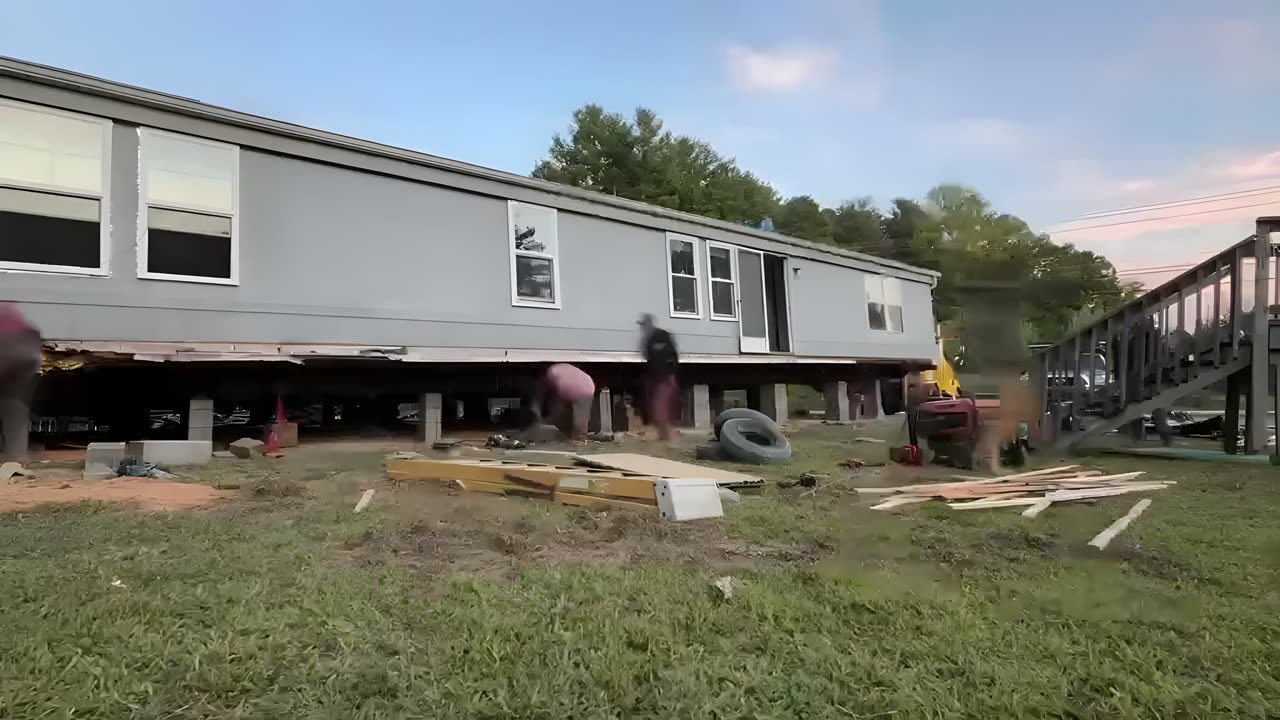
A clean removal leaves a grade, not just an empty footprint. What the lot needs after the home is out depends entirely on what goes in next — and in Leicester and western Buncombe County, the most common answer is another manufactured home. That next installation drives the site requirements backward into how the old home comes out.
Buncombe County is HUD Wind Zone I under 24 CFR 3280.305, which governs pier sizing, anchor spacing, and tie-down requirements for any manufactured home installed in the county. A new home going in needs a pad and grade built to Zone I specifications — not whatever configuration the previous home happened to leave behind. Pulling old piers, filling voids, and regrading for proper drainage is normally part of the clearance work, not a separate call after the pad is already cold. The foundation grading and footers service covers what an installation-ready, Zone I-compliant pad in Buncombe County requires.
Storm history adds practical weight to the drainage question. Buncombe County has recorded 19 federally declared disaster events across 1973-2026, including a Winter Storm in 2026, a Tropical Storm in 2024, and Hurricanes in 2023, 2021, and 2020. Lots on the French Broad River flats and in the low-lying hollows of western Buncombe can carry drainage issues that only become visible after a home is removed and the grade is fully exposed. Catching those before a new home goes in — rather than discovering them at the first hard rain after setup — is what separates a removal that leaves a usable lot from one that simply leaves a cleared one.