Splitting the marriage line: the move that surprises most people
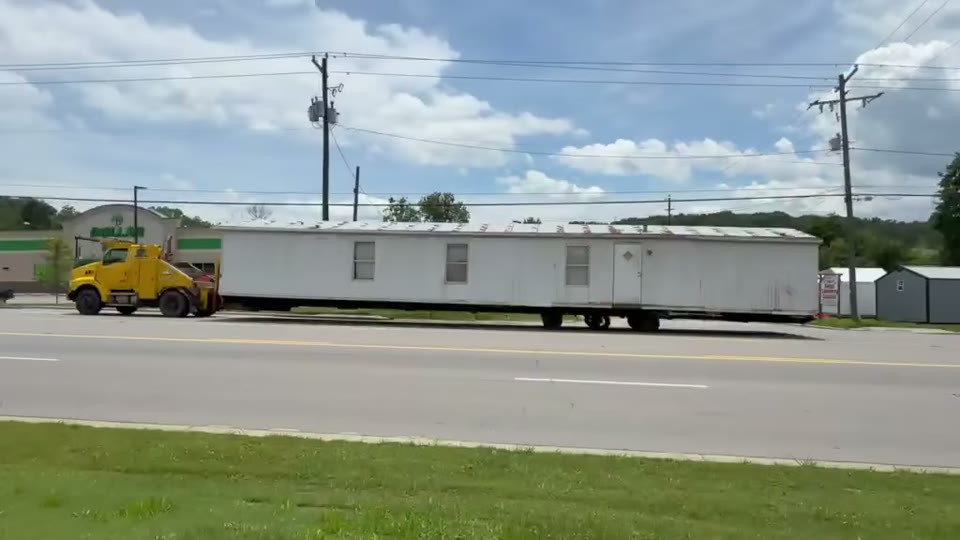
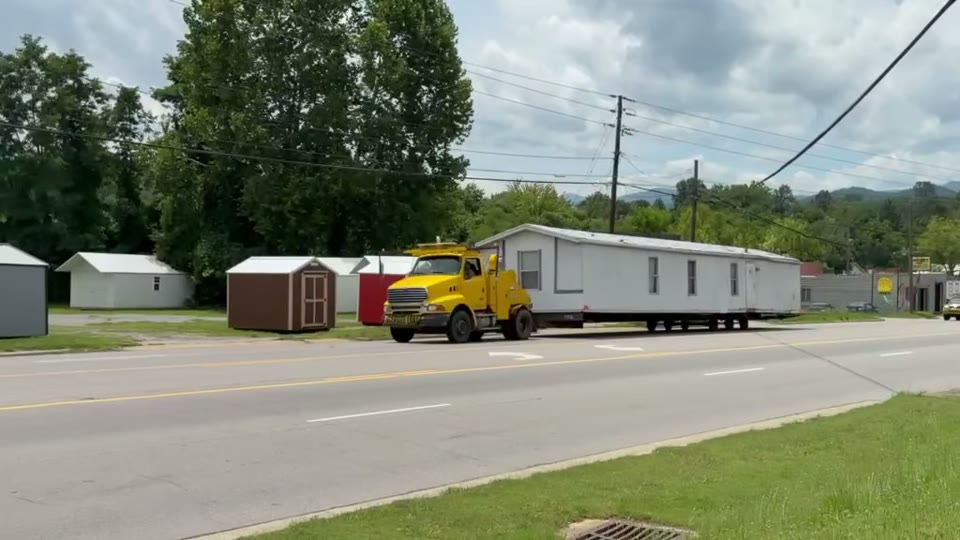
Buncombe County sits at the intersection of two mountain freight corridors, which means crews working double-wides here pull routes like Flat Rock to Sylva and Mooresville to Waynesville more often than flat-state movers would recognize. Both hauls cross grades where a full 28-foot-wide house cannot safely travel as one unit. So before either truck moves, the home splits at the marriage line.
The de-marriage process is exactly what TikTok clips make it look like: a crew removes marriage-wall panels, disconnects interior connections at the centerline, and separates the two halves for independent transport. What was a living room becomes the open edge of a half-house wrapped for road travel. Each half then receives its own NCDOT oversize permit (Publication MH-2). On sections wider than 14 feet — which most double-wide halves are — pilot escort vehicles travel with each load. The two halves may roll the same day or on consecutive days depending on route restrictions and crew logistics.
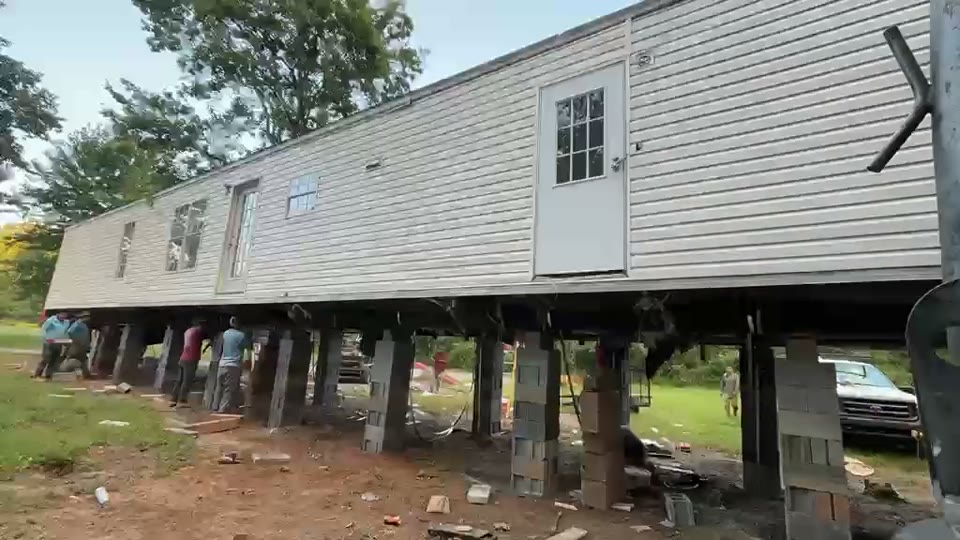
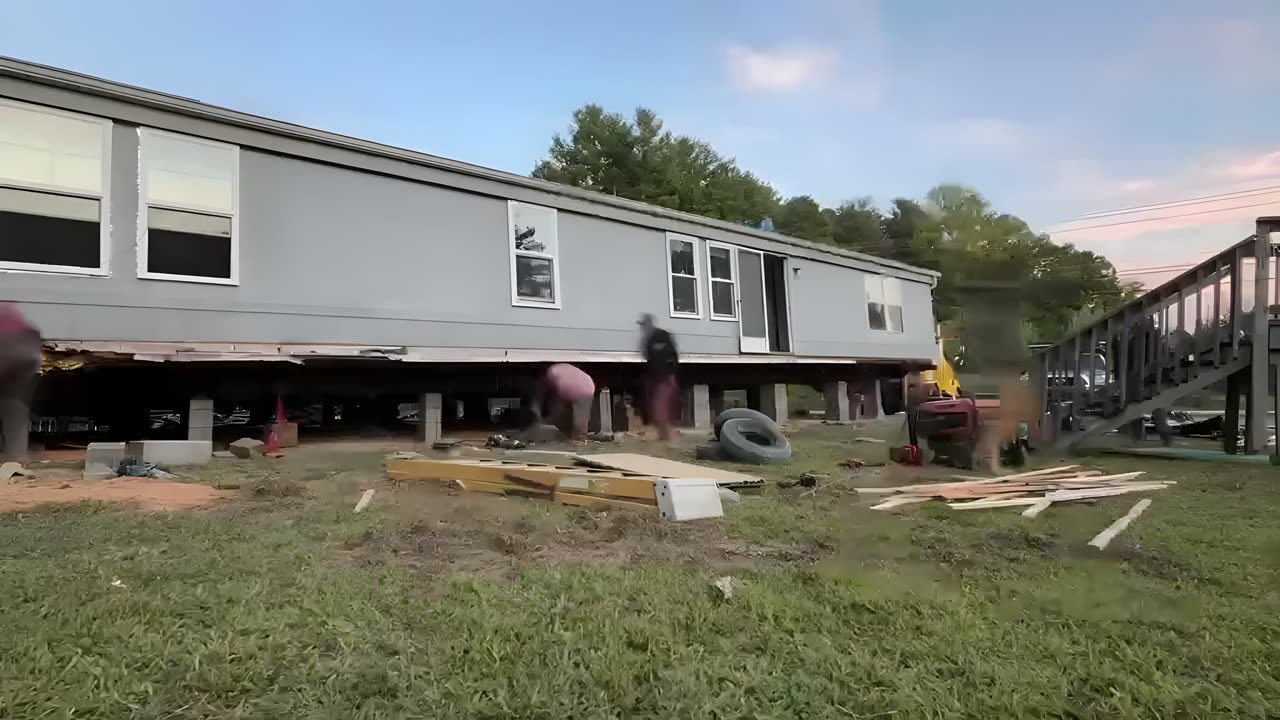
Re-marrying at the destination reverses every step: sections placed on the foundation, pulled together at the centerline, marriage-wall panels reinstalled, seams caulked and sealed, utilities reconnected. For what happens at that stage, see mobile home set-up and installation.
Permits, route approval, and the rules governing each section in transit
Moving a double-wide in North Carolina is regulated from two directions. The NC Manufactured Housing Board oversees installer licensing and setup code compliance, while NCDOT governs the road permit for each section in transit. The MH-2 publication specifies route pre-approval, travel-time windows (typically daylight only), and the conditions that trigger mandatory escort vehicles. Width, height, and axle load all factor into whether a given section needs one pilot car or two.
Buncombe County's road network adds a practical layer on top of state requirements. The French Broad River valley and the Swannanoa Valley both have segments where overhead clearances, bridge weight ratings, or intersection geometry force detours around the most direct path. The I-26 corridor handles large loads well, but the approaches to many rural parcels in western Buncombe do not. Mover crews familiar with western Buncombe routes often pre-survey secondary access roads before submitting the permit application, which adds time to the schedule but prevents mid-haul routing problems. Confirming the approved route before you close on a lot is not paperwork caution; it is the step that prevents a mid-move call to renegotiate costs and timing. For a full picture of how moving a manufactured home works across this region, see mobile home moving in western NC.
What a double-wide move costs in western NC
Moving a double-wide in western North Carolina typically costs $7,000 to $15,000 for transport only. That range reflects real variables: two permitted loads instead of one, mountain grades that slow travel and raise fuel costs, site access that may require additional equipment, and total haul distance. The full cost breakdown page walks through each line item. The table below maps scope to typical range.
| Scope | Typical transport range |
|---|---|
| Short haul (<30 miles), flat approach, accessible site | $7,000–$9,000 |
| Medium haul (30–60 miles), mixed terrain, standard site | $9,000–$11,500 |
| Long haul (60+ miles), mountain grades, pre-approved route | $11,500–$14,000 |
| Difficult site access (narrow hollow, steep driveway, sharp turn) | Add $1,000–$1,500 to applicable row, capped at $15,000 |
These ranges cover transport only and do not include setup, anchoring, skirting, or utility connections. Quotes that bundle transport and setup into a single number are harder to compare; ask for line-item separation so you can evaluate each scope independently.
Anchoring at the destination and the wind zone that governs it
Once both sections are placed and re-married, setup brings its own code requirements. Buncombe County falls in HUD Wind Zone I (24 CFR 3280.305), which establishes the minimum anchor and tie-down specifications for manufactured homes installed here. A correctly permitted setup produces documentation confirming the anchor system meets Zone I requirements. The HUD Office of Manufactured Housing Programs publishes the standards that licensed installers work from.
Mountain terrain in this county adds variables the standard alone does not resolve. Slope, fill soil, and drainage all affect how ground anchors perform over time. A site that appears level may have fill beneath it, and fill compacts differently than undisturbed soil. A site assessment at the actual lot before anchor installation — not just at permit review — is the read that protects both the investment and the occupants. For the full scope of what setup covers, visit set-up and installation services.
Storm history and what it means for siting a home in Buncombe County
Buncombe County has recorded 19 federally declared disasters over 1973-2026. Recent incidents include a Winter Storm (2026), a Tropical Storm (2024), and Hurricanes in 2023, 2021, and 2020. That pattern matters for manufactured housing for reasons that go beyond insurance premiums. The National Weather Service's manufactured home severe weather guidance is direct: manufactured homes require occupants to identify a nearby substantial shelter and reach it quickly when warnings are issued. Siting a home where that path exists and is usable in bad weather is part of a responsible placement decision, not an afterthought.
The storm record also shapes site drainage decisions. Flooding in the French Broad River basin during the 2023 and 2024 events saturated soils across significant parts of the valley. A lot that drains cleanly in a normal season may hold water after a major event, and anchors set into saturated soil behave differently than anchors in dry ground. A drainage assessment at the site before anchors go in is the kind of step that prevents a much larger problem later.