What the work costs at the foot of the Old Fort grade
Old Fort sits where US-70 and I-40 leave the eastern piedmont and begin climbing toward the Blue Ridge. Most manufactured homes along this corridor are set on cut-and-fill lots that shift with the seasons, which makes re-leveling a maintenance item here, not an emergency most owners get to avoid. The typical price for a single-wide runs $400 to $1,200; a double-wide runs $700 to $2,000. When the crew lifts the frame and finds cracked piers, collapsed pads, or rotted wood blocking, the job becomes a replacement rather than an adjustment and the bill rises to the $2,500–$5,000 range.
| Scope | Typical range |
|---|---|
| Single-wide re-level, piers in usable condition | $400 – $1,200 |
| Double-wide re-level, piers in usable condition | $700 – $2,000 |
| Pier or pad replacement required | $2,500 – $5,000 |
Sloped access and gravel drives — common on the US-70 corridor between Old Fort and Marion — tend to push costs toward the upper half of each range because staging takes more time. For a line-item breakdown of what drives that spread across North Carolina, see the NC mobile home leveling cost guide.
Four signs a home in McDowell County has gone out of level
Settling happens gradually enough that most owners adapt to the early signs before they recognize them. Four signals show up consistently in homes on McDowell County's mix of ridge-cut lots and creek-bottom parcels.
Interior doors that stick or bind on one side of the threshold are usually the first indication. A door that closed cleanly last fall and drags this spring is responding to frame movement, not humidity alone. Floors with a perceptible tilt across a room, especially along the marriage line between sections of a double-wide, mean a pier line has dropped or shifted. Skirting that has pulled away from grade at the bottom — creating a gap between the panel and the ground — shows the home moved upward relative to its base while the skirting stayed put. Diagonal cracks running from the corners of windows or door frames, in drywall or ceiling finish, indicate the frame is racking under uneven support.
Seasonal movement that eases in dry months and worsens in wet months points to moisture-driven settling beneath a pier. Movement that trends steadily in one direction and never recovers is a structural problem. The re-leveling process guide explains how a crew distinguishes the two at the inspection stage.
Terrain and storm frequency keep this a recurring job
McDowell County has 19 federal disaster declarations spanning 1973-2026, including a Winter Storm in 2026, a Tropical Storm in 2024, and Hurricanes in 2023, 2020, and 2019. Each major saturation event pushes water beneath homes on lower sites, softens pad-bearing surfaces, and accelerates settling that a drier decade would spread gradually. The NOAA National Weather Service records the regional precipitation history; anyone working on manufactured housing in this county has seen what that event frequency does to older support systems.
The terrain compounds the moisture problem. Old Fort is at the eastern approach to the Black Mountain divide, and many residential parcels along US-70 and the creek corridors were developed on fill soil cut from surrounding slopes. Fill compresses unevenly over time, and piers that were plumb at installation can drift apart over five to ten years — faster when wet seasons follow one another closely. A home that leveled well before 2019 may have needed the same work again after the run of storms that followed.
How re-leveling works — piers, shims, and the anchor check
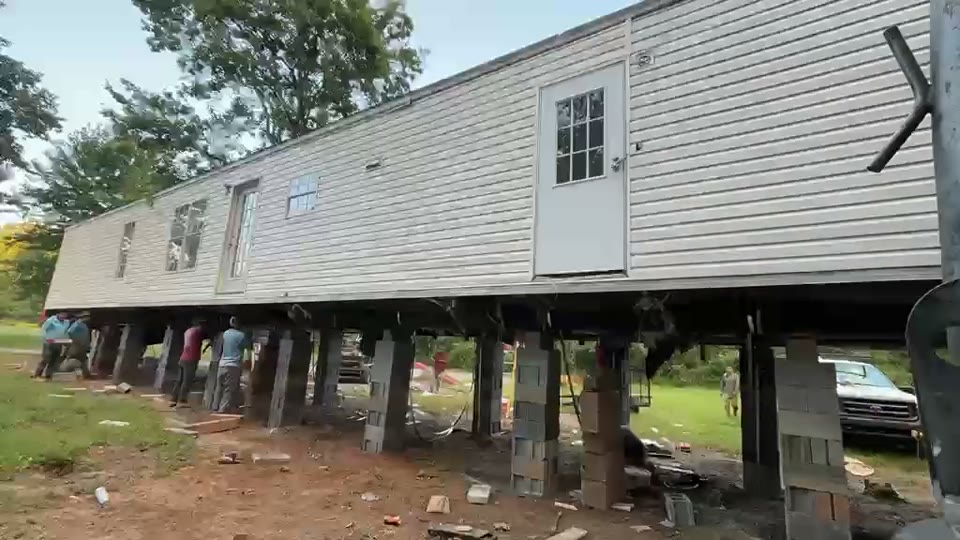
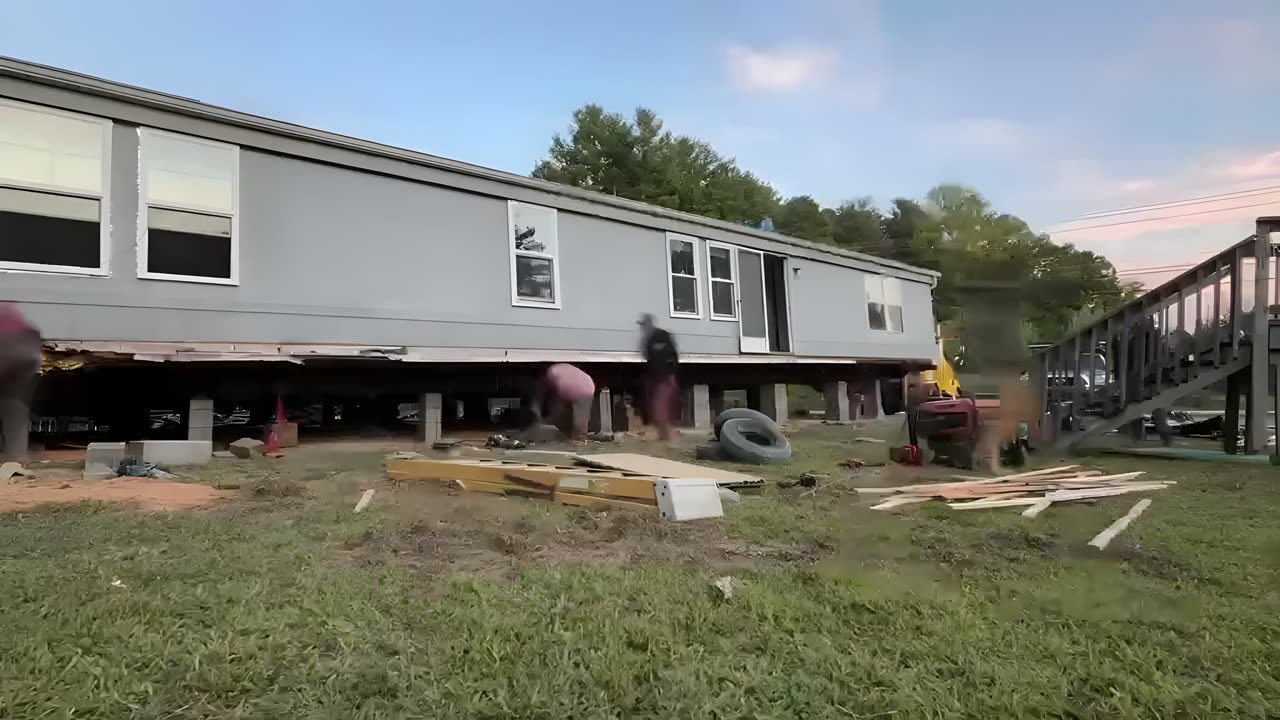
A leveling job begins with a pier-by-pier assessment. The crew walks the perimeter and the center pier line, checking each support for cracking, tipping, or rot, and measuring how far the frame has drifted from level. Where piers are structurally sound, the correction is shimming: steel or engineered plastic shims are adjusted beneath each pier until the frame returns to a level plane. A hydraulic bottle jack does the lifting; the shims hold the result. Most single-wide jobs finish in a half-day; a double-wide with multiple low points may take a full day or more.
McDowell County falls in HUD Wind Zone I under 24 CFR 3280.305. Any home set or reset near Old Fort must have its tie-down and anchoring system meet Zone I minimums. After any leveling job that requires jacking and resetting piers, the anchor straps and ground anchors should be checked and retensioned before the job is called complete. The HUD Office of Manufactured Housing Programs publishes the installation standards; the NC Manufactured Housing Board enforces them at the state level. Skipping the anchor check after a re-level is not an acceptable shortcut.
Permits and paperwork before the work date
McDowell County recorded 524 manufactured housing permits between 2019 and 2026 — a volume that means the county building office handles this type of work regularly and is the right first call before your work date. Whether a permit is required depends on scope: a shim adjustment is treated differently from a job that replaces piers or resets a home on new pads. Call the office to confirm which applies to your situation. A contractor who says permits are never required for re-leveling in North Carolina should be pressed on that — the threshold depends on scope and local rules, and a crew that doesn't know the difference hasn't been doing this work carefully.
If the home is being moved as part of a reset, a separate moving permit is required from the North Carolina Department of Transportation under Publication MH-2. Any home with outstanding property taxes also requires a tax-paid moving permit before a mover can legally pull it from the lot, under NCGS Chapter 105, Article 18. Both requirements apply in McDowell County regardless of how short the move is.
What to ask before a crew touches your home
Ask three things before signing anything: whether the crew has worked on homes set on sloped fill in McDowell County — this tells you whether they understand the terrain between Old Fort and Marion; whether they carry general liability insurance and can show a current certificate; and whether they will advise you on permit requirements for the scope of your job. The answer to the third question is never simply yes or no — it depends on what the work turns out to require, and a crew that gives a flat answer before seeing the home hasn't done this carefully.
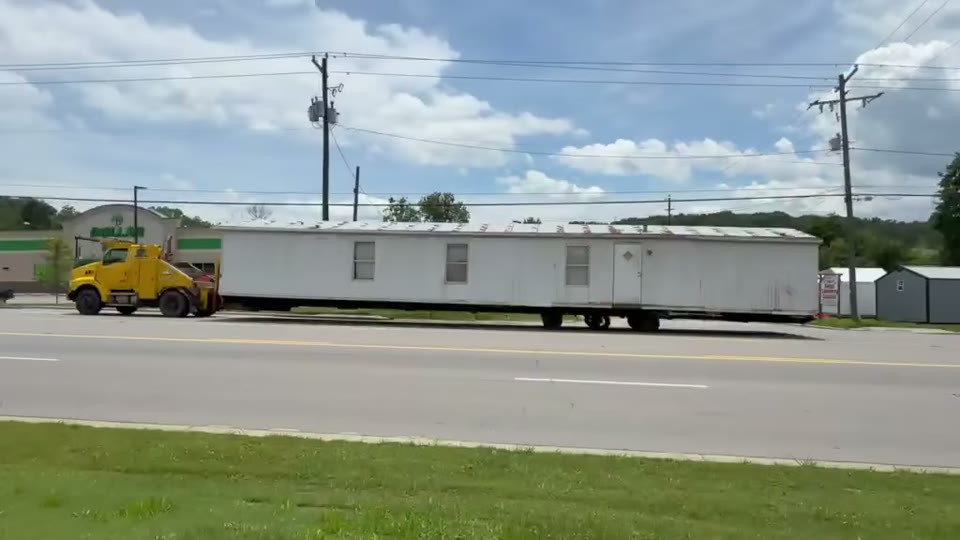
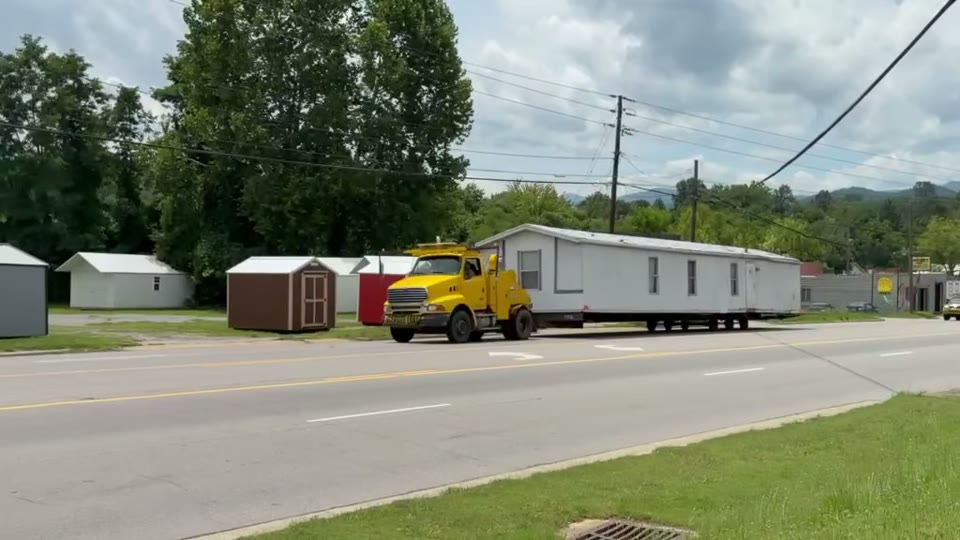
For homes that need a full relocation — after storm damage, a lot sale, or a site change — the Old Fort mobile home movers page covers that scope separately. That work overlaps with leveling at the reset stage, where a move and a full re-level happen together, and combined jobs typically land at the top of the leveling ranges or beyond depending on distance and site preparation.