Route and lot access: the first question for any Leicester job
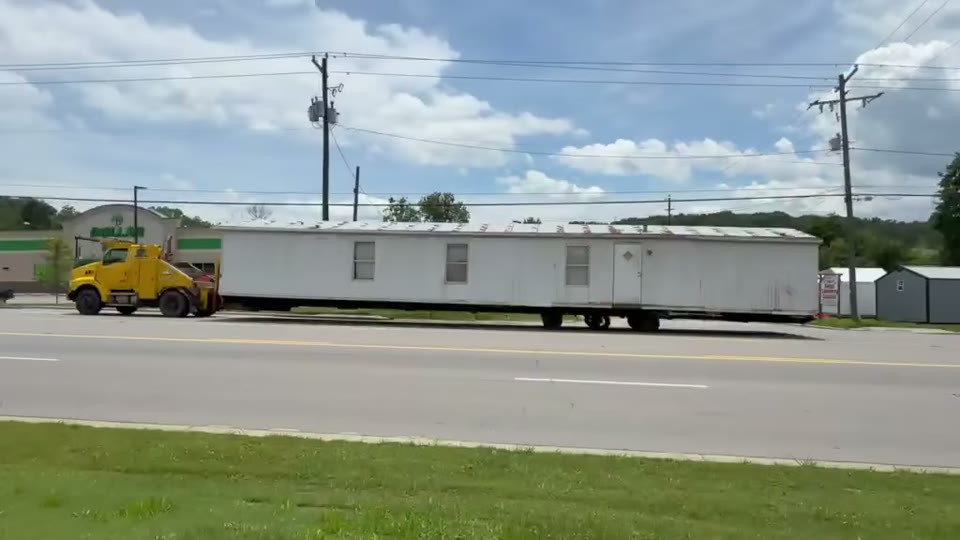
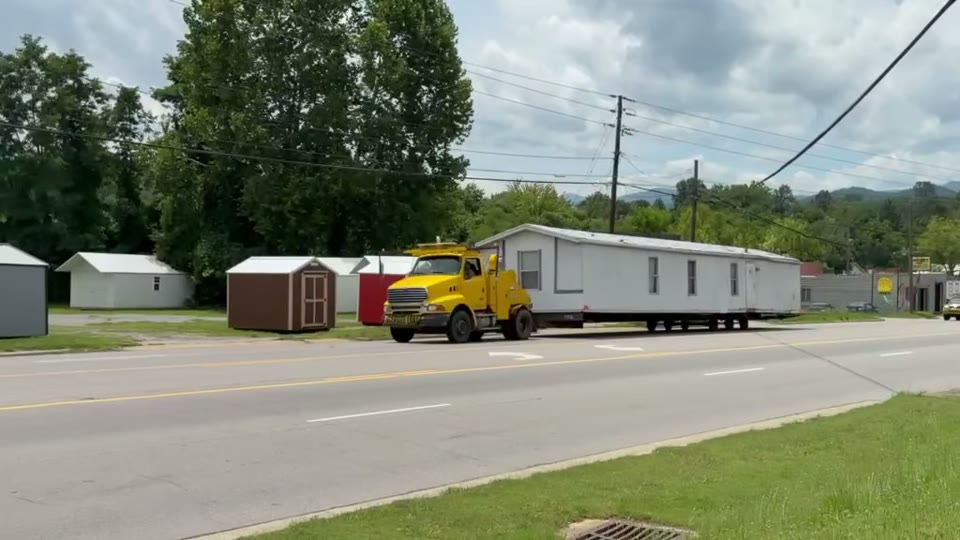
Leicester sits about ten miles northwest of Asheville NC on NC-63, where the road climbs from the French Broad River valley into the Sandy Mush watershed. The two-lanes here tighten around ridge curves, cross posted bridges, and reach hollow roads where vegetation and terrain leave no margin for a wide load. That geography shapes every manufactured home move in this community before a permit is filed or a price is set.
A move into the hollows off Newfound Road or the upper Sandy Mush Creek corridor may require a route pre-survey: bridge clearance measurements, posted weight limits, driveway turn radius, and whether the approach grade will let a loaded transporter pull in and back out without damage. A flat-lot Asheville NC suburb presents none of those questions. A sloped hollow in the Sandy Mush community may present all of them. Movers who work this area know to look at satellite imagery and often walk the approach before quoting. Those who skip that step tend to discover the problem on move day, which is the worst time to find it. On a straightforward lot with paved county road access, the route question is largely handled by the permit itself. On a Leicester hollow lot, the answer to whether a rig can get there determines whether the job is possible at all, whether it requires a smaller transporter, and whether the haul from NC-63 to the destination adds enough time and risk to change the price.
For context on how mountain access conditions affect jobs across the region, see the overview of mobile home moving in western NC.
What a Leicester move typically costs
Transport cost is driven by the home's dimensions, the move distance, and access difficulty at each end. The ranges below reflect typical market conditions in the Buncombe County corridor for transport only. Setup, permits, and utility connections are quoted and contracted separately.
| Job scope | Typical market range |
|---|---|
| Single-wide, local move (under 30 miles) | $3,000 – $6,000 |
| Single-wide, longer haul (30–60 miles) | $5,000 – $8,000 |
| Double-wide, standard road access | $7,000 – $11,000 |
| Double-wide, difficult access or hollow approach | $10,000 – $15,000 |
| Re-leveling at an existing site | $400 – $900 |
Jobs that require temporary support blocking, pier removal, or utility disconnection at the origin site carry additional line items. Crane work for steep or narrow lots adds further cost. Difficult hollow access in the Sandy Mush corridor — where a driver must make multiple backing moves or navigate tight approach angles — is one of the clearest reasons why Leicester double-wide jobs frequently land toward the upper part of the market range. For a full breakdown of what the destination-side work involves, see the setup and installation page. If the home is already on site and out of level, that is a separate scope covered on the re-leveling page.
NCDOT transport permits and what they cover
North Carolina requires an oversized load transport permit from NCDOT for any manufactured home moved on public roads that is wider than 8 feet 6 inches, which covers essentially every home built to current federal standards. The rules, permit classes, escort requirements, and restricted travel hours are set out in the NCDOT Publication MH-2. A double-wide transported as two sections requires a permit for each section, and both must travel the approved route under the same move authorization.
The permit specifies the approved route, not a general area. On the NC-63 corridor between Asheville NC and Leicester, bridge postings and lane geometry on Sandy Mush Creek road segments matter. If the only viable approach to a hollow destination is not on the permitted route, a route amendment must be filed before the move date. Discovering that on move day delays the entire job. Experienced movers confirm the route against the actual site approach before filing the application — that step is worth asking about when comparing quotes.
A separate setup permit through the NC Manufactured Housing Board, under the Office of State Fire Marshal, is required for the installation at the destination. That permit is independent of the NCDOT travel permit and must be obtained before setup work begins.
Anchoring and installation at the new site
Buncombe County's HUD wind zone designation is Zone I under 24 CFR 3280.305. That classification sets the minimum anchor count, anchor depth, and tie-down angle for every manufactured home installed in the county. The requirements are federal, administered through the HUD Office of Manufactured Housing Programs, and apply equally to a new home arriving from the dealer and a used home being relocated from another Buncombe County lot.
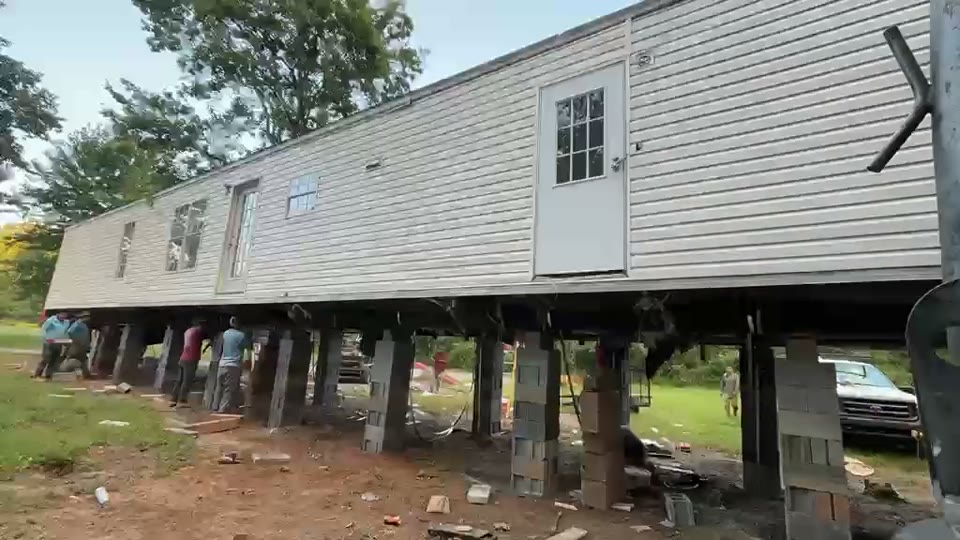
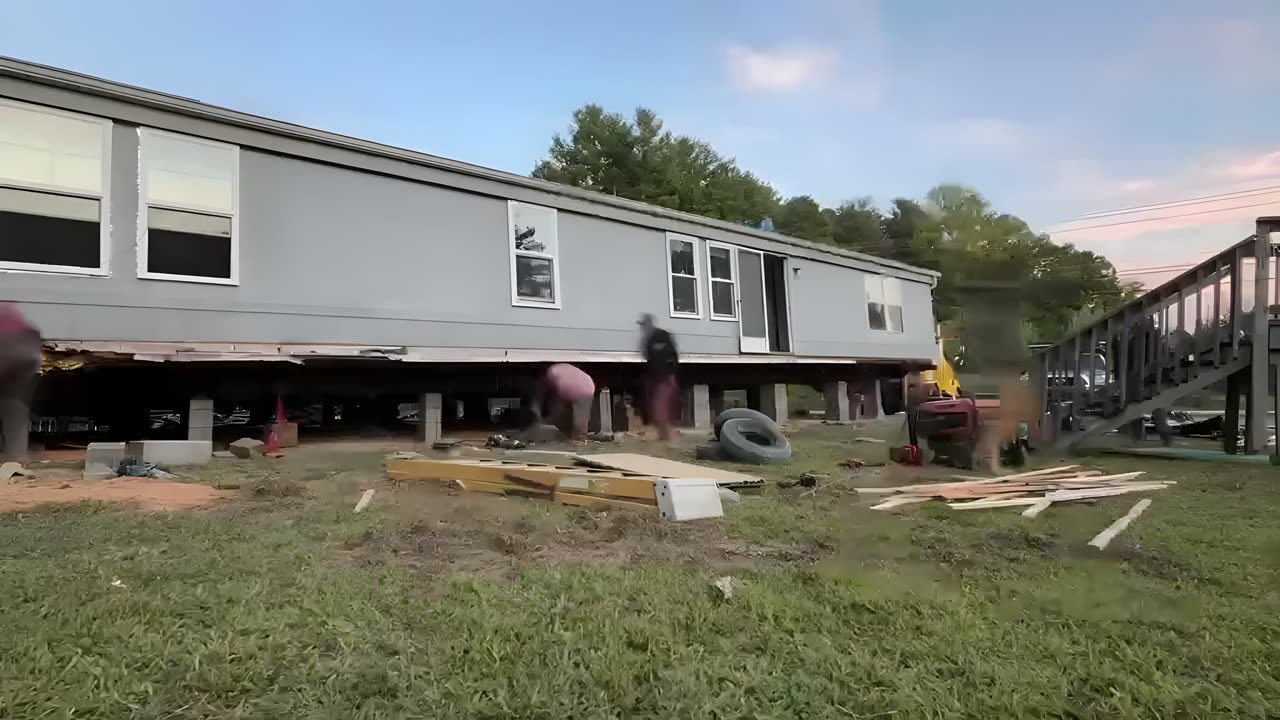
Leicester's terrain means most home sites are graded rather than naturally flat. Blocking on a slope requires precise shim work at every pier so the frame sits level across its full length. A home that starts out of level racks slowly — doors and windows bind first, then the floor deflects, and eventually the piers begin to shift. The right blocking and leveling at installation costs far less than correcting a home that was set poorly the first time. For homes on significant grades, some crews use concrete block piers with steel shims and some use manufactured pier systems; each has different load tolerances on settling soils, and the specification chosen at install should be documented and provided to the homeowner. The re-leveling page covers what recurrent settling looks like and what causes it on Buncombe County hillside lots.
Before any setup crew starts work, confirm that they have pulled the required permit through the NC Manufactured Housing Board. The permit ties the work to a licensed contractor and creates the record that matters at title and at refinance.
Storm history and what it means for how a home sits
Buncombe County has recorded 19 federally declared disasters over its history (1973-2026). The recent pattern reflects the mountain weather this county actually faces: hurricanes in 2020, 2021, and 2023, a tropical storm in 2024, and a winter storm in 2026. Manufactured homes in mountain hollows carry a different exposure profile than coastal homes — less surge risk, but more exposure to straight-line wind, fallen timber, and the channeling effect terrain creates when a storm system moves through a narrow watershed.
The National Weather Service guidance on mobile homes and severe weather is direct: a manufactured home is not a safe shelter in a tornado or severe windstorm, and the only meaningful protection is proper anchoring and access to a nearby permanent structure. Zone I installation standards are the baseline; homes installed to that standard perform better through wind events than homes that were under-anchored when they first arrived on their lots. When reviewing a quote for installation work, ask the crew to show you the anchor spacing plan and the tie-down specification sheet they intend to use — it should match the home manufacturer's requirements and the Zone I standard.