What a move in Henderson County typically costs
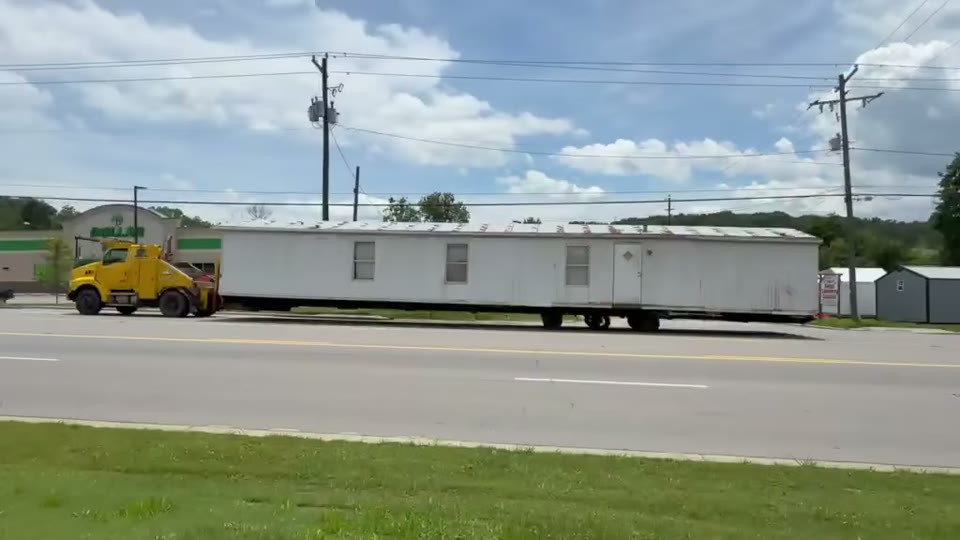
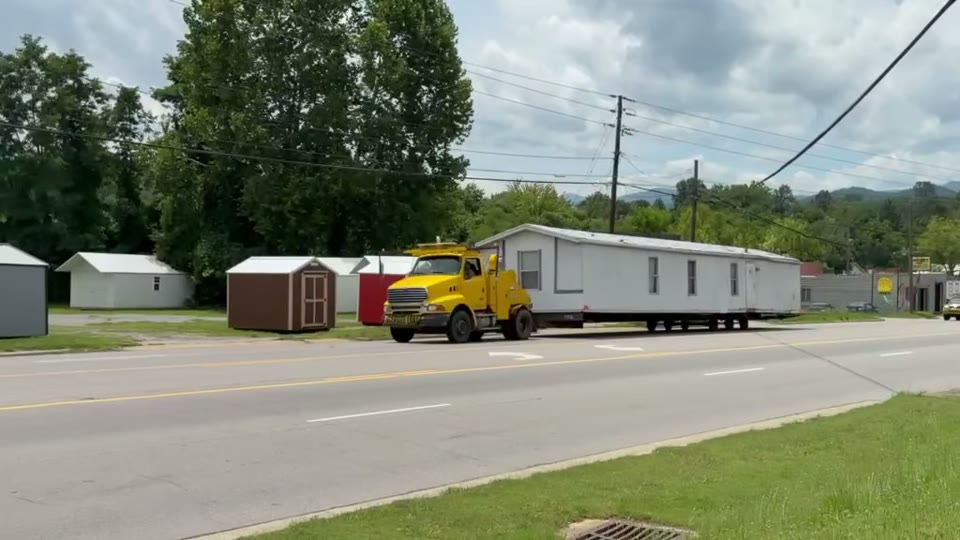
A move our clients posted about on Facebook started in Candler and finished in Hendersonville: single-wide, roughly 45 miles, two NCDOT permits, and a new concrete runner pad waiting at the destination. That job landed in the middle of the table below, which is about right for Henderson County's road mix. The I-26 and US-25 corridors are manageable for most loads, but the last mile into a rural lot can add equipment and time that no flatland quote anticipates.
| Scope | What's typically included | Typical range (transport only) |
|---|---|---|
| Single-wide, under 30 miles | Disconnect, haul, block and level | $3,000 – $6,000 |
| Single-wide, 30–60 miles or rural lot | Disconnect, haul, block and level | $5,000 – $8,000 |
| Double-wide, under 30 miles | Disconnect, haul, marry and set | $7,000 – $10,500 |
| Double-wide, 30–60 miles or steep lot | Disconnect, haul, marry and set | $9,500 – $15,000 |
| Skirting and steps | Material and labor | $800 – $3,000 |
| Utility reconnection, per trade | Electric, water, sewer — each separate | $500 – $2,500 |
These are market ranges for Henderson County moves with standard road and lot access. Steep driveways, overhead clearance issues on US-64, or wide loads on secondary roads will push a quote toward the top of its band.
Routes, road widths, and lot access
Henderson County's main corridors work well for most moves. I-26 handles the north-south hauls between Hendersonville and Asheville NC and carries most of the volume coming in from Buncombe County. US-25 runs through Hendersonville proper and is the usual choice for moves within town or heading south toward Flat Rock. US-64 connects east toward Dana, Bat Cave, and Chimney Rock, and it narrows and curves enough that wide loads require a pilot car and an advance route survey before the transporter commits.
The complications usually show up at the destination. A rural lot off Kanuga Road, a steep driveway near Edneyville, or a tight entrance in Mills River can require a site visit before any price is firm. Soil matters too: the lower valleys in Henderson County carry clay-heavy ground that may need additional footings under a new pier set.
For moves that cross the Henderson-Buncombe county line — the Candler-to-Hendersonville corridor is the most common example — two separate county jurisdictions may each require inspection sign-offs. The western NC mobile home moving overview covers how multi-county routes get coordinated and what each county line requires.
Permits: NCDOT and Henderson County, in sequence
Two permit streams have to run in order before anything moves on a North Carolina public road. NCDOT requires a transport permit for any manufactured home traveling on state roads; Publication MH-2 is the official guide to that process and lays out the oversize and overweight rules that govern most homes on highway corridors. A single-wide is typically one permit load; a double-wide almost always requires two separate transport runs.
Henderson County's building department issues the setup permit separately — before the home can be legally installed at its new lot. That permit covers the foundation plan, tie-down layout, and utility rough-in points. Inspections run in sequence: footing or slab first, then anchoring, then final. The NC Manufactured Housing Board, administered through the NC Office of State Fire Marshal, sets the statewide standards that Henderson County inspectors apply to every permitted installation. Getting the setup permit in hand before the home arrives prevents a costly sit on a transporter while the county queue works through.
Setting up at the new lot: HUD Zone I and what it requires
Henderson County falls under HUD Wind Zone I under 24 CFR 3280.305 — the minimum federal anchoring standard for manufactured homes installed here. No setup permit closes without the anchoring requirement being met, regardless of how recently the home was moved or what the previous site's anchoring looked like.
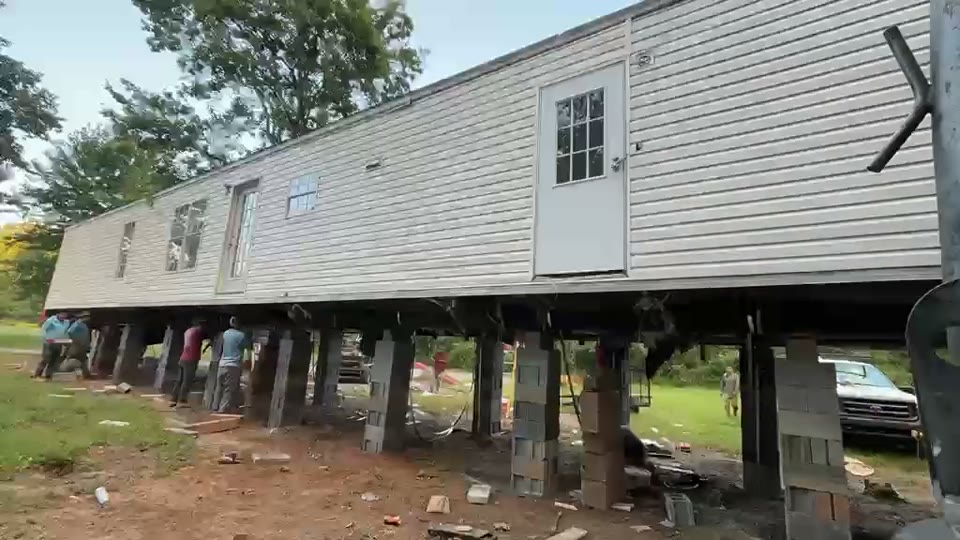
A proper installation starts with footings sized to the home's weight and the site's soil class. Runners or piers go next, then blocking courses, then the strap anchors that connect to ground anchors driven to required depth. A double-wide also requires the marriage-line connection between the two halves to be completed and inspected before utilities are connected.
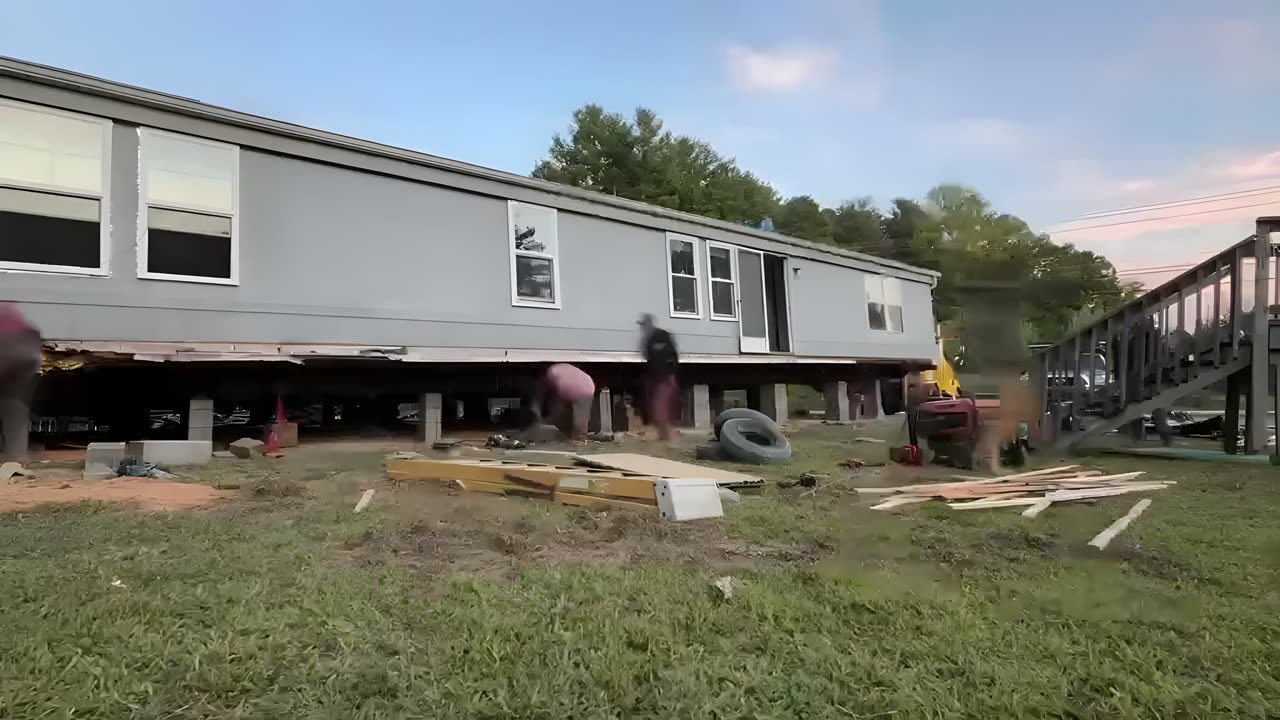
Homes that have been on one lot for several years often need re-leveling work after the move. The haul shifts piers and can surface soft spots in older blocking that were not visible before transport. A condition check on arrival at the new site is worth scheduling before assuming the original setup specs still apply. The full inspection sequence — utility rough-ins, skirting requirements, and step-by-step signoffs — is covered in the set-up and installation guide.
Storm history and why anchoring standards matter here
Henderson County has logged 16 federally declared disasters across 1978-2026, including hurricanes in 2019, 2020, and 2023, a tropical storm in 2024, and a winter storm in 2026. That record is not abstract for manufactured housing: the National Weather Service severe weather guidance identifies mobile homes as particularly exposed to high-wind events because their anchoring and wall systems respond differently from permanent foundations under the same storm load.
A home anchored to the HUD Zone I standard — inspected and documented through Henderson County's permit process — is meaningfully more secure than one set without permits or with anchors that were never verified. Insurance carriers in this market increasingly require documentation of the tie-down inspection before binding a policy on a relocated home. The permit record and the anchor documentation are part of the home's defensibility in a claim and its value at resale.