Free quotesBased in the Asheville, NC areaMoving, set-up and re-levelingSingle-wide, double-wide and modularMon-Sat 8 AM-5 PMSe habla español
Call or text (828) 731-9948

Asheville Modular, Asheville NC

Mobile Home Pier Replacement: When Shims Are Not Enough

Mobile home pier replacement in Buncombe County typically runs $150–$400 per individual pier for targeted repairs, or $1,500–$5,500 for a full re-pier under a single-wide. Also useful: re-leveling, mobile home leveling cost in NC and mobile home leveling. Based in the Asheville, NC area. Moving, set-up and re-leveling across Western North Carolina.

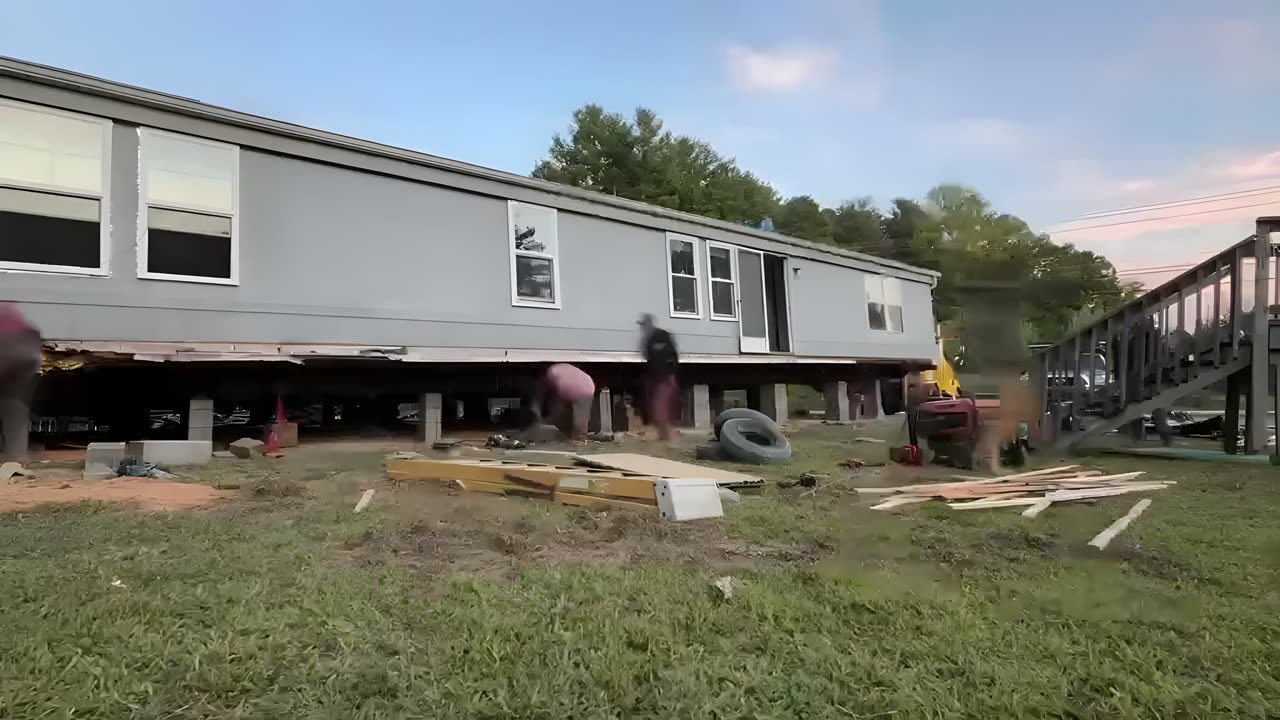
Pictured: the crew setting a single-wide on blocks.

Get a free estimate

Goes straight to us. We never sell or share your info.

Quick answer
Mobile Home Pier Replacement: When Shims Are Not Enough

Mobile home pier replacement in Buncombe County typically runs $150–$400 per individual pier for targeted repairs, or $1,500–$5,500 for a full re-pier under a single-wide. Mountain clay soil and freeze-thaw cycles in the higher elevations push concrete block piers in ways flatland homes never see. Whether you need new piers or adjusted shims depends on what an inspection finds under the frame — and it often finds both.

19
federal disaster declarations on record in Buncombe County
Hurricane Dorian
most notable event in the federal record
1973–2026
span of the declaration record
Asheville
Buncombe County hub

What Buncombe County terrain does to pier foundations

A soft spot in the floor of a mobile home in Buncombe County is not random. Mountain clay around Asheville NC expands measurably when it absorbs rainfall, and this county has seen 19 federal disaster declarations across 1973-2026, many tied to storm and flood events that saturate ground repeatedly. Each wet season followed by a dry one creates a slow, uneven lift-and-settle cycle that eats shims and tilts piers.

At higher elevations, freeze-thaw cycles run from October through April. A concrete block pier that absorbs moisture can chip, crack, or heave as that water freezes. One hard winter does not ruin a pier, but stacked winters on mountain clay soil do. Many single-wides and double-wides throughout this county are thirty or forty years old, meaning the original pier work predates current HUD installation standards. Some of that older work was never formally inspected.

The signs above the problem, and what you can check safely

The classic tells for failing piers show up inside the home before anything is visible from outside: soft or springy floor sections near the center of the home where span is greatest, doors and windows that have started catching at the top of the frame, visible separation between the bottom of the exterior wall and the skirting rail, and water stains on the underbelly vapor barrier where piers have shifted and opened gaps. A floor that feels solid in one room and springy in the next points to localized pier failure rather than a whole-home problem that a standard mobile home re-leveling would address.

What you can check yourself without going under the home: walk the perimeter slowly and look at the gap between the bottom of the skirting and the ground. A home that has moved shows uneven gaps — close to the ground on one end and lifted several inches on the other. From a doorway, place a level on the floor threshold. More than one inch of fall across eight feet is a clear signal. Look for shims between the steel frame and the concrete block that are angled rather than flat, or gaps where a shim has walked out entirely. Do not crawl under a home showing any of these signs before a professional has assessed it; a home under active movement can shift further. If you spot any of these signs, photograph them with a date stamp before anything changes.

Shims versus pier replacement: where the line falls

A shim adjustment (compressing or replacing the wood or steel shims between the home's outrigger frame and the top of the pier) is the right call when the concrete blocks are intact and plumb and the pier spacing still meets the original installation plan. That is what a standard re-leveling covers. Pier replacement becomes necessary when blocks are cracked, tilted more than a few degrees, sitting in soil that has eroded or heaved beneath them, or spaced outside HUD's required support intervals.

HUD installation standards under 24 CFR Part 3285 specify maximum pier heights, required footings for load-bearing piers, and the materials that qualify. Stacked masonry block without a proper footing is non-compliant above certain heights. When an inspection finds a block stack that was never correctly footed, shimming the top of it is a temporary fix. That is when replacement is the honest answer.

What pier replacement typically costs in Buncombe County

Mountain terrain adds cost that coastal or flatland quotes never show: access under older mobile homes on sloped lots takes more time, and footing work in clay soil often requires removing and replacing compacted material. The NC leveling cost guide covers the broader picture; the ranges below reflect the Buncombe County labor and material environment.

ScopeTypical Range
Single pier repair with new shims$150 – $400
Replace 4–6 piers, one end of home$600 – $1,600
Full re-pier, single-wide (14 × 60 or similar)$1,500 – $3,500
Full re-pier, double-wide$2,800 – $5,500
Footing work added (clay soil, sloped lot)add $200 – $600
Emergency stabilization after storm or flood$800 – $2,500

These figures cover pier and footing work only. If tie-down anchors also need adjustment or replacement, that adds to the scope. Buncombe County falls in HUD Wind Zone I per 24 CFR 3280.305, which sets the minimum lateral and vertical resistance the anchor system must meet. The Asheville NC leveling page explains how re-leveling and pier work are typically scoped together when both are needed.

NC licensing and what to ask before work begins

Work on manufactured housing in North Carolina falls under the oversight of the NC Manufactured Housing Board, which licenses dealers, contractors, and set-up crews. Before any pier work starts, ask whether the job requires a set-up permit. The answer depends on scope, and it matters for insurance coverage and resale. A pier replacement that restores the home to its original permitted set-up is treated differently than a modification that changes support spacing or footing design.

The questions that separate qualified crews from the rest: do they pull a permit for the work, and if not, why not? Do they reference HUD installation standards or rely on what was already there? Do they document the before-and-after pier condition with photos? Mountain lots in Asheville NC, sloped lots especially, often have drainage or soil conditions under the home that need to be understood before anything moves. A pier replacement that does not address what caused the pier to fail will need repeating.
Buncombe County, NC: the storm record

Federally declared disaster events19
Named storms in the recordHurricane Dorian, Hurricane Florence, Hurricane Fran, Hurricane Helene, Hurricane Ian, Hurricane Isaias
Incident typesFire, Flood, Hurricane, Severe Storm, Snowstorm
Record span (fiscal years)1973–2026
Most recent declared incidentsWinter Storm (2026), Tropical Storm (2024), Hurricane (2023), Hurricane (2021)
HUD wind zone for manufactured homesZone I (24 CFR 3280.305)
Source: FEMA OpenFEMA disaster declarations. County-level federal declarations, not individual claims.
Questions people ask

Straight answers

How much does mobile home pier replacement cost in Buncombe County?
Most pier replacement in Buncombe County runs $150–$400 per pier for individual repairs and $1,500–$5,500 for a full re-pier under a single-wide; double-wides run higher. Footing work in clay soil and slope-lot access add to the total. See the NC leveling cost guide for line-item ranges.
How do I know if my mobile home needs new piers or just shimming?
Shimming works when the concrete blocks are intact and plumb. Cracked blocks, piers that have tilted or sunk, and any pier without a proper footing are replacement candidates, not shim candidates. An under-home inspection makes the call; a crew that shims without examining the piers is skipping the diagnosis.
Can I replace mobile home piers myself?
Adjusting shims is work some homeowners handle on a stable, level home. Replacing concrete block piers is different: the frame must be unloaded, new footings set, block restacked to HUD tolerances, and load reapplied. Getting it wrong means the home moves again, and North Carolina has licensing requirements for set-up work on manufactured housing.
Does mobile home pier work require a permit in NC?
Many pier replacement jobs require a set-up permit under the NC Manufactured Housing Board licensing rules. The threshold depends on scope. Ask your contractor whether a permit is required for the specific work and get the answer in writing; unpermitted set-up work can complicate resale and insurance claims.
What causes mobile home piers to fail in the Asheville NC area?
Mountain clay in Buncombe County swells when wet and shrinks when dry, creating a seasonal lift-and-settle cycle that shifts piers over time. Freeze-thaw cycles at higher elevations crack and heave block that has absorbed moisture. Sloped lots concentrate drainage at one end of the home, accelerating soil movement there. Most failures build slowly over years.
Does homeowner insurance cover pier damage after a storm?
Standard policies often exclude gradual settlement, but damage from a declared weather event may be covered. Buncombe County has had multiple federal disaster declarations in recent years, including a Winter Storm in 2026, a Tropical Storm in 2024, and Hurricanes in 2023, 2021, and 2020. Document post-storm pier damage with photos before repairs begin and contact your insurer first.
How long does mobile home pier replacement take?
Single pier repairs typically finish in a day. A full re-pier under a single-wide on a level lot runs one to two days; a double-wide on a sloped Buncombe County lot with footing work can take two to three days once materials are staged. Budget time for the under-home inspection before the repair work is scheduled.
Our work

Our work

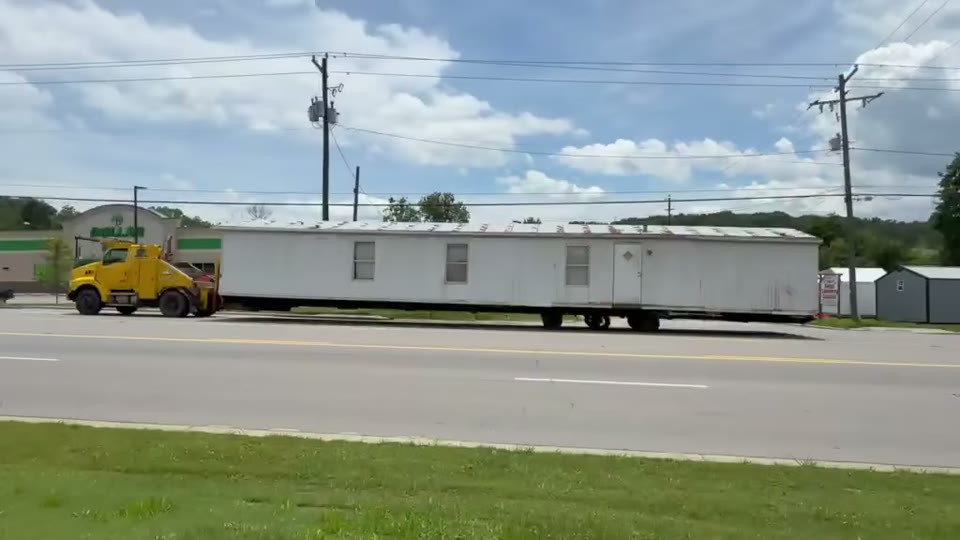
Our yellow truck pulling a white single-wide down the highway. Built by Asheville Modular and Mobile Home Services.
Our yellow truck pulling a white single-wide down the highway.
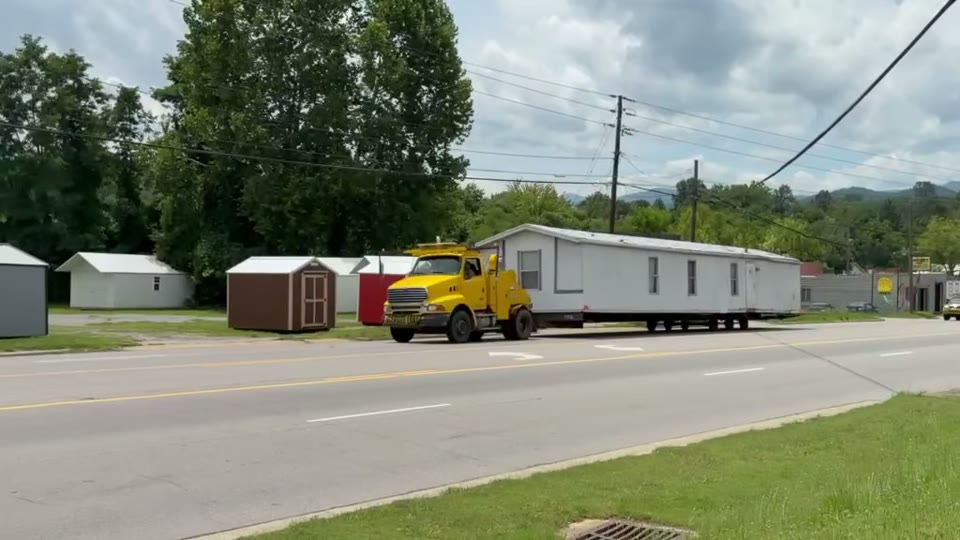
Our truck pulling a single-wide past the shops. Built by Asheville Modular and Mobile Home Services.
Our truck pulling a single-wide past the shops.
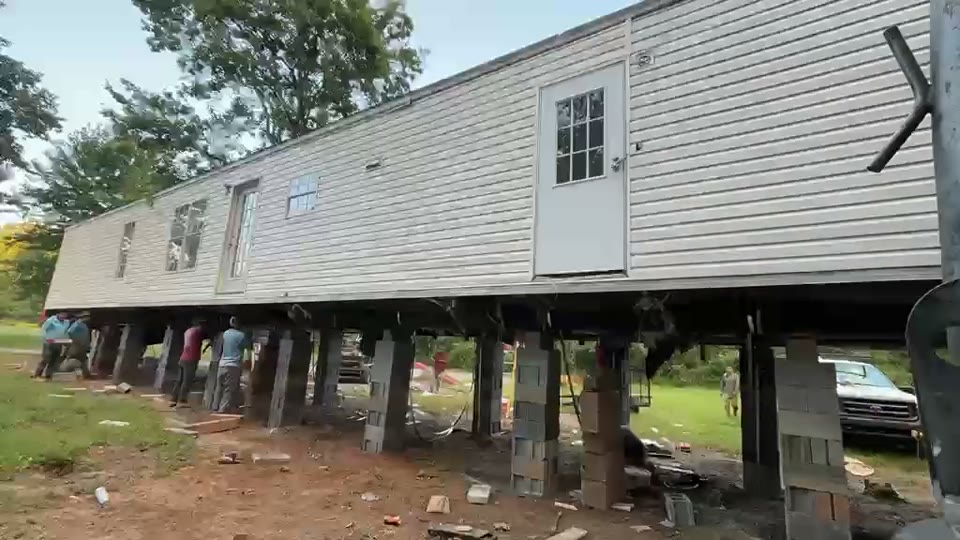
A double-wide raised on cribbing so it can be leveled. Built by Asheville Modular and Mobile Home Services.
A double-wide raised on cribbing so it can be leveled.
The crew setting a single-wide on blocks. Built by Asheville Modular and Mobile Home Services.
The crew setting a single-wide on blocks.
Get a quote

Tell us about your project. We price it straight.

Where it is and what you need — that's all it takes to start. You get a clear scope and an honest number, and your info never gets sold to a list.

Or call — (828) 731-9948

Get a free estimate

Call now Text us