Two ways a Black Mountain lot gets cleared
Black Mountain sits at the eastern crook of Buncombe County, where the Blue Ridge folds in tight and lots cut from ridge and creek-bottom terrain come with gradients that make any large-equipment job more complicated. That topography shapes mobile home removal here in ways a flat-county bid sheet will not reflect.
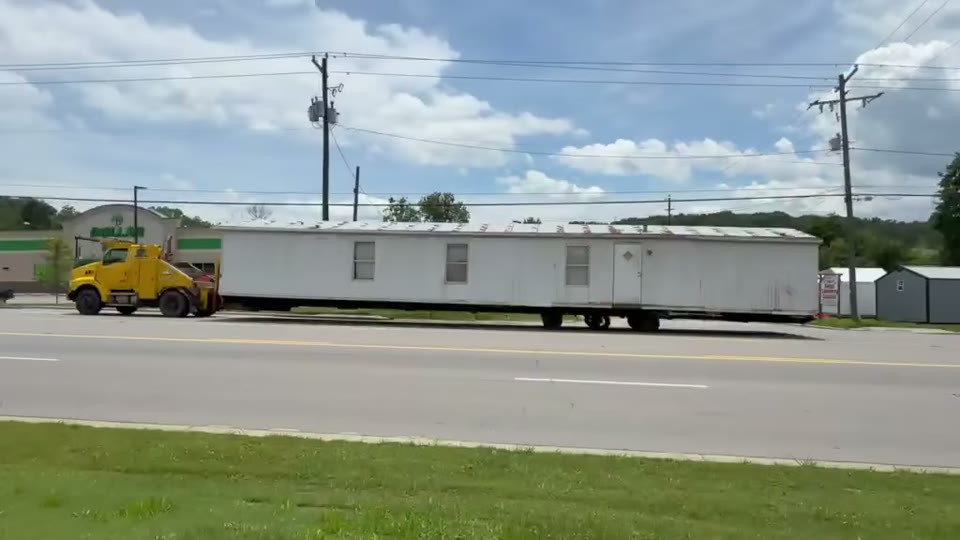
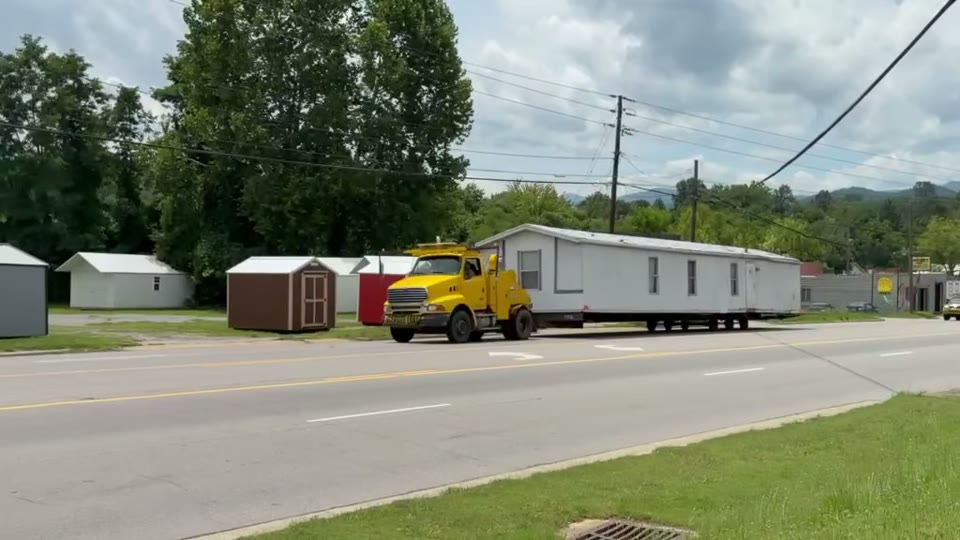
The first decision on any removal job is whether the home can leave intact. A single-wide or double-wide with a workable frame, sound axles or hitch points, and a roof that has not collapsed can be towed out in one piece. That is a relocation move, and the mobile home movers page covers what that looks like from permit to rollout. Removal and relocation share NCDOT oversize-load paperwork but are different labor scopes; know which you need before the first call.
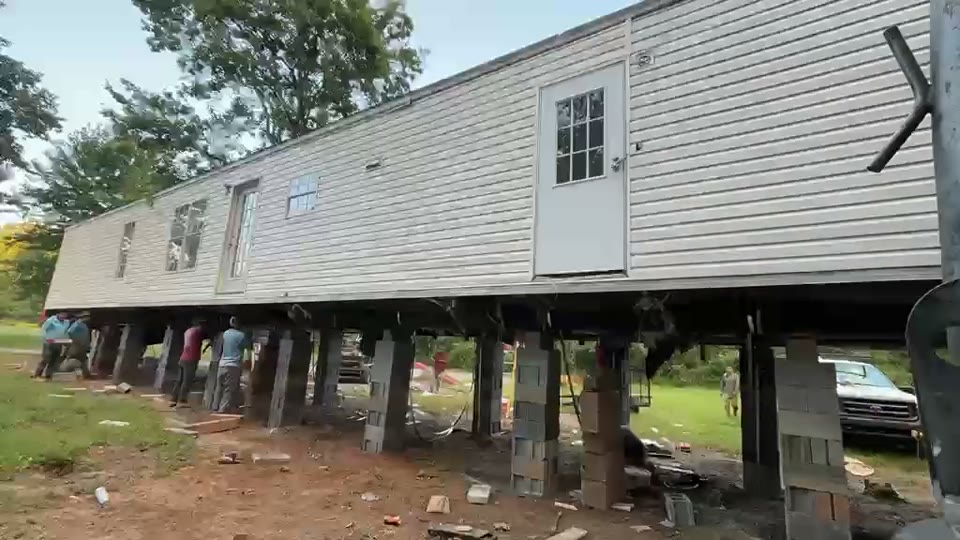
When the home cannot roll — rot at the floor system, fire or storm damage, a foundation that fixed it in place through decades of deferred maintenance — it comes down as a demolition job. That means an asbestos survey first for any unit built before 1980, then systematic teardown, then haul-off to a licensed disposal facility. The demolition and removal page covers the survey-to-disposal sequence in full.
Both routes end at the same result: a cleared lot, graded and ready for what comes next.
What the work actually costs
Price on a Black Mountain removal job follows the unit size and the work method. A home that moves intact costs less than one that comes down on-site in pieces; slope and road access push bids toward the upper end in ways that flatland quotes never capture. The table below reflects typical market ranges for Buncombe County.
| Work scope | Typical range |
|---|---|
| Single-wide haul-off intact, lot cleared | $3,000 – $5,500 |
| Double-wide haul-off intact, lot cleared | $6,000 – $10,000 |
| Single-wide demolition and full disposal | $4,500 – $7,000 |
| Double-wide demolition and full disposal | $9,000 – $15,000 |
Any quote for a Black Mountain job that does not ask about slope, road width, and haul-out access should be treated as incomplete rather than cheap. Roads climbing toward the Swannanoa Valley ridge regularly affect routing options, and that affects labor cost. Utility disconnects and asbestos abatement — when needed — are separate line items that add to the project total and should appear explicitly in any bid.
Permits, title, and utilities before the crew arrives
Manufactured home removal in Buncombe County runs through two permitting channels depending on where the lot sits. Buncombe County Permits and Inspections, at 35 Woodfin St. in Asheville, administers manufactured housing permits at the county level. If the home sits inside Black Mountain's town limits, Black Mountain's own building department handles the permit — same category of work, different office.
For any road move, the transport permit under NCDOT Publication MH-2 must be in hand before the home rolls. Alongside that, state law under NCGS Chapter 105, Article 18 requires a tax-paid moving permit confirming that property taxes on the home are current. A delinquent balance or active lien stops the move before the tow truck is scheduled.
Title is the other document that needs to be resolved first. A home titled as personal property carries a DMV certificate of title that transfers or is surrendered depending on destination. One that has been converted to real property has recorded documentation at the Buncombe County Register of Deeds. Which type applies determines who signs the transfer and how the permit package closes. Water and sewer proof — a utility letter, meter receipt, or county authorization for well and septic — goes into the permit application. The NC Manufactured Housing Board, operating under the Office of State Fire Marshal, sets the contractor licensing requirements that govern setup and installation work on manufactured structures in North Carolina.
Storm history and what it means for unit condition
Buncombe County carries 19 federally declared disaster events on record spanning 1973-2026. The most recent run includes a winter storm in 2026, a tropical storm in 2024, and hurricanes in 2023, 2021, and 2020. Each event reached manufactured homes in and around Black Mountain differently than it affected site-built housing, because the two construction types carry load and shed wind in different ways.
Homes built and anchored to HUD standards for Buncombe County's Wind Zone I designation (24 CFR 3280.305) are engineered for regional wind loads — but that assumes the tie-down system was properly installed and remains intact. A home that lost anchors, shifted pier blocking, or sustained frame racking in a past storm may look salvageable from the road and not be moveable safely. A compromised frame that fails on a public road creates a different and far more serious problem than a demolition line item.
If condition is genuinely uncertain, a walk-through before any permit is filed is the right sequence. For demolition jobs, EPA regulations govern the handling of asbestos-containing materials in older manufactured homes — flooring, ceiling tiles, roof coatings, and insulation. An abatement requirement affects both disposal cost and which contractors can legally perform the work.
Leaving the lot ready for what comes next
Most removal jobs carry a second job underneath: what happens to the lot after the home is gone. Getting the home off is one scope; leaving the lot ready for a new installation is another. They should be discussed as separate decisions even when one crew handles both, because the prep standard for a replacement home is higher than bare cleared ground.
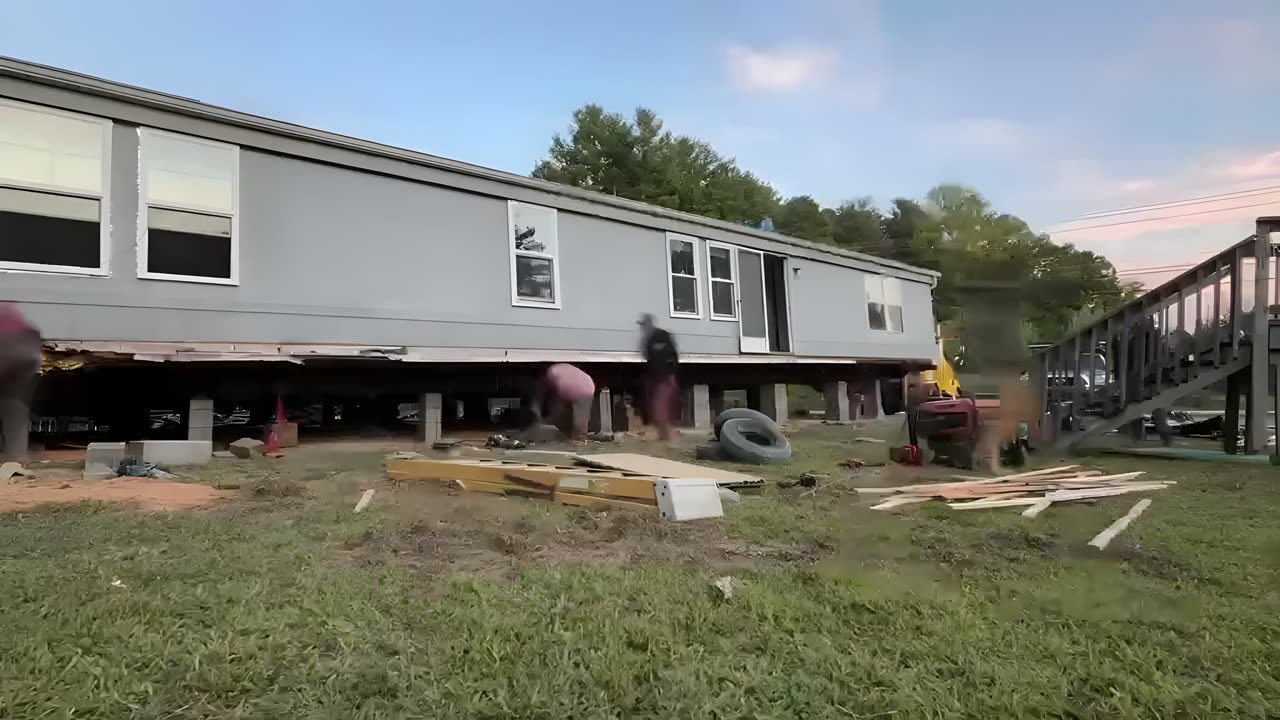
A minimum cleared lot means piers pulled, blocking out, and debris hauled. A finished pad is a different standard: the ground is graded to drain away from center, compaction is addressed, and the footer layout is set for the replacement structure. The foundation grading and footers page covers what a code-compliant footer system looks like under Buncombe County's enforcement of the state building code and how drainage decisions made now affect the installation that follows.
On demolition jobs, metal recovery offsets some disposal cost. Steel frame, aluminum panels, and copper in the electrical rough-in carry scrap value that a thorough crew accounts for; roofing materials and foam insulation go to a licensed facility at a cost. A bid that does not address material sorting is not pricing the full scope of the work.