What the move costs along Soco Road
Maggie Valley properties spread up the ridges and hollows that branch off US-19 (Soco Road) between Waynesville and the national park boundary. The valley's elevation and tight access roads drive cost more than mileage does. A move that looks short on a map can carry steep-lot fees, specialized equipment charges, and utility-disconnect costs that flatland quotes never include.
| Scope | Typical Range |
|---|---|
| Single-wide, level lot, short haul | $3,000–$5,000 |
| Single-wide, steep or narrow lot access | $5,000–$8,000 |
| Double-wide, accessible lot, moderate distance | $7,000–$10,000 |
| Double-wide, mountain access or long haul | $10,000–$15,000 |
These are transport-only ranges — the home delivered to your lot, not set. Blocking, leveling, tie-downs, and utility reconnects are separate line items at the destination. For a full picture of what setup adds to the total, see the Maggie Valley leveling and setup guide and the statewide NC mobile home cost breakdown.
The gap between low and high within each row reflects real conditions here. A single-wide moving from a level park pad near Waynesville to another flat lot a few miles away is a different job than one being relocated from a hillside site up a gravel switchback. Any reputable crew will ask detailed questions about both lots — or make a site visit — before giving a firm number.
Route clearance on US-19 and the side roads
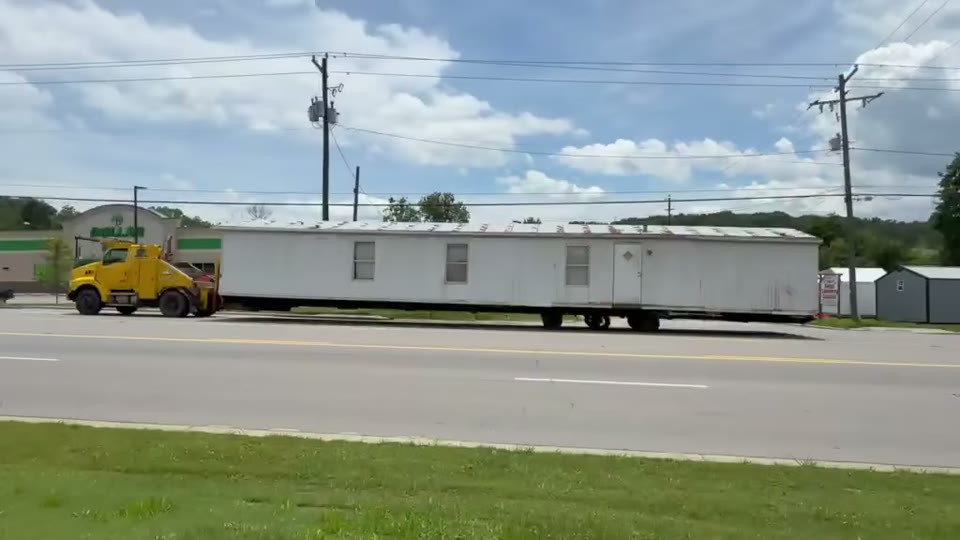
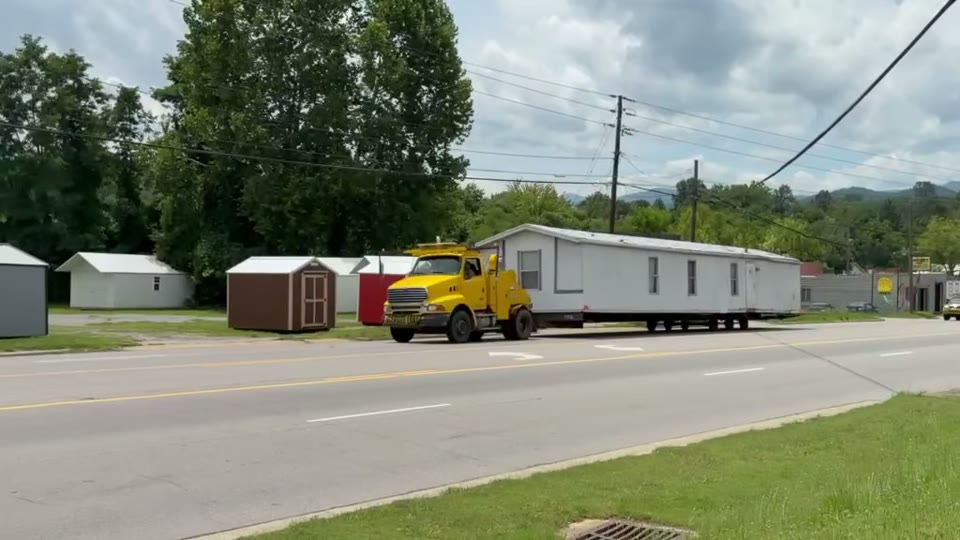
US-19 handles oversized loads through the main valley corridor, but the branch roads climbing off Soco Road are a different matter. Many Maggie Valley homesites sit on switchbacks with overhead utility lines, sharp corners, and grades that require a pilot car or alternate routing. Movers working this area typically drive the route in a standard truck before committing to a price, because surprises on a mountain lot are expensive for everyone.
Any manufactured home moving on a North Carolina public road requires a state transport permit. NCDOT publishes the current requirements in Publication MH-2, Mobile and Modular Home Permits, which covers width and height restrictions, restricted travel hours, and when a pilot vehicle is mandatory. Pulling this permit is the mover's responsibility; confirm it is in hand before any work begins.
Width is the most common routing constraint for a double-wide. A home at full width needs clearance not just on the highway but at every turn, including the entrance to the destination lot. Trees, powerlines, and fences that appear distant on satellite imagery become immediate obstacles on move day. Some Maggie Valley lots require a temporary utility line drop from the local utility company before the home can reach the site, and scheduling that coordination adds days to the timeline.
For how mountain-area hauls differ from Piedmont moves across the state, the western NC mobile home moving overview covers the factors that separate mountain jobs from flatland ones.
Permits: what to pull and who to call first
Two permit requirements apply before any mobile home lawfully rolls in North Carolina. The NCDOT transport permit (MH-2) covers the road move. The second is a tax-paid moving permit: under NCGS Chapter 105, Article 18, the county tax office must verify that property taxes on the home are current before the title can follow it to a new location. A mover who skips this step can leave the buyer with a title problem that surfaces only when they try to sell or refinance years later.
The Article 18 tax clearance process requires coordination between seller, buyer, and the county tax office. Documentation from both parties is typically required, and clearance can take several business days. Build this into the move timeline from the start, not the day the truck is scheduled.
Haywood County also has its own placement permit requirements for manufactured homes, separate from the state transport permit. The county's specific process was not verified for this page and can change. Call the Haywood County permit office before move day — they can confirm what is required for your lot, whether a separate electrical inspection applies, and how long current approvals are taking. Spring and fall moving seasons fill permit office calendars quickly; allow two to three weeks of lead time when possible.
Installers and movers operating in North Carolina fall under oversight from the NC Manufactured Housing Board (NC Office of State Fire Marshal). Ask whoever is handling your setup to confirm they hold a current board license — it is a state requirement, not an optional credential.
Anchoring and leveling at the destination
Getting the home to the lot is the first half. Blocking, anchoring, and leveling it correctly determines how long it stays in that condition. Haywood County falls in HUD Wind Zone I under 24 CFR 3280.305, the lightest of three national wind designations. Zone I sets the minimum specification for ground anchors and over-the-top straps — your installer must meet it, and a reputable crew will document that they did.
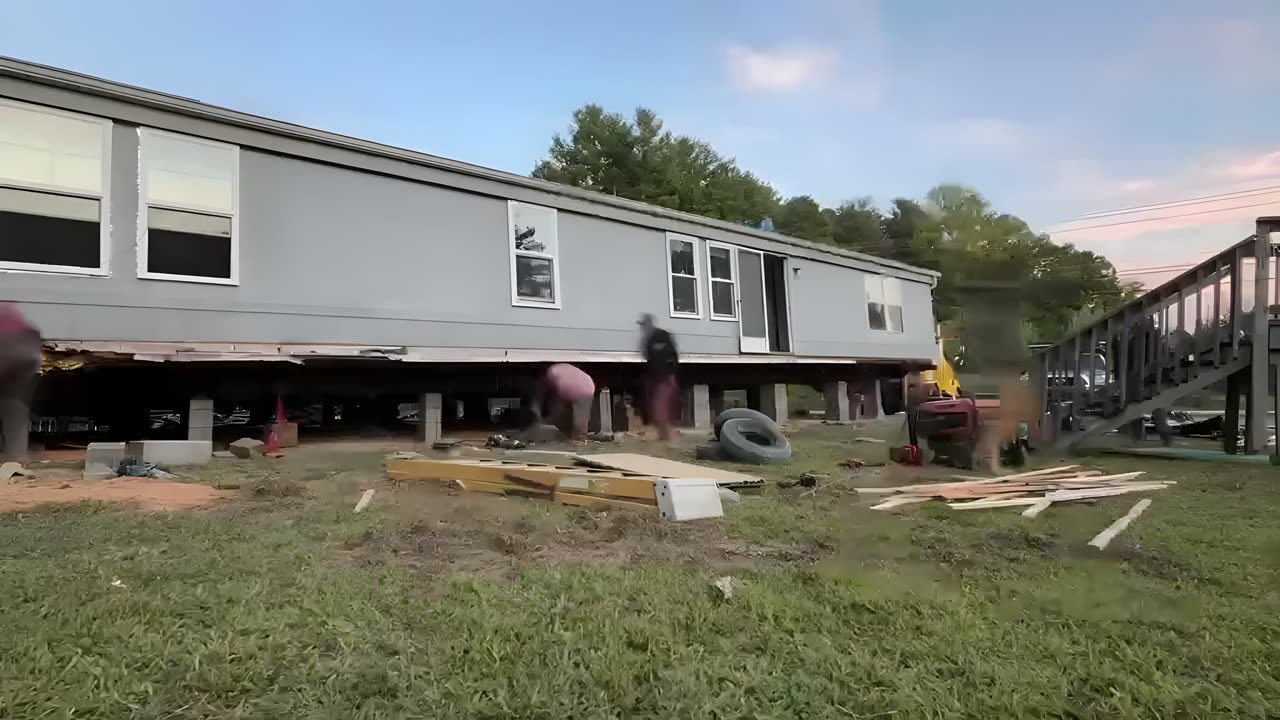
Mountain lots add complications that Zone I minimums do not fully address. Cut-and-fill sites settle unevenly over time; sloped sites need carefully differential blocking; and drainage under and around the home matters year-round in a county that receives substantial annual precipitation. A blocking and leveling inspection done right after installation — and again after the first winter — catches settlement before it becomes a structural problem.
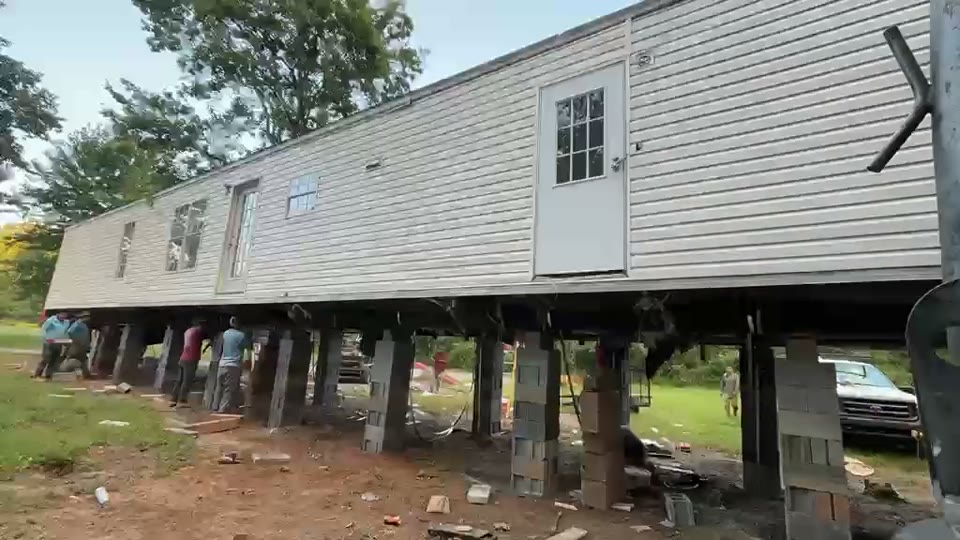
The blocking system itself, the concrete pads, steel or wood blocks, and shimming between them, is what keeps a home level as the ground shifts through freeze-thaw cycles and wet seasons. A mountain lot that drains poorly will shift more than a well-graded one. Ask the installer specifically about blocking material and, for double-wides, center-line support: a home that sags at the marriage wall two years after install almost always had an installation-day blocking problem. See the leveling page for when and how re-leveling is done after a mountain install.
Storm history and what it means for site selection
Haywood County carries 19 federal disaster declarations across 1973-2026, a record shaped heavily by storm and flood events. Recent declared incidents include a Winter Storm (2026), Tropical Storm (2024), and hurricanes in 2023, 2021, and 2020. Every one of those events pushed water against foundations, underframes, and tie-down systems that were installed under fair-weather site assumptions.
Site selection matters before placement, not after. For a manufactured home, that means checking whether the proposed lot sits in a mapped flood zone, how stormwater drains off any hill above the site, and whether the soil type suits the anchor system being specified. The NOAA National Weather Service maintains current flood and winter storm watches for Haywood County — worth checking before any move window is scheduled, especially in late summer and fall when tropical systems reach the southern Appalachians.
The practical implication is straightforward: a lot that flooded once is likely to flood again, and a manufactured home placed there without adequate elevation and drainage becomes a recurring cost rather than a one-time move. Haywood County's storm declaration record is a reason to ask flood-zone questions before purchase, not after the home is set.