What Buncombe County winters do to manufactured home piers
Mountain winters in Buncombe County reach hard-freeze territory on a regular basis — ridges above Asheville NC routinely see overnight lows well below 20°F for stretches of days, not isolated overnight spikes. That matters for manufactured homes because the piers supporting them sit in soil that responds to freezing temperatures in a predictable and damaging way.
When ground moisture freezes below a pier footing, the expanding ice pushes the footing upward. The pier rises. The frame tilts above it. When the ground thaws in March or April, the footing rarely settles back to exactly where it started — especially in the expansive clay common across much of Buncombe County, which holds water near the surface longer than sandy coastal soils and heaves more forcefully per degree of cold. The result is a floor that felt level in October, rides an unfamiliar ridge by February, and sits in a new wrong position by May.
Why clay soil around Asheville NC amplifies the problem
The soil profile across much of Buncombe County is heavy clay — the same material that makes drainage a persistent issue for homeowners in Weaverville, Swannanoa, and the Leicester area. Clay holds water near the surface, so when air temperatures drop, more moisture is available to freeze and expand under pier footings than in looser, draining soils. Frost depth in the Asheville NC area can reach 12–18 inches during sustained cold, deep enough to affect standard concrete block piers when their footings sit in saturated clay. The National Weather Service tracks freeze data for this region; higher-elevation sites in Buncombe County above 2,500 feet log more hard-freeze hours per winter than the valley floor, which means rural manufactured home sites on the ridges see this problem more often than in-town lots.
Frost heave damage compounds over seasons. A pier that heaved and settled slightly off-true one winter is easier to push further the next. Without correction, cumulative drift can reach the point where doors no longer close cleanly, floors develop a slope you can see, or skirting gaps open along one side of the home.
What homeowners can check before calling a crew
A homeowner can identify most frost heave symptoms without crawling under the home or touching the piers. Start inside: place a marble on a hardwood or tile floor and note whether it rolls consistently toward one wall. Stand at one end of your longest room and sight down the floor surface — a visible bow or tilt confirms what the marble told you. Check whether interior doors that closed easily last fall now bind or fail to latch.
Outside, look at the skirting. A uniform gap that has opened along one side, especially one you did not see last fall, suggests that section of the home has risen relative to the rest. Check the corners: if a corner gap has opened, the frame near that pier has moved. Cracked or visibly shifted concrete block piers are the clearest sign that the problem has progressed beyond shimming.
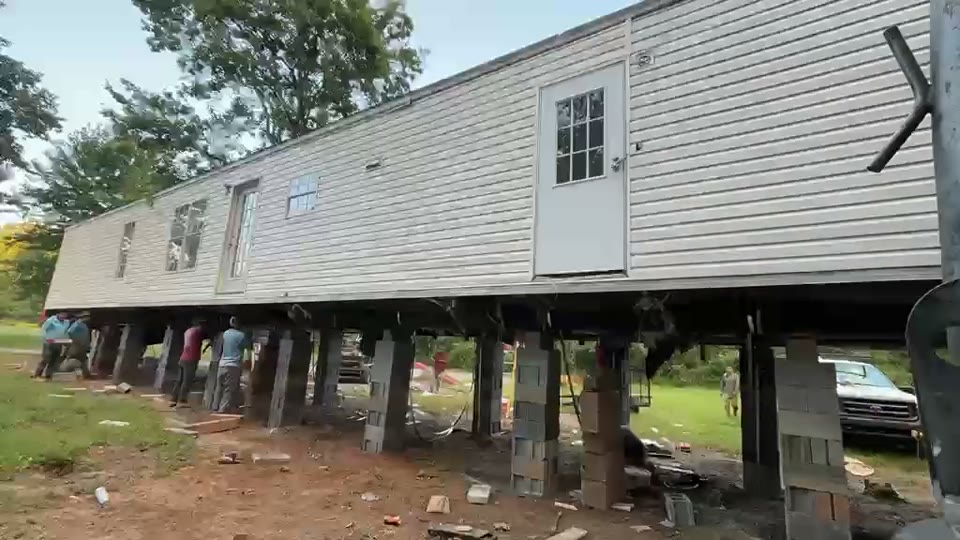
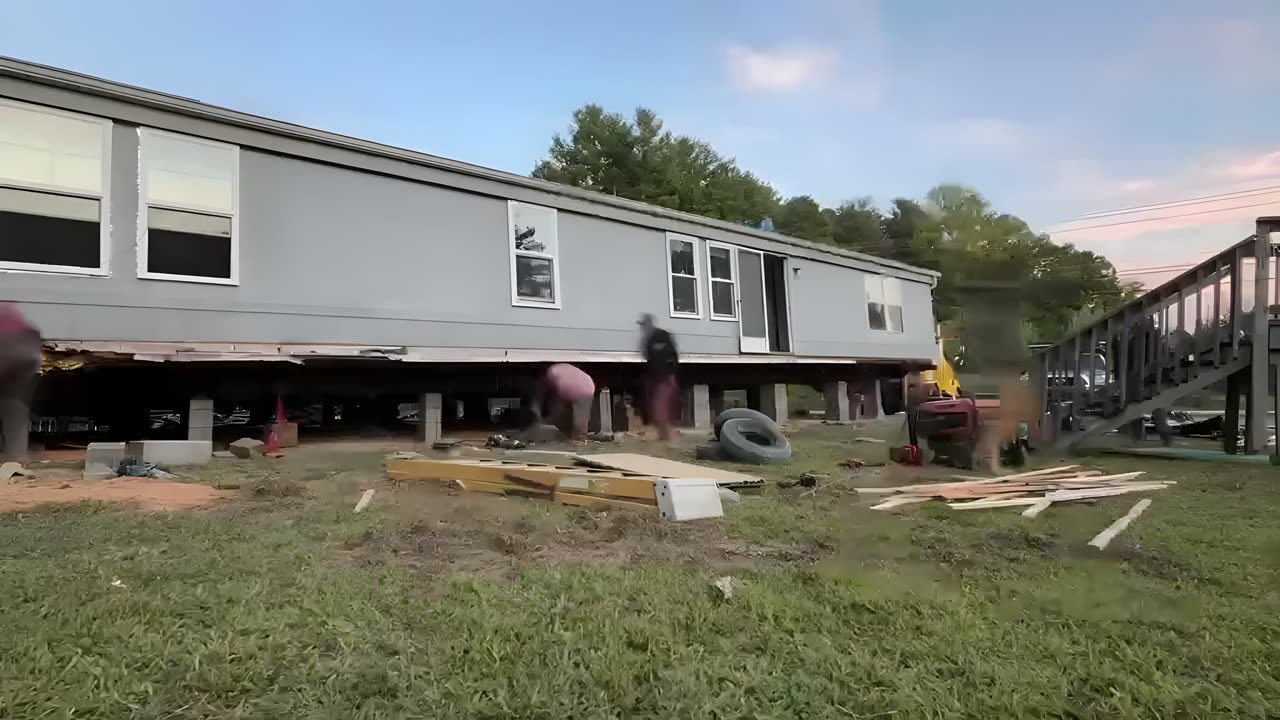
What not to attempt yourself: do not re-shim piers under a home that is visibly tilted or has a pier working out of plumb. A pier under active load and partially displaced can shift unexpectedly. The mechanical work — removing damaged shims, replacing cracked block, resetting footings, and bringing the frame back to level — requires equipment and experience to do safely.
Repair scope and what it typically costs
Frost heave repair ranges from re-shimming a few piers on a home that heaved mildly, to footing excavation and reset on a home that has cycled through multiple winters of movement in clay. The table below covers common repair scopes in western NC with typical regional ranges. For a line-item breakdown by home size and scope, see the NC mobile home leveling cost guide.
| Repair scope | Typical range | Notes |
|---|---|---|
| Re-shimming 2–4 piers, footings intact | $300–$700 | Minor seasonal heave, no pier damage |
| Full perimeter re-shim, minor footing reset | $600–$1,200 | Multiple seasons of drift |
| Cracked block pier replacement plus re-level | $900–$2,200 | Depends on pier count |
| Footing excavation and reset in clay pocket | $1,500–$3,500 | Recurring heave, disturbed footing |
| Full re-level after multi-season drift | $800–$2,500 | Varies by home length and access |
These are market-rate ranges, not quotes. Actual cost depends on access conditions, home length, pier count, and whether anchoring work accompanies the re-level.
Piers, anchoring, and what North Carolina requires
Any manufactured home set up or substantially re-leveled in North Carolina must comply with state and federal standards for support and anchoring. Buncombe County falls in HUD Wind Zone I under 24 CFR 3280.305, which sets minimum specifications for tie-down systems, anchor spacing, and pier load capacity. When frost heave work includes pier replacement or footing reset — not just shimming — the anchoring system should be inspected and confirmed against Zone I requirements at the same time.
The NC Manufactured Housing Board, administered through the NC Office of State Fire Marshal, licenses manufactured home installers and sets the setup standards that govern this work in North Carolina. Homeowners are entitled to ask any contractor for their installer license credentials before work begins. The HUD Office of Manufactured Housing Programs publishes the federal construction and safety standards that establish the baseline for all manufactured housing — useful if you want to confirm what your home was originally built to handle. For a full overview of what a proper re-level includes, see the mobile home re-leveling guide.
Finding the right crew in Asheville NC
Frost heave calls in Buncombe County tend to cluster in two windows: late winter, when homeowners notice a tilt that has been building since December; and early spring, when the ground thaws and the home settles into a new, wrong position. Both are reasonable times to schedule an inspection, though a home that is actively leaning or has a pier out of plumb deserves faster attention.
When evaluating a crew for frost heave repair in Asheville NC, ask three questions: Do they hold a manufactured home installer license under the NC Manufactured Housing Board? Have they worked on mountain clay sites with heave history, as opposed to flatland installs only? Do they inspect existing footings before shimming, rather than shimming over a footing already compromised? The answer to the third question separates a durable repair from a temporary fix — clay that has been heaved and disturbed will heave again if the footing pocket is left unchanged.
Buncombe County has had 19 federally declared disasters over 1973-2026, including a Winter Storm declaration in 2026 and multiple hurricane seasons that repeatedly saturated mountain soils. Ground that has absorbed heavy storm moisture and then frozen hard is more prone to heave than drier ground. That history matters when scoping a lasting repair. For local leveling options and what the process looks like in this area, see mobile home leveling in Asheville NC.