Haul it out or tear it down: the Fletcher fork
Fletcher's valley floor holds a generation of manufactured homes set between the late 1970s and early 1990s, when the corridor along US-25 between Hendersonville and the Buncombe County line offered flat parcels accessible enough for a new single-wide. Many of those homes have outlived their useful life on the original lot, and the decision their owners face is a clear one: does the home leave on its own wheels, or does it come down in pieces?
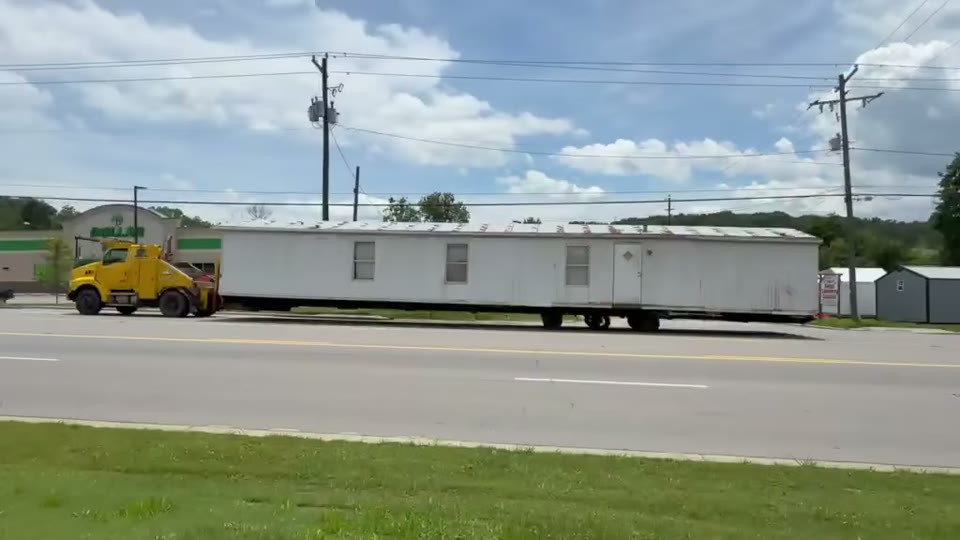
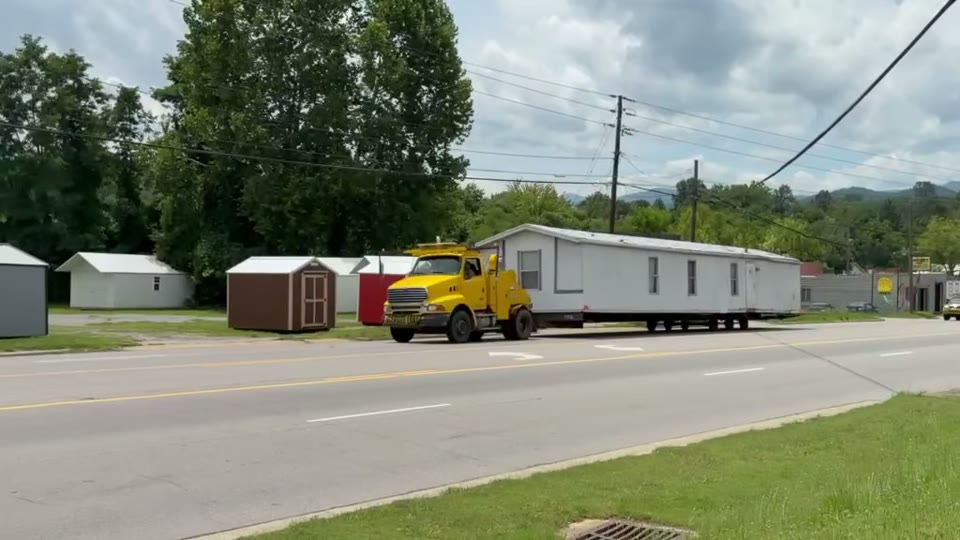
A home that can still roll is a different job than one that cannot. If the chassis is sound, the running gear turns, and the frame is structurally intact, moving it to a new site preserves the structure and avoids the labor of cutting, sorting, and hauling every component. That path runs through the permitting and logistics covered on the Western NC moving page. When the home is too far gone — rotted floor system, compromised frame, or no receiving site in prospect — the scope shifts to demolition and removal: pulling skirting and utility connections, sectioning the structure, and hauling material to licensed facilities.
Either way, the result is a cleared lot. A Fletcher parcel with the old home gone is a pad site, typically flat in this part of Henderson County. If a replacement home is part of the plan, see the grading and footers page for what the ground prep looks like from that point.
What removal costs in Henderson County
Price depends on three variables: size, condition, and which path the job takes. The table below reflects typical Henderson County market ranges for mobile home removal in Fletcher and the surrounding area.
| Scope | Typical Range |
|---|---|
| Single-wide, moved off-site intact | $3,000 – $5,500 |
| Double-wide, moved off-site intact | $6,000 – $10,000 |
| Single-wide, demolition and haul | $4,500 – $7,000 |
| Double-wide, demolition and haul | $8,000 – $15,000 |
| Pad grading after removal | Quoted separately |
Two factors that push a job toward the higher end: homes built before 1980 may contain asbestos siding or pipe insulation, and proper testing and abatement under EPA regulations must be completed before any demolition work begins. Site access also moves the number — a home set back from the road on ground that has softened after wet weather takes more equipment time than one sitting on a paved pad at the road edge.
The Henderson County removal checklist
Mobile home removal in North Carolina touches more agencies than most owners expect. These are the items Henderson County requires before work can legally begin or the title can be cleared.
Tax-paid moving permit. Before a licensed contractor can move a manufactured home, the Henderson County tax office must confirm that property taxes on the structure are current. NCGS Chapter 105, Article 18 governs this requirement; it applies to in-county moves as well as moves out of Henderson County.
NCDOT transport permit. Any manufactured home section moved on a public road requires a permit under NCDOT's Publication MH-2. This is the mover's responsibility; a legitimate contractor obtains it without being asked.
Environmental Health septic sign-off. Henderson County Environmental Health must approve the disconnection and proper abandonment of the septic connection serving the home, or accept a completed affidavit. This protects the lot owner and neighboring properties from contamination.
Town of Fletcher zoning confirmation. Fletcher has its own zoning jurisdiction. Parcels inside town limits go through the town for confirmation that the removal is permissible; parcels outside those limits go through Henderson County Planning for the equivalent review.
Utility disconnect receipts. Electric, gas, water, and sewer connections each require sign-off from the respective provider before the home can be moved. Most utilities conduct a disconnect inspection and issue a receipt confirming the service is properly sealed.
Contractors performing setup and teardown work on manufactured homes in North Carolina must meet the licensing requirements administered by the NC Manufactured Housing Board. Ask for the crew's current license before any contract is signed.
The title, utilities, and what a clean pad looks like
Two paperwork items surprise owners going through this process for the first time.
The title. In North Carolina, a manufactured home is personal property until it is retired or converted to real property. If the home is being permanently removed and the lot restored, the title must be surrendered or retired with the NC DMV. Leaving an open title on a structure that no longer exists creates a legal encumbrance on the parcel, which complicates any future sale or financing. If the home is being moved rather than demolished, the title transfers to the buyer as part of the transaction.
Utilities. The disconnect sequence matters: electric first (the utility company removes service at the meter), then gas (the provider shuts off and caps the line), then water and sewer (capped at the connection point or properly abandoned by the respective authority). Disconnecting at the home rather than coordinating with the provider creates safety and liability issues. Each Henderson County provider has its own scheduling process; allow extra days for gas in particular.
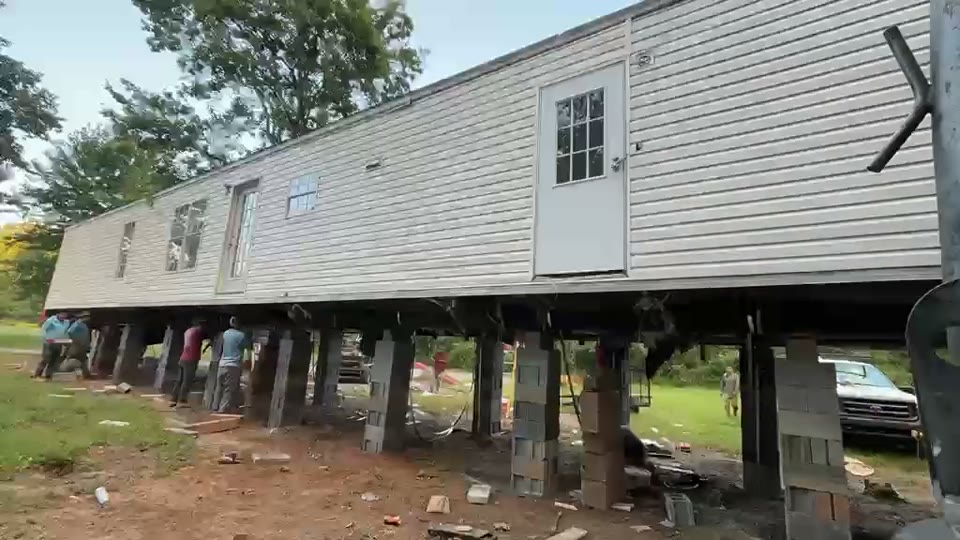
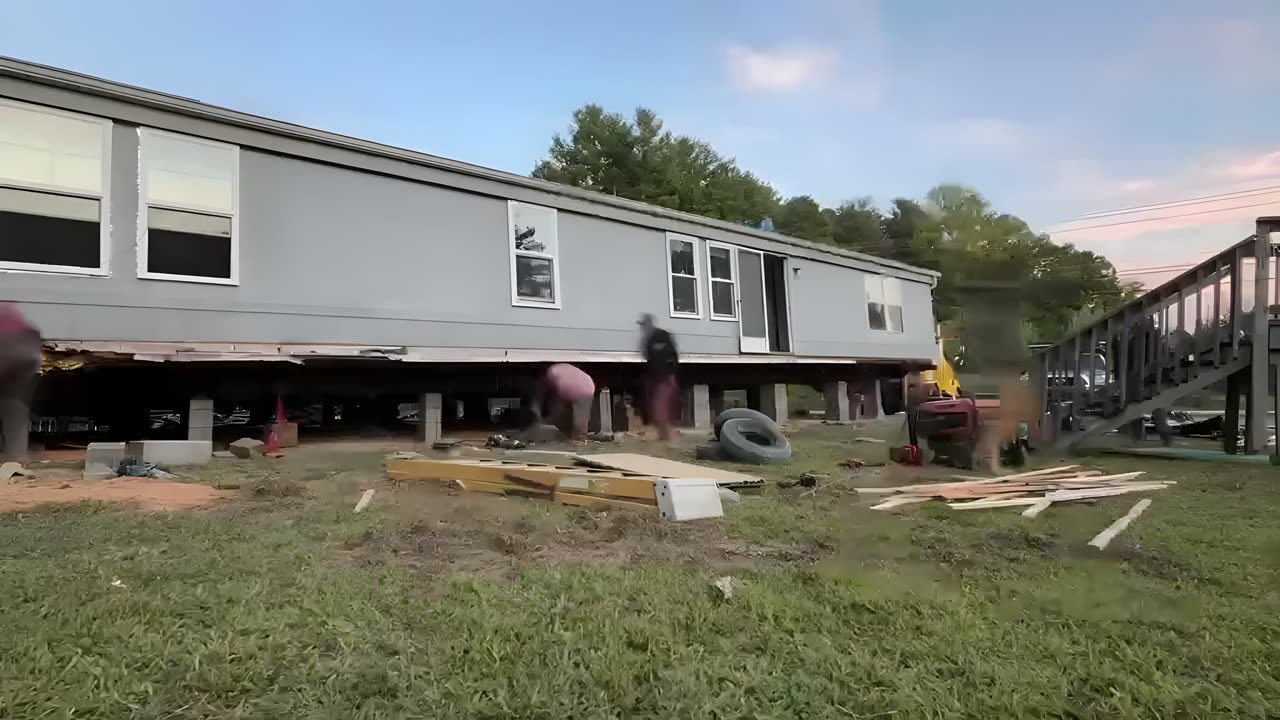
The pad. A completed removal leaves a rough-graded rectangle with anchor bolts and tie-down straps pulled, piers and blocking removed, and the ground filled and shaped to drain. That is the starting point for new-home setup; the grading and footers page covers what comes next if a replacement is going in.
Storm history, wind zone, and why condition matters
Henderson County has accumulated 16 federally declared disaster events across 1978-2026, a record that includes Hurricane (2019), Hurricane (2020), Hurricane (2023), and Tropical Storm (2024). Manufactured homes were among the structures most directly affected by those events. The anchoring systems, tie-downs, and chassis that held these homes through repeated storm seasons carry accumulated stress that is not always visible from the outside.
North Carolina's designated HUD wind zone for manufactured housing is Zone I, as defined under HUD regulations at 24 CFR 3280.305. A home built to Zone I standards was engineered for a specific wind loading, and after several hurricane cycles, the anchor hardware and frame connections deserve inspection even when the exterior looks intact. A chassis that took on water during the 2023 storm season may have corroded connections hidden beneath skirting that has since been patched.
For removal purposes, that history shapes the estimate before the job starts. A home whose structure is compromised by storm damage takes longer to safely section than a clean, intact unit. Knowing a home's condition history before quoting protects both the owner and the crew.