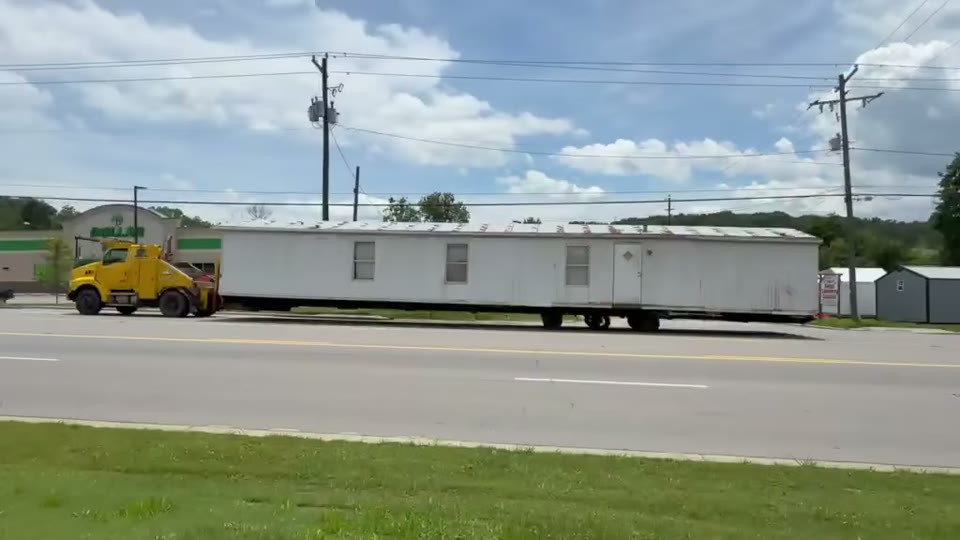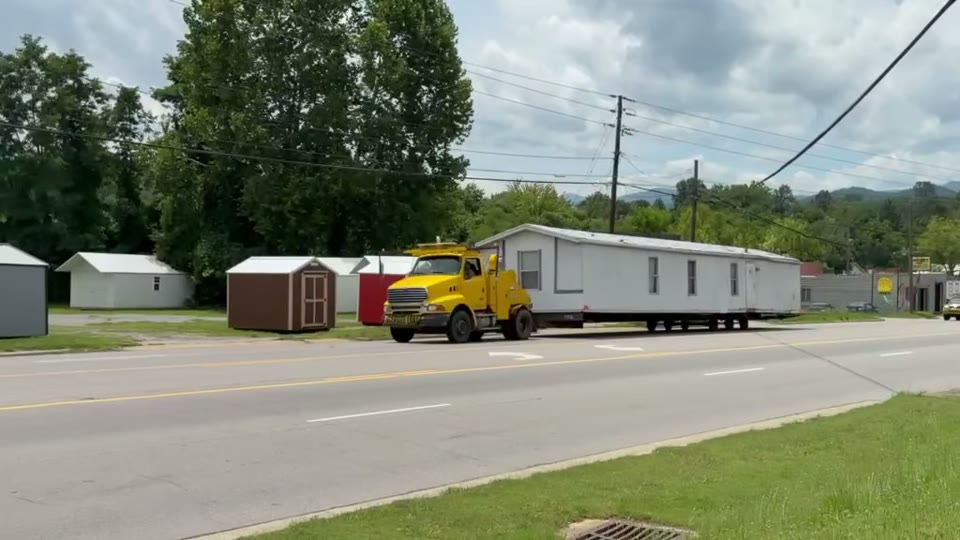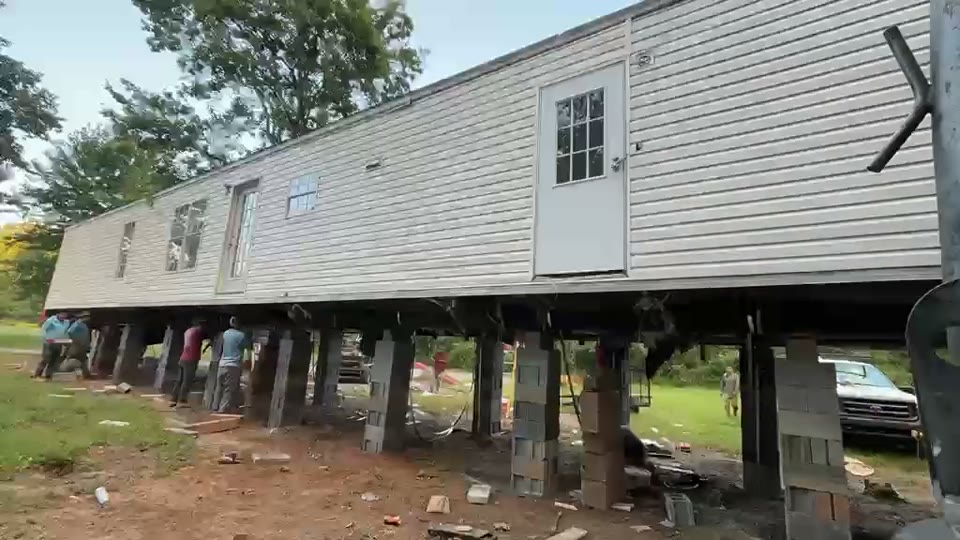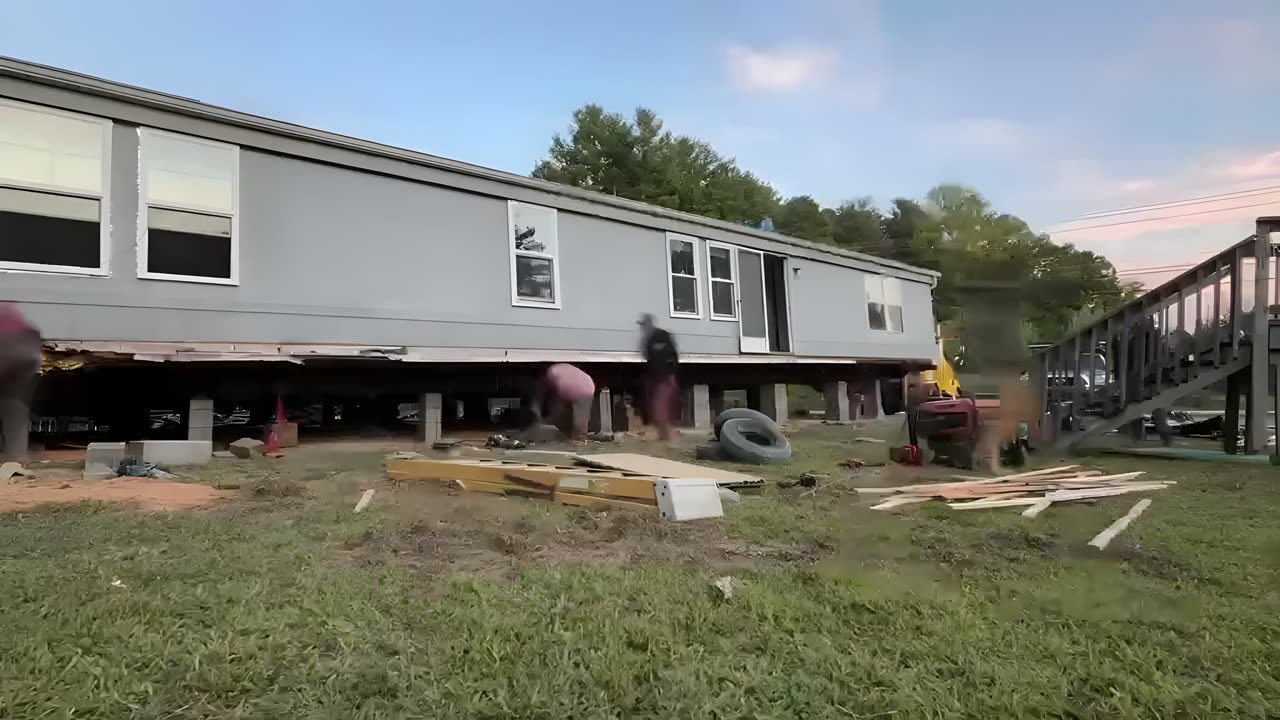
Leveling a pad on a Waynesville lot
Waynesville sits at roughly 2,600 feet in a fold of the Blue Ridge, and parcels in Haywood County come in every shape the mountain makes: benched ridge lots above town, low-lying parcels near Richland Creek, in-town lots on gentler ground along US-276, and properties near the Pigeon River and its tributaries that can hide drainage problems visible only after a heavy rain. Almost none of them arrive flat enough to accept a manufactured home without site work.
The grading sequence for a mobile home pad is specific: clear the footprint, establish rough grade, cut the high side or fill the low side to a working pad height, then fine-grade the finished surface so it slopes away from the home's perimeter on all sides. That last step — positive drainage away from the chassis — is what keeps soil from saturating under the home and softening the bearing ground around the footers. In Haywood County's wet winters and storm seasons, water management is not a cosmetic detail; it is what the foundation is protecting against.
Frost depth shapes the work here more than it does in eastern North Carolina. Concrete footers at this elevation are typically placed at 10 to 16 inches to stay below the local frost line and prevent seasonal heaving. That depth affects both concrete volume and forming labor on every job, and it is one reason a mountain-area estimate does not resemble a piedmont number. The grading and footers guide covers the full site sequence from clearing through final inspection.
Foundation systems and what each one runs
Three systems cover most manufactured home placements in Haywood County, and the right choice turns on lot conditions, home size, and how the owner plans to title and finance the property.
| Foundation system | What it includes | Typical range |
|---|---|---|
| Concrete block piers on individual pads | Poured concrete footing pads, block pier stacks, leveling | $2,000–$4,500 |
| Continuous concrete runners | Poured runners under both main beam lines, end and interior piers | $3,500–$6,500 |
| Full concrete slab (double-wide) | Full perimeter footings and interior slab poured monolithically | $10,000–$15,000 |
| Site grading (added to any system) | Cut, fill, and fine-grade to drain; may include drainage swales | $500–$2,500 |
Block piers on individual pads suit most single-wide placements on stable, well-drained lots. Continuous runners provide better bearing distribution on softer or wetter ground — which describes a number of creek-side and bottom-land lots in Haywood County. A full slab is used for double-wides and is often required when a mortgage treats the home as real property. The NC footer cost guide breaks down each line item — materials, concrete pour, labor, and drainage work — so you can read any bid against real market data.
What the county's storm record demands from site work
Haywood County has carried repeated federal disaster declarations in recent years: a Winter Storm in 2026, a Tropical Storm in 2024, and hurricane-related events in 2020, 2021, and 2023. Across the full federal record, Haywood County has seen 19 declared events spanning 1973-2026, the majority involving storm and water events that push saturated soil and high water at foundations built for drier assumptions. A correctly drained pad is not optional in a county with that history — it is what separates a foundation that holds from one that shifts in the first hard wet season after placement.
The anchoring requirement is set federally. Haywood County is classified as Wind Zone I under 24 CFR 3280.305, the HUD standard that governs minimum anchor and tie-down specifications for manufactured homes placed here. The HUD Office of Manufactured Housing Programs publishes the technical specifications; the strap and anchor system your installer uses needs to meet that standard at minimum. A home that is leveled correctly but anchored inadequately will move in a mountain windstorm before the footers ever become the problem.
Paperwork before the truck leaves
Moving a manufactured home in North Carolina involves at least two permit streams that are separate and easy to conflate. Getting both in order before move day prevents a legal hold on the road or at the site.
The first is the NCDOT oversize transport permit, which authorizes the load to travel on state roads. Current requirements are published in NCDOT Publication MH-2. The second is the tax-paid moving permit required under NCGS Chapter 105, Article 18, which confirms property taxes on the home are current before it can legally be moved.
The site-side permit — the building or zoning approval for the foundation work and setup — comes from Haywood County. The county's specific process and current requirements were not verified for this page; call the permit office before any site work begins rather than assuming what applied to a neighbor's similar job last year applies now. Setup work in North Carolina must be performed by a contractor licensed through the NC Manufactured Housing Board; ask any contractor you consider for their license number and verify it through that board before signing anything.
Connecting site prep to the installation that follows
A foundation built to the right depth, with proper drainage and correct runner or pier spacing for the home's beam layout, makes the installation work that follows straightforward. One that is rushed or underspecified — footers too shallow, a pad that drains toward the home, runners that do not match the beam pattern — adds rework costs to what is already a large project.
For Waynesville placements specifically, the site conditions worth confirming before foundation work begins: finished pad elevation relative to the driveway approach and any neighboring drainage channels; soil bearing capacity at footer locations (fill areas near the building perimeter are a common soft spot on cut-and-fill lots); and utility trench placement, since routing service lines after footers are poured costs significantly more than routing them first. The mobile home installation page for Waynesville covers what comes after the foundation is set — leveling, tie-down, utility connections, and the state inspection that closes the job. The NC footer cost guide stays useful as a reference for comparing bids throughout the process.