What Candler's hillside ground does to mobile homes
Candler sits at the western end of Buncombe County where Smokey Park Highway runs the valley floor and the neighborhoods climb steeply toward the Newfound Range ridgeline. That topography shapes nearly every mobile home settling problem in this part of the county. The valley bottom soaks runoff from the slopes above it; those slopes shed water fast enough to undermine pier pads during any significant rain event; and the clay-heavy subsoil on both kinds of lots shrinks and swells with the seasons. A home set on one of the hollow roads above Hominy Creek is working against gravity from the day it is placed.
Most of the manufactured homes in Candler sit on concrete pads with block piers — a system that is durable when the soil beneath the pads stays stable. What moves that soil here is water. Not always visible water, not always dramatic water: the persistent channeling of runoff that, over several wet seasons, softens the bearing layer under specific piers while leaving adjacent ones untouched. The home tilts, slowly and unevenly, until the house starts telling you about it.
The signs worth acting on before costs climb
The gap between a straightforward re-level and a job that requires pier replacement is usually measured in seasons, not years. Catching settling while it is still in the shimming-and-adjustment stage keeps the job in the lower half of the cost range. Waiting until pads have cracked or piers have punched through brings you to a different scope entirely.
Signs that indicate a re-level is overdue: interior doors in the middle of the home that swing open or closed on their own; a noticeable lean when walking from one end of the main hallway to the other; cabinet doors that gap at the top on one side; and skirting that has lifted off the ground along the high-side wall of a sloped lot. Any two of those together is a prompt to act. After any significant rain event on a slope lot, a quick look at the uphill piers — the ones most likely to undermine when water channels beneath them — costs nothing.
For a full breakdown of what each symptom typically indicates and what the repair path looks like, see the mobile home re-leveling overview.
Scope and typical price for Candler area work
Re-leveling prices in western Buncombe County track closely to statewide ranges, but slope-lot jobs here tend to land toward the upper portion of each band. Steeper driveways mean tighter equipment access; uphill water channels mean drainage work comes up more often than on flat-lot jobs; and pier damage rates are higher on hillside sites. Any bid on a clearly sloped lot that does not mention access or drainage conditions is worth a follow-up question before you accept it.
| Job scope | Typical range |
|---|---|
| Single-wide re-level, piers intact | $400 – $1,200 |
| Double-wide re-level, piers intact | $700 – $2,000 |
| Re-level with pier or pad replacement | $2,500 – $5,000 |
These are typical market ranges for the area, not quoted prices. The actual number depends on pier count, slope severity, site access, and whether drainage work is part of the scope. See the full NC mobile home leveling cost guide for a line-item breakdown of what drives each range up or down.
How re-leveling works on a steep lot
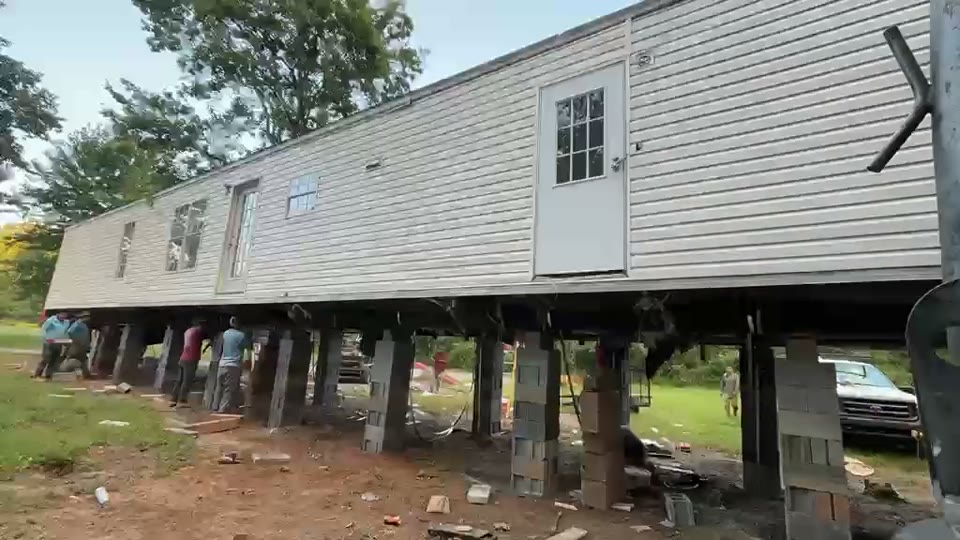
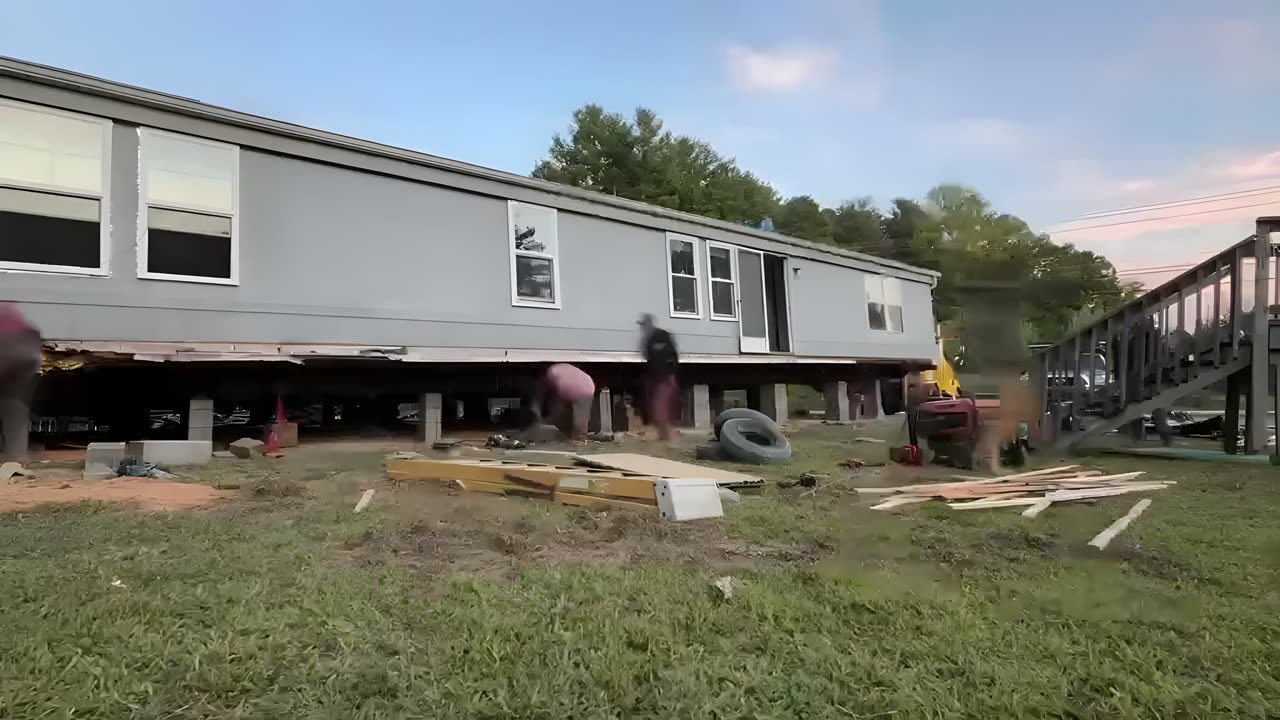
A re-leveling job on a slope lot starts at the perimeter. Each visible pier gets checked for height, integrity, and contact with the pad beneath it. On a hillside site in Candler, the low-side piers often need more shimming than the high-side ones, and access to the crawl space is tighter on the uphill end where the grade tucks under the floor. Crews that have only worked flat manufactured home parks can underestimate what that access takes in time and labor.
Pier replacement on a slope lot sometimes requires hand-digging the failed pad out rather than using mechanical equipment, because driveway grades and clearances in Candler's hollows leave no room for a machine. That is real labor cost; any bid that does not mention it on a visibly sloped site deserves a direct question about how they plan to remove the old pads.
After the piers are set and shimmed, the crew checks the floor plane with a level and continues adjusting until it sits within tolerance. On a double-wide, the marriage line — the seam where the two sections meet — gets specific attention, because that joint is where a twisted home first shows structural stress. A proper close-out includes walking the floor plane end to end, not just checking the center.
Storm history and the anchor standard it demands
Buncombe County has recorded 19 federal disaster declarations spanning 1973-2026, including Hurricanes in 2020, 2021, and 2023, a Tropical Storm in 2024, and a Winter Storm in 2026. That sequence is not incidental to re-leveling work. Every wind and water event in that record loaded mobile homes with lateral and uplift forces that ground anchors are specifically designed to resist — and a home whose anchors were compromised by ground movement is carrying that vulnerability into the next storm season.
Under the HUD installation standard, Buncombe County is classified as Wind Zone I (24 CFR 3280.305), which sets the minimum anchor and tie-down specification for any home set or reset in this county. A re-leveling job that lifts the home and disturbs the ground anchors must restore them to at least that specification before work is complete. The National Weather Service's mobile home storm safety guidance is direct: proper anchoring is not optional equipment during severe weather. Installer licensing and setup certification in North Carolina are governed by the NC Manufactured Housing Board, which sets the standards that apply to every installer working in this state.
What to ask before work starts in Buncombe County
Three questions tell you most of what you need to know before a re-leveling crew starts on a Candler slope lot. First: have they done hillside work specifically, not just flat manufactured home parks? The access and water-drainage conditions here are different, and crews with genuine slope-lot experience show that in how they scope the job. Second: will they inspect and restore the anchor system after the lift? Under Wind Zone I requirements, that is not optional on a reset job. Third: what is their plan for water at the perimeter? Settling that water caused will return if nothing changes about how drainage flows around the home.
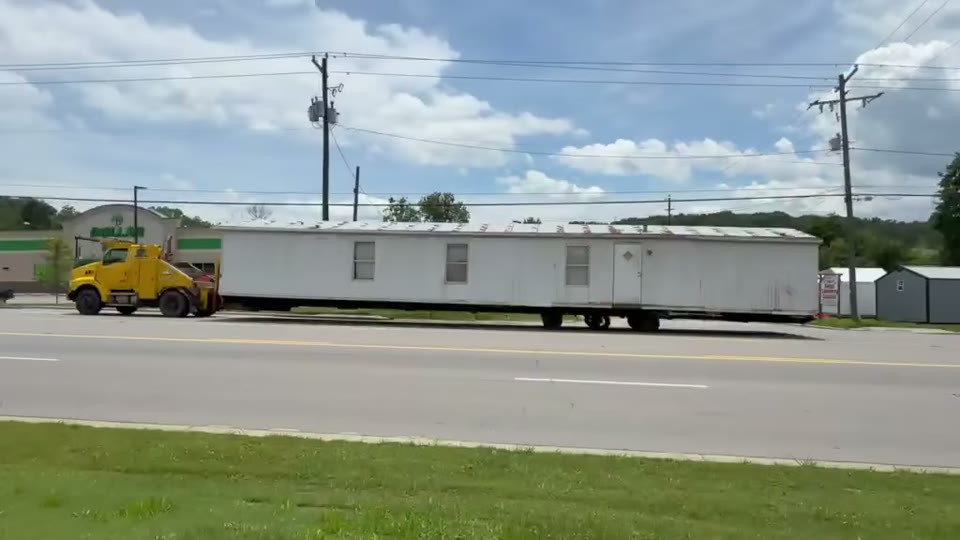
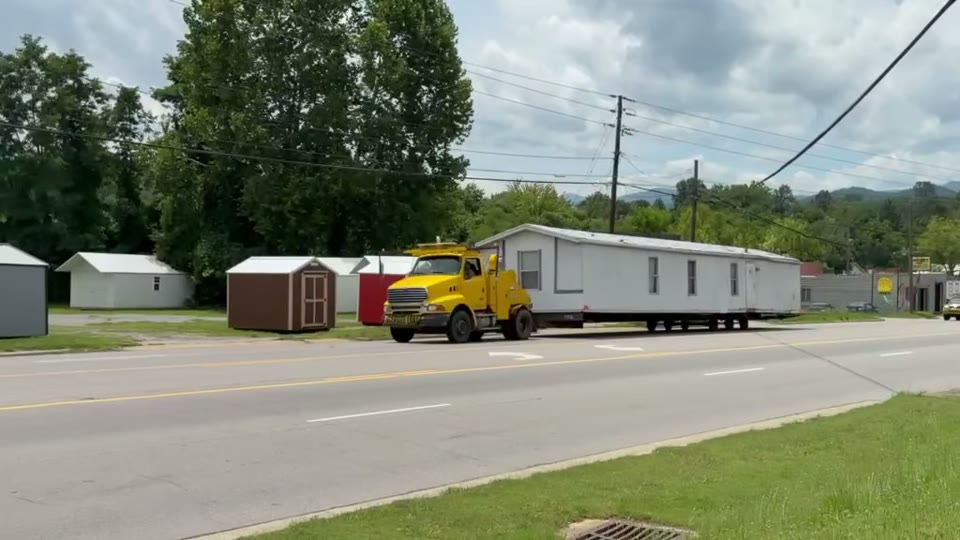
The HUD Office of Manufactured Housing Programs maintains the federal construction and installation standards that govern what a properly completed setup must meet. If this is a full relocation rather than a re-level of an existing home, oversize-load road permitting in North Carolina runs through NCDOT Publication MH-2. For everything involved in placing a home from scratch, the mobile home set-up and installation guide covers the full scope of what a proper Buncombe County installation requires.