What the ground here does to a home's supports
Soco Road — US-19 through the heart of Maggie Valley — runs at elevations that climb past 2,600 feet between Waynesville and Soco Gap. The lots flanking it tilt, narrow, and shift under seasonal freeze and thaw in ways that flatland manufactured-home owners rarely encounter. A home set plumb at installation can move measurably within a single hard western North Carolina winter, and the movement builds if it goes unaddressed.
The signs worth acting on: a door that latched fine in September and sticks by December; floors with a noticeable heel toward the lower side of the lot; a gap opening between the skirting and the ground where it once sat flush; and, for double-wides, a crack tracing the marriage line along the roofline or interior walls where the two halves meet. Any of those signals means the home has moved off level, and every season it stays that way adds cumulative strain to the frame, the roof-to-wall connections, and the plumbing running through the belly board.
Haywood County's manufactured housing stock covers a wide range: older single-wides on surface block pads that were never anchored to current standards, double-wides on hand-laid masonry piers, and newer HUD-code homes on engineered footings. Each type settles differently, and the right repair scope starts with knowing which one you own and what its current support condition actually is.
What re-leveling typically costs in and around Maggie Valley
Typical market ranges for Haywood County jobs are on the NC mobile home leveling cost page. For Maggie Valley specifically, steep-lot access and the condition of the existing pier stack are the main price movers:
| Scope | Typical Range |
|---|---|
| Shim and minor adjustment — single-wide | $400 – $700 |
| Full re-level — single-wide | $600 – $1,200 |
| Full re-level — double-wide | $700 – $2,000 |
| Failed piers or pads plus re-level | $2,500 – $5,000 |
A job that starts as a shim-and-reset can become a pier replacement once the blocks are exposed. Get a scope that accounts for what is actually under the home — not just how it looks from outside — before committing to a number.
How a mountain re-leveling job works
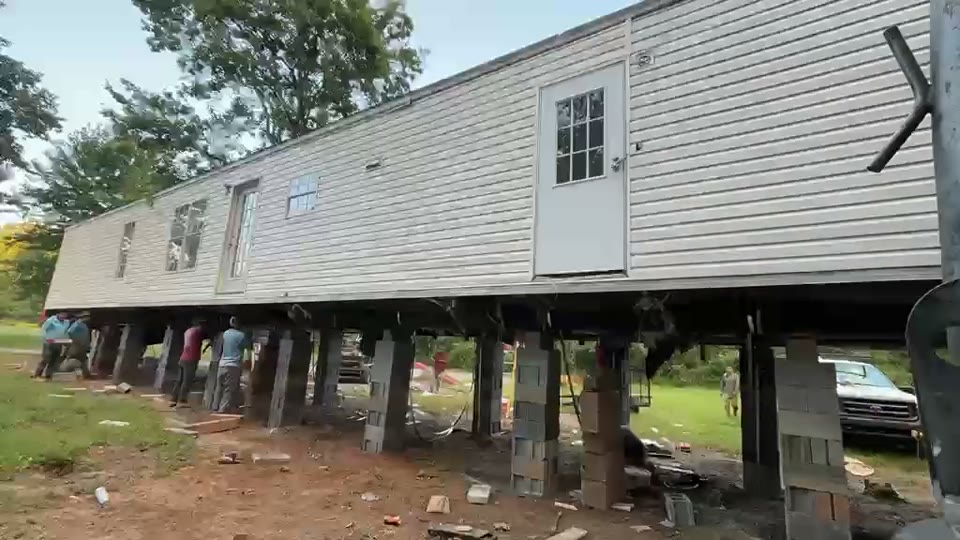
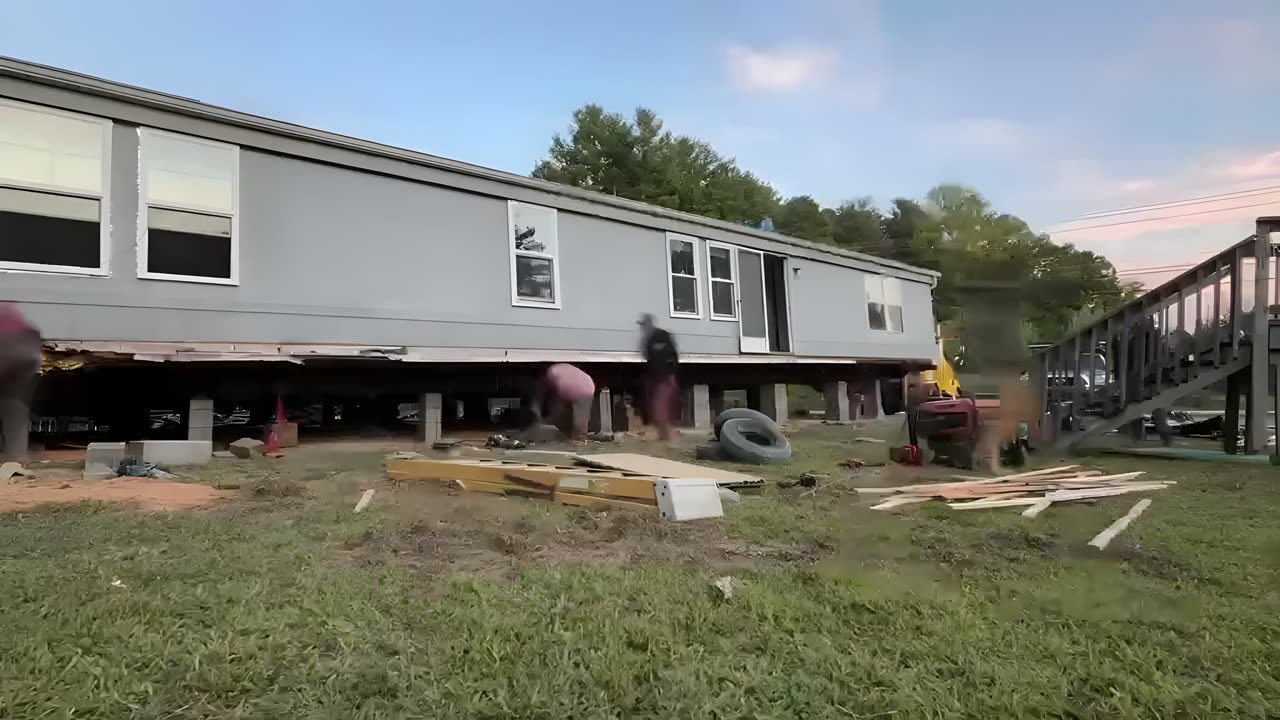
Re-leveling means lifting each low section of the home back to the manufacturer's published spec using a hydraulic jack, then rebuilding or replacing the pier stack beneath it before setting the home down. On a Maggie Valley lot, the downhill side of the home often sits on piers substantially taller than the uphill side, and that height difference changes how jacking points load the frame. Experienced crews account for it before the first lift.
After the frame is reset, tie-downs need to be inspected. Haywood County falls under HUD Wind Zone I as defined in 24 CFR 3280.305, which governs the anchor count, strap ratings, and spacing required for the home's size and configuration. A home that is level but improperly anchored is still at risk in a hard mountain storm. The NC Manufactured Housing Board licenses contractors who perform installation and re-leveling work in North Carolina; confirm that any crew you hire operates under those rules before work begins.
When the job is finished, the contractor should be able to show the as-built pier heights, the anchor types and placements, and any shim materials used. That record matters if the home is ever sold or if a permit is pulled later. The full walkthrough of what a re-leveling job involves is on the mobile home re-leveling guide.
What Haywood County's storm record means for your home's supports
Haywood County has recorded 19 federally declared disaster incidents spanning 1973-2026, including a Winter Storm event in 2026 and hurricane and tropical storm events in 2020, 2021, 2023, and 2024. Each of those events cycled the soil beneath manufactured home foundations through saturation, compression, and frost — every cycle moves pier pads slightly, and on a sloped lot those small movements compound year over year.
Homes on cut-and-fill sites above Soco Road face a particular dynamic: the fill on the high side of the lot compresses at a different rate than the native soil at the low side, pulling the home's two ends in opposite directions over time. The NOAA National Weather Service mountain forecast zone for western North Carolina regularly issues hard-freeze warnings into late April. A home set level in October can be measurably off the following spring when the ground firms back up after thaw season, and any home that has not been inspected since the 2023 hurricane season is overdue for a leveling check.
What to sort out before the crew arrives
Hiring for a steep-lot job involves one layer of due diligence that flat-lot work does not require: access. Getting the right equipment onto a graded Haywood County lot takes planning, and that work should appear in any credible estimate. Three questions worth asking any contractor before you book a date:
Whether they have worked comparable grades. Steep access in Maggie Valley is different from typical flatland work in the region, and a realistic estimate reflects that difference rather than ignoring it.
How they inspect the piers before lifting. Jacking a home on compromised or undersized blocks transfers load to the wrong point and can crack the frame. Any contractor who skips the pier inspection before quoting deserves a follow-up question.
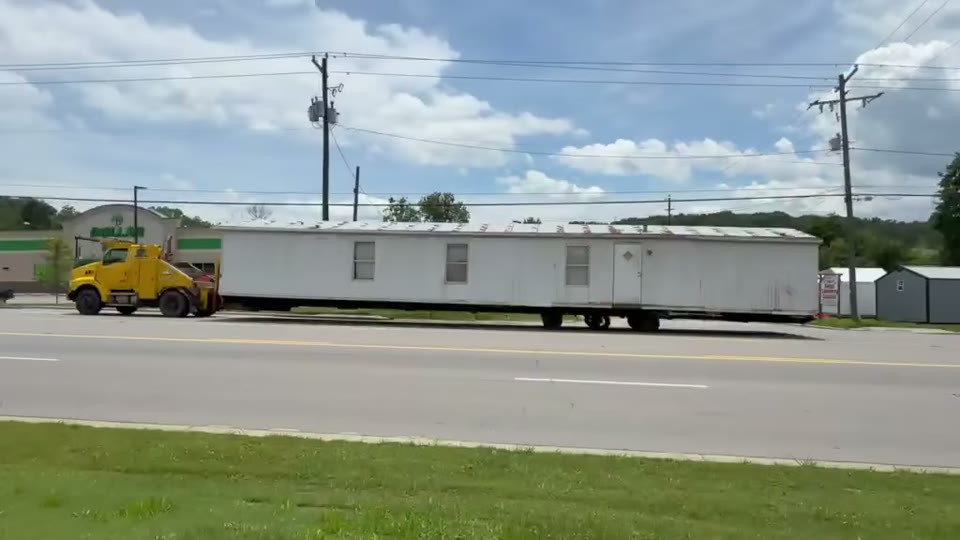
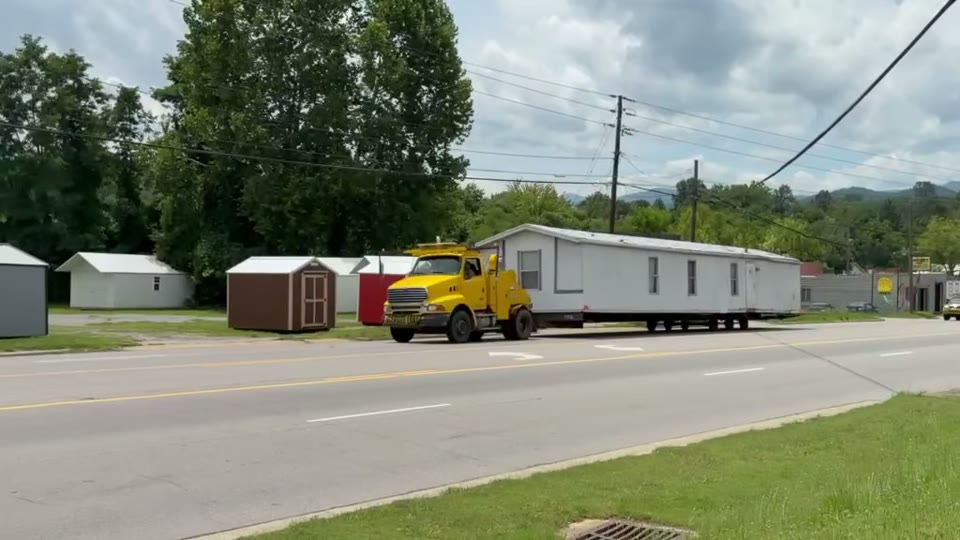
Whether the work requires a permit. Routine re-leveling in place is typically maintenance, but if the home is being moved or set for the first time, Haywood County has permitting requirements. Call the county permit office directly before move day — do not assume what triggers a permit. If the home will travel on a public road, the NCDOT Publication MH-2 governs oversize transport permits, and a tax-paid moving permit under NCGS Chapter 105, Article 18 is required before the home leaves its current site.
When the job involves a full move rather than in-place leveling, the Maggie Valley mobile home movers page covers what transport coordination involves.