The Swannanoa Valley and its housing stock
The Swannanoa Valley runs roughly twelve miles between Asheville's eastern edge and Black Mountain, carrying US-70 and I-40 through a corridor that has housed manufactured homes for generations. Parks near the Swannanoa River and the valley floor make up a significant share of the area's older stock — some of those homes have sat on the same lots since the 1970s. When a family needs to relocate one, whether a park is closing, a lot is changing hands, or a home is moving to a private parcel in Buncombe County, the work starts not with a truck but with a site evaluation at both ends.
Valley-floor lots have their own character: relatively flat by western North Carolina standards, but subject to flood-zone conditions near the river and often serviced by Buncombe County's Metropolitan Sewerage District or a well and septic system depending on location. Any move ending on a new parcel requires proof of water and sewer service — a utility connection letter or meter receipt for municipal water, an MSD approval for sewer, or county well and septic authorizations — filed with the installation permit application. Getting that documentation in hand before the permit goes in is the most reliable way to avoid delays on the approval side.
What a move costs in this market
Transport prices in Buncombe County reflect the route and the access conditions at each end. The ranges below are typical market figures for transport only; site preparation, anchoring, and utility reconnection are separate line items on every job.
| Scope | Typical Range |
|---|---|
| Single-wide transport, within county | $3,000 – $5,500 |
| Single-wide transport, longer haul or restricted access | $5,500 – $8,000 |
| Double-wide transport, within county | $7,000 – $10,000 |
| Double-wide transport, longer haul or tight approach | $10,000 – $15,000 |
| Site preparation (grading, pad, piers) | $1,500 – $5,000 |
| Anchoring and tie-down system | $800 – $2,500 |
| Utility reconnection (water, sewer, electric) | $500 – $3,000 |
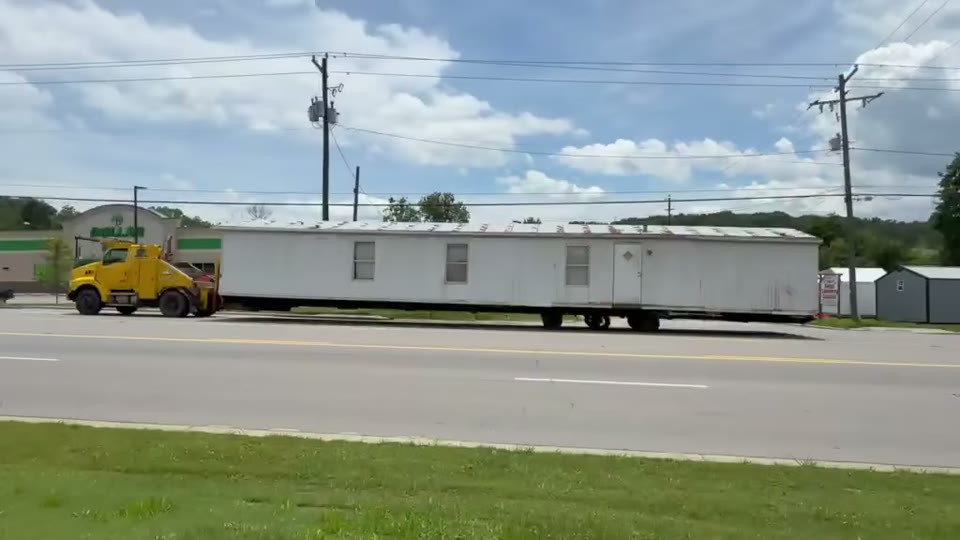
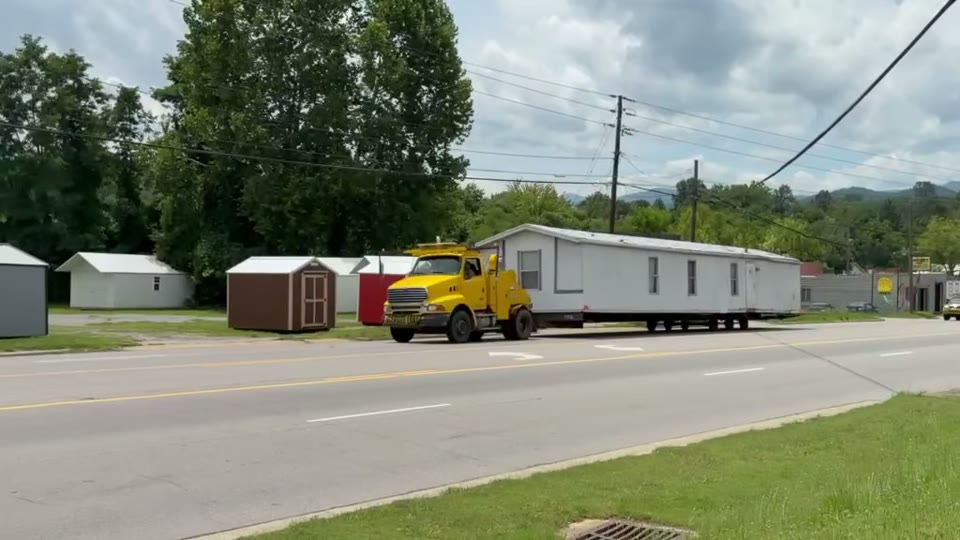
A park near US-70 with a wide pull-through is a different job from a private parcel up a gravel lane with a low power line at the entrance. Lot access at both the origin and destination drives price more than raw mileage does. The full scope — from disconnect through final inspection — is covered in the set-up and installation guide.
Route planning and the road permit
Moving a manufactured home on North Carolina public roads requires an oversize and overweight permit from NCDOT. Publication MH-2, available through the NCDOT oversize/overweight permit office, governs the specific rules for mobile and modular home moves: route approval, daylight-only travel requirements, and the escort vehicle requirements that apply at certain widths. In the Swannanoa Valley, US-70 between Asheville NC and Black Mountain is the main corridor; I-40 is an option for some moves, though interchange geometry and shoulder conditions create their own constraints at specific exits.
Any route that passes through Asheville NC city limits or Black Mountain town limits may require separate coordination with those municipalities, since both run their own permitting inside their boundaries. The transport crew applies for and carries the NCDOT permit as part of their operating requirement — homeowners do not apply for it separately. What the owner manages is confirming the route survey accounts for low-clearance obstacles: utility lines, bridge heights, and the entrance geometry at both parks or parcels. A line that needs to be temporarily raised by a utility company requires advance scheduling, and that lead time should be built into the move date rather than assumed on the day.
The permit stack before the home moves
North Carolina requires two separate authorizations before a manufactured home relocates. The state layer flows through the NC Manufactured Housing Board, housed within the NC Office of State Fire Marshal, which licenses the contractors who move and install homes and sets minimum qualifications for every installation. Separately, the tax-paid moving permit required under NCGS Chapter 105, Article 18 confirms that the home's property taxes are current; a county tax office issues it, and movers are required to have it in hand before the home leaves the lot.
The county layer runs through Buncombe County Permits and Inspections at 35 Woodfin St., Asheville NC. An installation permit covers the new site: foundation, tie-downs, skirting, and utility connections. If the destination address falls inside Asheville NC city limits or inside Black Mountain town limits, those municipalities handle their own permitting — same documentation requirements, different counter. Getting water and sewer authorization confirmed before the permit application goes in saves the most time. The full authorization sequence for this region is covered in the western NC moving guide.
Installing the home and meeting the wind-zone requirement
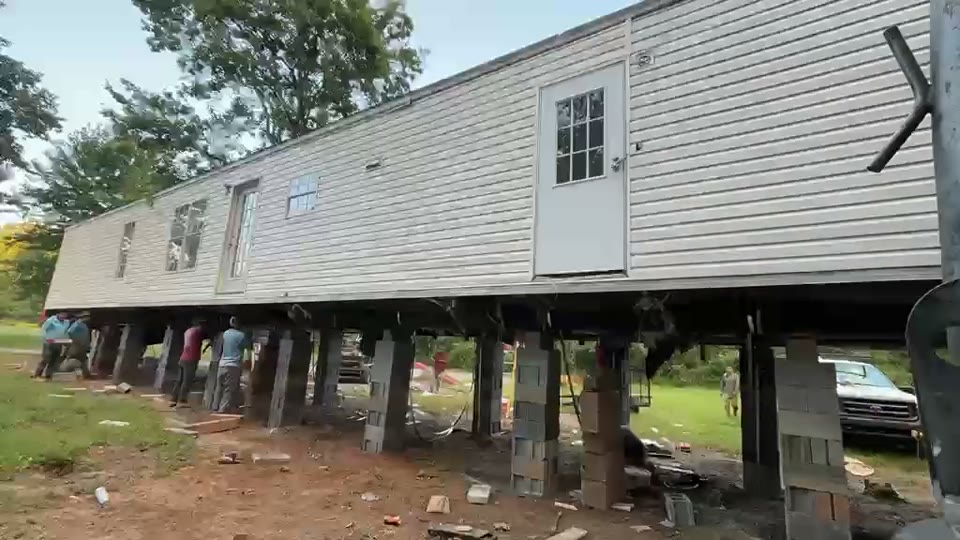
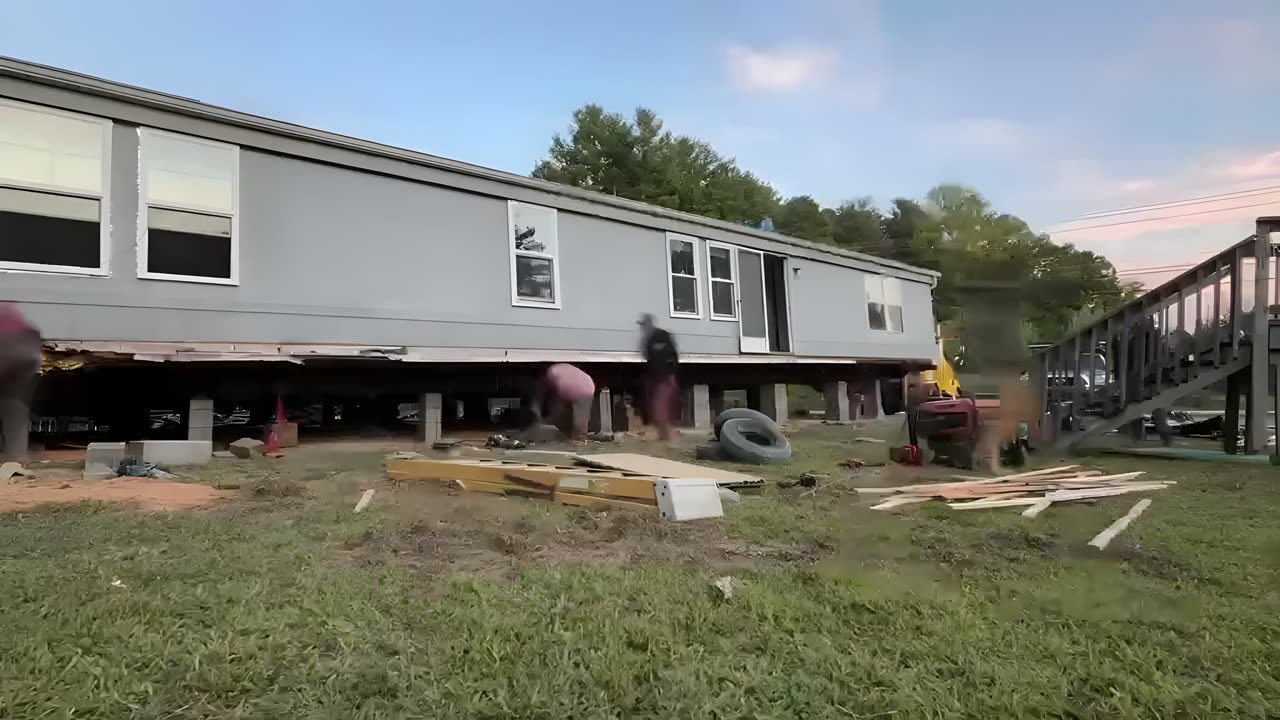
Once the home arrives at the new site, installation must meet the standards set by the HUD Manufactured Housing Program. Buncombe County falls in HUD Wind Zone I under 24 CFR 3280.305 — the national baseline for tie-down and anchoring requirements. Wind Zone I means the minimum anchoring specification applies, not that anchoring is optional: a proper ground-anchor system with over-the-top strapping, correctly spaced to the home's length and pier layout, is required at every installation in the county.
Valley-floor lots along the Swannanoa River have absorbed significant weather events in recent years. The federal disaster record for Buncombe County covers 19 declared events spanning 1973-2026, including Hurricanes in 2020, 2021, and 2023 and a Tropical Storm in 2024. A home anchored to spec after a move holds through those conditions; one that sits on a pier system without proper tie-downs after transport can shift enough to require full re-leveling within a season. After set-up, a county inspector signs off before the home can be occupied. If a home was properly set before but has since settled or shifted, the re-leveling guide covers what that work involves and what the signs of a problem look like before it becomes structurally urgent.