Settlement moves fast on hillside lots between Canton and Waynesville
Clyde anchors the middle of a valley that begins where I-40 exits the Pigeon River gorge and stretches northwest toward Waynesville, the Haywood County seat. US-19/23 runs through the center of town, and the ground on either side rises quickly into steep forested slopes. That same terrain that makes this corner of western North Carolina distinctive also makes it hard on manufactured home foundations.
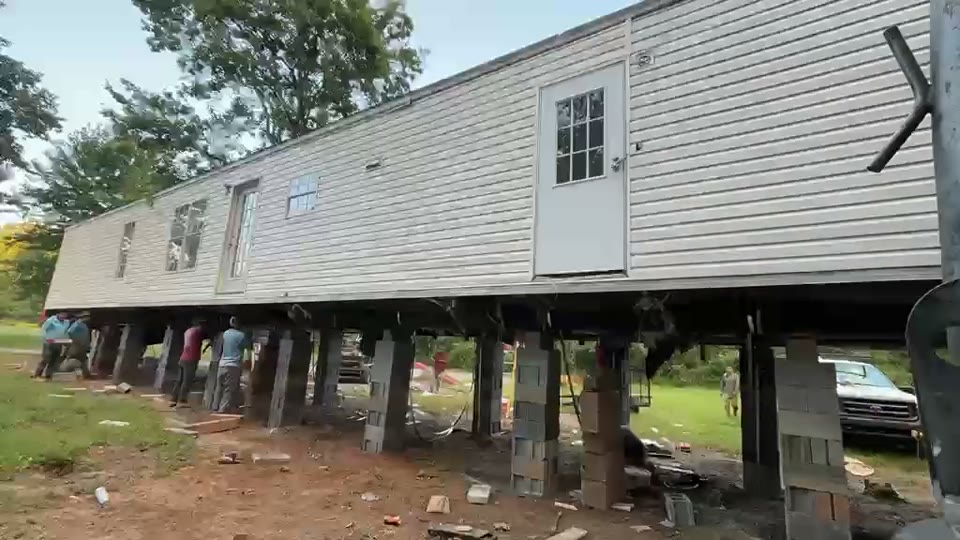
Most of the mobile home stock in this part of Haywood County occupies cut-into-hillside lots where one end of the home is set significantly lower than the other. That imbalance accelerates pier settlement: the high-side piers carry less load while the low-side piers bear more, and over time the difference compounds without any single triggering event.
The signs that settlement has progressed: doors that latched fine in winter but drag in summer, floors that send a marble rolling toward one wall, gaps opening between the skirting and the ground on one side of the home, and on double-wides, cracks appearing at the marriage line where the two sections meet. When more than one shows up together, the home has usually moved past what a single shim pass can correct. That is the point where a real scope and an honest price range become the useful answers for anyone searching for mobile home leveling near Clyde.
What leveling costs in Haywood County
The full NC leveling cost breakdown covers the state-wide picture. The table below focuses on the job types that actually come up on Haywood County lots, with the ranges that apply in and around Clyde.
| Scope | Typical range | What moves the number |
|---|---|---|
| Single-wide re-level (shim and reset) | $400–$1,200 | Pier count, lot slope, access under home |
| Double-wide re-level | $700–$2,000 | Marriage-line alignment, bearing-height variation |
| Partial pier or pad replacement | $2,500–$5,000 | Number of failed piers, soil bearing conditions |
| Full re-block with new pads | $2,500–$5,000 | Age and material of existing bearing stack |
Jobs on Clyde's steeper hillside lots tend toward the top of each range. Bearing height varies dramatically from one end of the home to the other, access under the low end is often restricted, and crews sometimes need to add intermediate piers that a flat-lot job would never require. Any bid that does not account for those slope-specific conditions should be questioned before work begins.
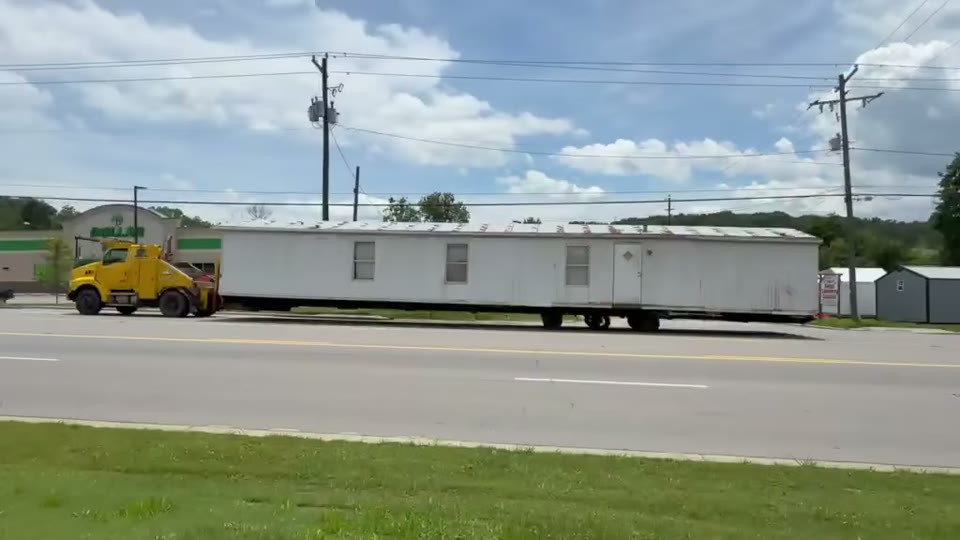
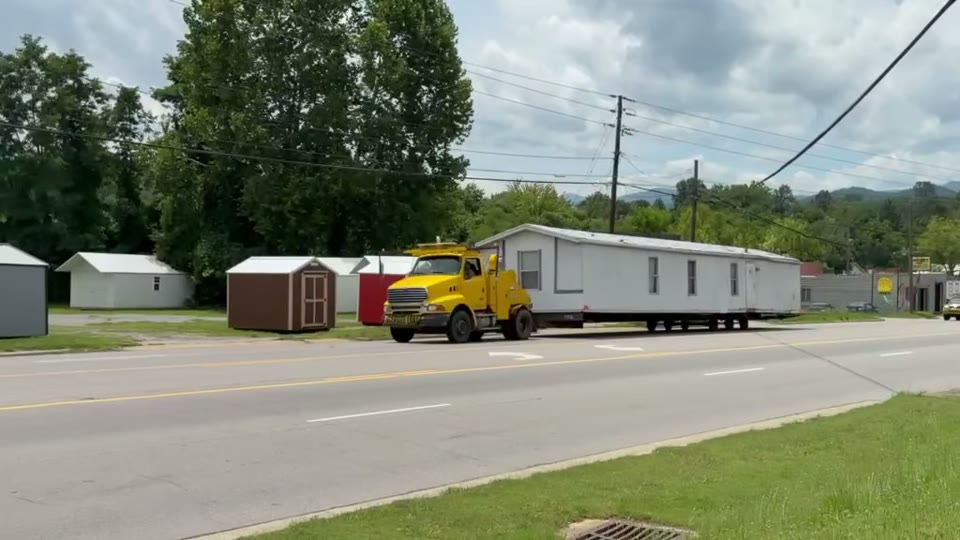
If the home's position on the lot is part of the problem, repositioning before re-leveling is sometimes the more durable fix. See mobile home movers in Clyde for what moving and resetting involves.
Storm history and what it does to piers and pads
Haywood County's federal disaster record covers 19 declared events spanning 1973-2026. That run includes two back-to-back hurricanes (2020 and 2021), a third hurricane in 2023, a tropical storm in 2024, and a winter storm in 2026. Each of those events saturated the valley floor and the hillside soils that manufactured homes in this area sit on.
Saturated soil loses bearing capacity gradually rather than all at once. A pier pad correctly sized for stable, dry ground may sink incrementally over several seasons of above-average rainfall, and the movement rarely registers in real time. The NOAA National Weather Service documents the Southern Appalachians as a region where tropical remnant systems amplify due to terrain effects, and Haywood County's geography places it directly in that pattern.
Before any leveling crew starts work, the drainage situation around the home deserves a direct look: where runoff flows after a heavy rain, whether any piers sit in a low spot that holds moisture between storms, and whether the original soil bearing capacity has been compromised by repeated saturation. Water addressed first; piers and pads corrected second.
What a leveling crew actually does on a slope lot
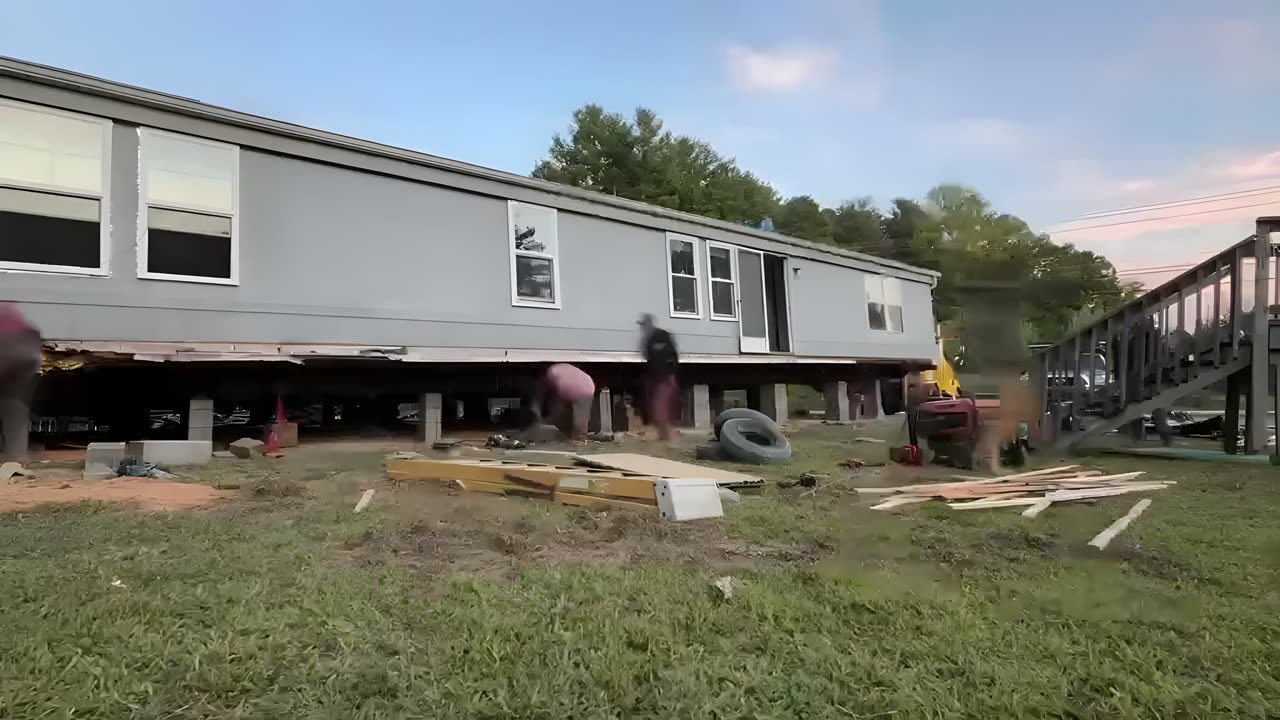
Standard re-leveling starts with a level reading at every pier, working outward from the home's center beam. The crew identifies the low points, raises the frame with a hydraulic jack, and adjusts the bearing stack by adding shims, replacing cracked or sunken blocks, or setting new pads, until the home reads level on both long and short axes. On a double-wide, the marriage-line joint adds a third check, and significant settling sometimes requires separating and resetting the two halves before a proper level can be set.
Haywood County falls in HUD Wind Zone I (24 CFR 3280.305), the anchoring threshold set by the HUD Office of Manufactured Housing Programs for manufactured homes in this region. Re-leveling creates the right moment to inspect the anchoring system: ground anchors corrode, tie-down straps stretch and crack, and the hardware that met code at original installation may have degraded in the years since. The NC Manufactured Housing Board administers the installation and anchoring standards for the state. Re-leveling without reviewing the anchor condition is a missed opportunity to make the home meaningfully safer.
For the complete step-by-step walkthrough, the re-leveling process guide covers what a proper job involves from start to finish.
Before you hire: permits, licensing, and the right questions
Permit requirements for re-leveling depend on job scope and how the county interprets that scope. The Haywood County permit office is the authoritative source for whether a permit is required before work starts — call them directly, describe what is being done, and get a clear answer. A routine shim may be treated differently from a full re-block with new pads. That confirmation is the homeowner's responsibility, not the contractor's assumption.
On licensing: the NC Manufactured Housing Board licenses manufactured home contractors operating in North Carolina and sets the standards their work must meet. Ask any crew you consider for their license status and for references on slope-lot jobs specifically in Haywood County. Experience on flat Piedmont lots does not translate directly to the bearing-height variation and access constraints that Clyde's hillside terrain creates.
If the home needs to move to a new site before leveling is practical, the NCDOT's Publication MH-2 governs oversize move permits, and NCGS Chapter 105, Article 18 requires a tax-paid moving permit before the home leaves its current location. Both items fall on the homeowner, not the mover, so confirm them before scheduling.