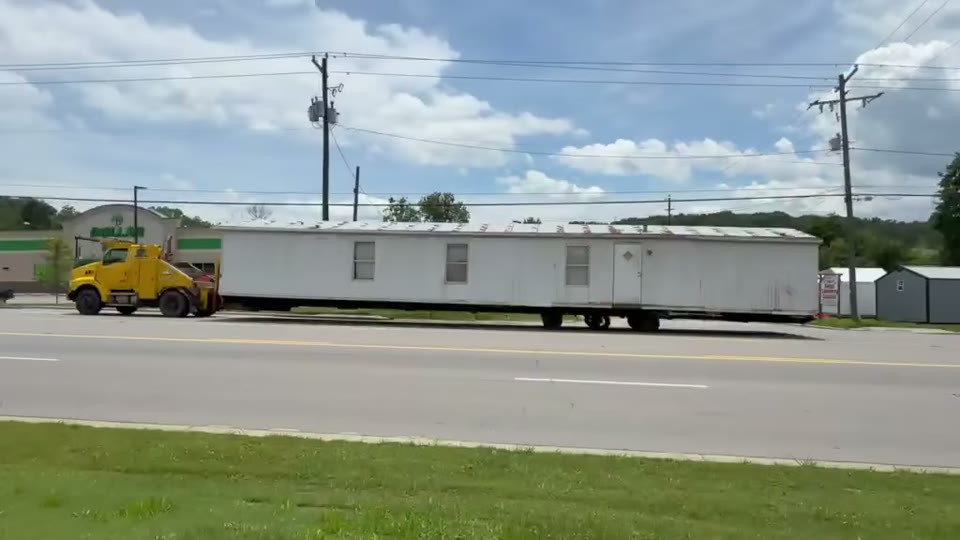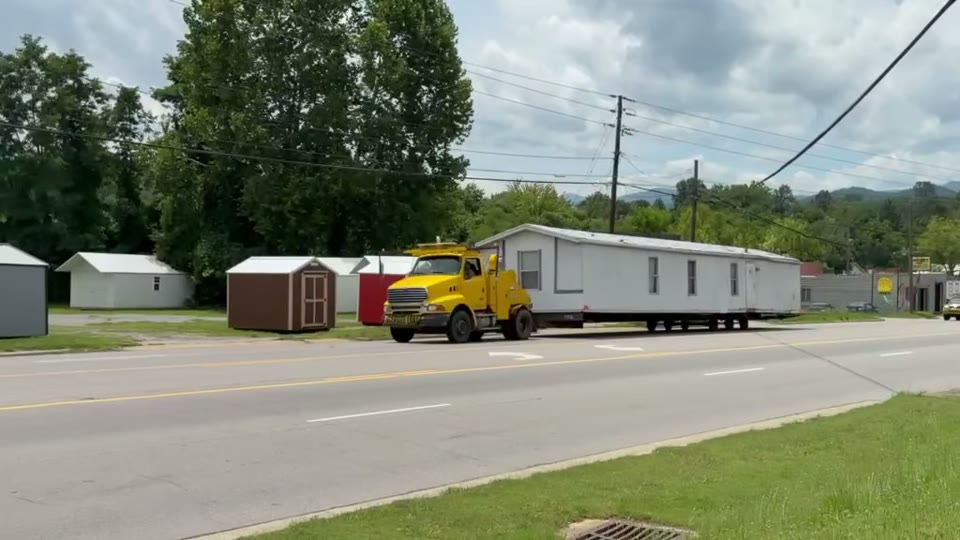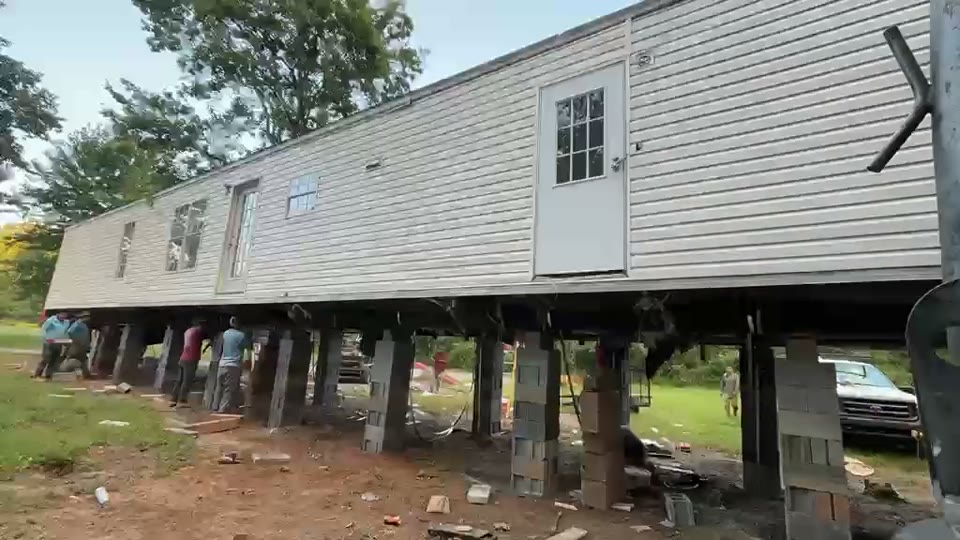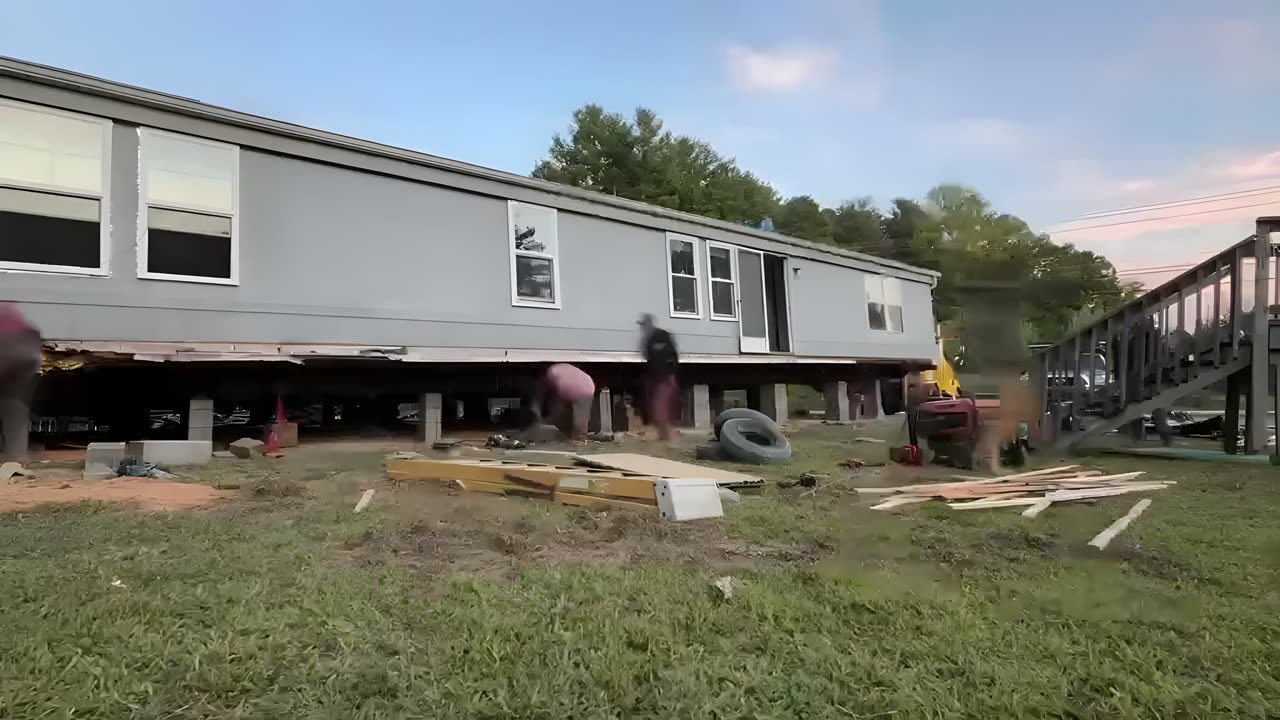
Brevard's terrain shapes every foundation decision
Most residential parcels in Transylvania County carry real grade change — cleared woodland lots outside Brevard's downtown often drop two feet or more across the length of a manufactured home footprint, and the subsoil under those sites is typically a mix of forest duff, root zones, and decomposed granite that cannot support a home's weight without preparation. A pad that looks level at the driveway edge is not a level pad until a string line says so. Getting that wrong means a racking frame within a season and a repair bill that dwarfs the original site-prep cost.
In this county the question is not just which foundation system to use — it is how much earthwork comes first. Forested lots cleared for a new placement need topsoil stripped to mineral soil, organic material removed from every footer location, and drainage swales cut to route water away from the home's perimeter. That grading sequence has to finish before concrete is poured. The grading and footers guide walks through how those decisions line up on a mountain lot.
Footers, runners, and slabs — matching the base to the lot
Three foundation systems are in common use for manufactured homes in western North Carolina, and the right choice depends on the lot, the lender, and whether the home is intended to stay permanently.
Individual concrete pier pads are the code-minimum approach for most single-wide placements on sloped ground where continuous concrete is impractical to form. Runners — continuous poured concrete strips running the length of the home — are more stable on variable soil and are commonly required by lenders and insurers for double-wides. A full poured slab is the most expensive option and the only path to permanent foundation status under the standards maintained by the HUD Office of Manufactured Housing Programs.
Frost depth in Transylvania County runs roughly six to ten inches — shallower than the central Piedmont but real enough that footers must bear on undisturbed or properly compacted fill, never on organic soil or active root zones. Transylvania County is designated HUD Wind Zone I under 24 CFR 3280.305, which sets the anchor and tie-down standards your installer works to on every placement in the county, regardless of whether the code reference is recited on the job site.
What Transylvania County requires before the home arrives
The county's permitting sequence for a new manufactured home placement has a fixed order, and each step feeds the next. Scheduling a delivery before the permit is in hand delays the move and can require a second oversize-load permit fee.
- Parcel map or survey — confirms the home's footprint meets required setbacks from property lines.
- County-assigned 911 address — Transylvania County requires this before any building permit is issued on a new placement.
- Health department septic sign-off — Transylvania County Environmental Health reviews the existing or proposed septic system against the home's bedroom count. New placements on parcels with no prior home cannot skip this step.
- Manufactured Home Permit Application — submitted to the county building department with all supporting documents attached.
- Setup inspection call — once the home is set and utilities are connected, the installer contacts the county to schedule the final inspection.
The statewide standards county inspectors use as their checklist come from the NC Manufactured Housing Board, administered by the NC Office of State Fire Marshal. Moving the home to the site requires an oversize-load permit from NCDOT — requirements and the application process are in Publication MH-2. For parcels where no manufactured home has previously been titled, the tax-paid moving permit process under NCGS Chapter 105, Article 18 applies to the title clearance stage. Full setup and utility sequencing is on the Brevard NC installation page.
What typical jobs cost in Brevard NC
All ranges below reflect typical market conditions in Transylvania County. Slope, soil type, and drainage complexity are the main cost movers — a flat lot with stable subsoil sits near the low end of each range; a sloped lot needing retaining or extended drainage work sits near the top. The NC mobile home footer cost page has the full statewide breakdown with line-item detail.
| Scope | What is included | Typical range |
|---|---|---|
| Pier pads and footers — single-wide | Minimal grading, individual concrete pads, anchor straps | $2,000–$4,500 |
| Concrete runners — single-wide | Grading, continuous poured runners, full tie-down set | $3,500–$6,000 |
| Concrete runners — double-wide | Extended grading, longer runner spans, full tie-down set | $5,000–$8,000 |
| Poured slab — single-wide | Grading, full slab pour, perimeter prep, utilities roughed in | $6,000–$10,000 |
| Poured slab — double-wide | Larger pour, perimeter wall, permit costs | $10,000–$15,000 |
| Slope and drainage add-on | Retaining segment, drainage swale, extended grading | $1,500–$3,500 (add-on) |
Steep-lot placements — common on rural Transylvania County parcels east and north of Brevard — regularly carry the drainage add-on as a necessity rather than an option. Any bid on a sloped Brevard NC lot that leaves out a water-routing line item is incomplete, not a bargain.
What the storm record means for drainage on a Transylvania County lot
Transylvania County has 16 federally declared disasters spanning 1993-2026, including Hurricane events in 2021 and 2023, a Tropical Storm in 2024, a Fire incident in 2025, and a Winter Storm in 2026. Water-driven events make up the core of that list, and they are directly relevant to manufactured home foundations: saturated soil loses bearing capacity. A footer correctly set in dry, compacted material can shift after a major rainfall event if the drainage path away from it was not properly established at the time of installation.
Brevard's annual rainfall total is among the highest for any town of its size in the eastern United States — the Blue Ridge Escarpment channels significant orographic precipitation into this corner of the mountains on a regular basis. On a Transylvania County lot, positive drainage away from the home's perimeter, properly extended downspouts, and grading that sheds water to a swale rather than pooling it at the foundation are not optional upgrades. The NC State Building Code Council treats site drainage as a first-class requirement in residential manufactured housing installation standards, not an afterthought.