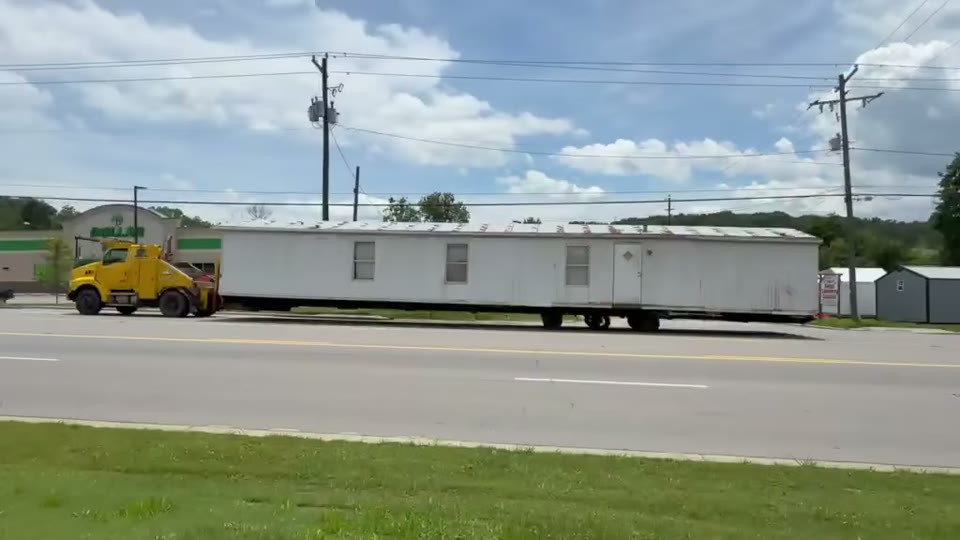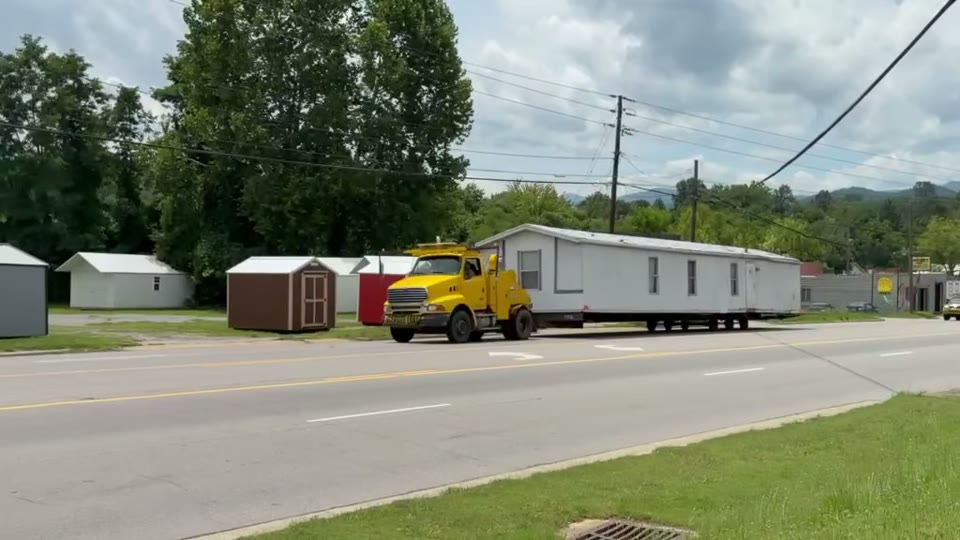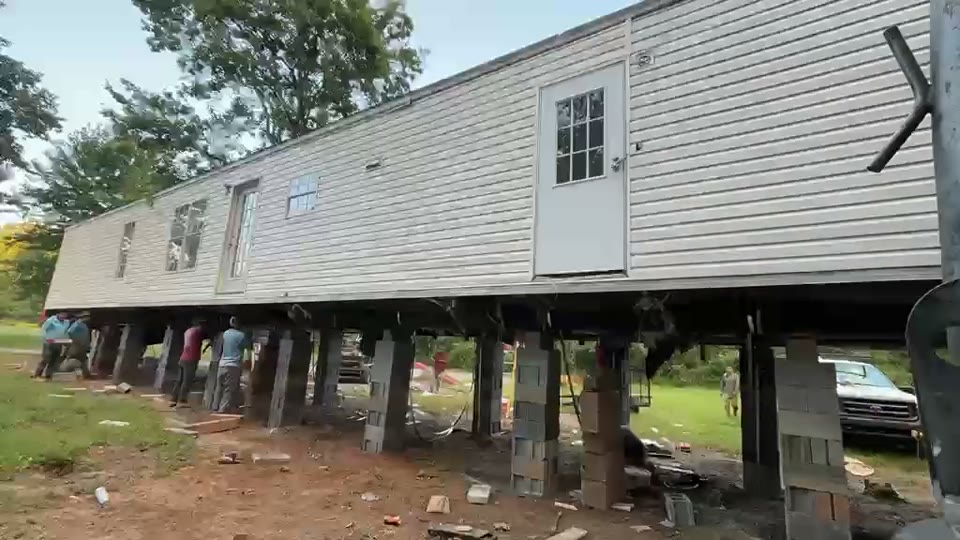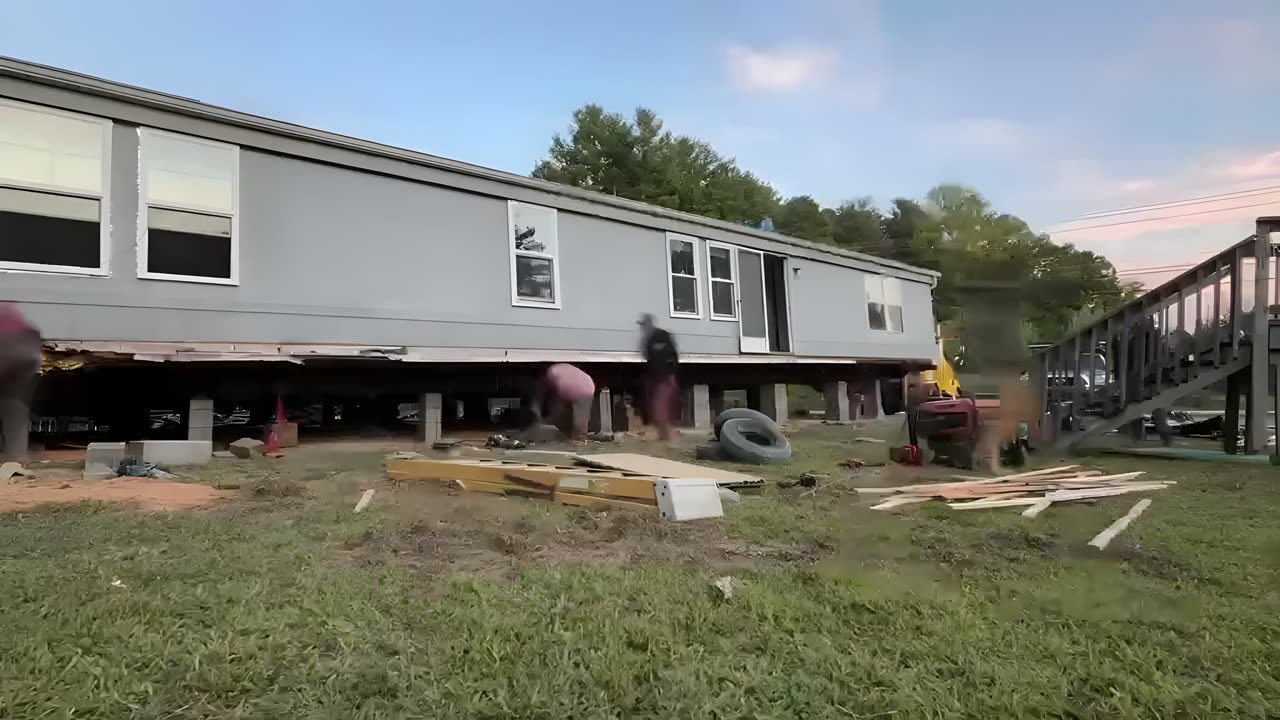
The three permit layers that govern a Buncombe County placement
Buncombe County sits at the heart of western North Carolina's mountain region, where manufactured housing represents a meaningful share of the housing stock in the rural and semi-rural communities outside Asheville NC. Moving or placing one of those homes legally involves three separate permit authorities — and knowing which one applies to your lot before you file saves significant back-and-forth.
| Permit or step | What you need and from whom |
|---|---|
| Building permit (placement, setup, utility connections) | Buncombe County Permits and Inspections for unincorporated areas; City of Asheville or Town of Black Mountain inside those municipal limits |
| NCDOT oversize-move permit | Required before the home travels any public road; the hauler obtains it under Publication MH-2 |
| County tax moving permit | Buncombe County Tax Department — property taxes must be settled before the home moves, per G.S. 105-316.1 |
| Water and sewer proof | MSD sewer-tap approval (public sewer) or Buncombe County Environmental Health authorization (well and septic) — goes in with the building permit application at submission |
| HUD label and data plate | On the home itself; Buncombe County is HUD Wind Zone I under 24 CFR 3280.305 — the tie-down system must meet that standard |
The Buncombe County Permits and Inspections page lists manufactured homes among its permit types. The NC Manufactured Housing Board, administered by the NC Office of State Fire Marshal, sets the statewide installation floor that every county permit must meet.
Before the truck rolls: the NCDOT oversize permit
A manufactured home on a flatbed is an oversize load under North Carolina law. NCDOT Publication MH-2 covers the single-trip oversize permit that must be in hand before the home moves on any public road. The hauler typically obtains this permit, but the permit travels with the move — if it is missing during a roadside stop, the homeowner bears consequences alongside the mover.
Route restrictions, travel-window requirements, and pilot car rules vary by the home's width and local road conditions. Western North Carolina adds real constraints: the secondary mountain roads running in and out of Buncombe County carry narrow shoulders, tight turns, and significant grade changes that can force longer routing even when the direct line looks short on a map. Ask your mover to share a copy of the permit before move day and to walk through the planned route. For a complete look at what the state road-move permit covers, see NC mobile home moving permit requirements.
Clearing the property tax lien before the move
G.S. Chapter 105, Article 18 requires that manufactured home property taxes are current — or formally resolved — before the home leaves its lot. The Buncombe County Tax Department issues the tax moving permit once that condition is met. A home that moves without this permit can leave an unresolved lien on the original parcel, and the receiving county will check tax status on the departing unit before advancing the building permit application at the new site.
This step is easy to overlook because it does not come from the building or transportation agencies. It is a separate administrative lane, and it runs in parallel with — not after — the other permit steps. Start the Buncombe County Tax Department inquiry at the same time you begin the NCDOT and county building permit processes, not once those are already in motion.
What the county building permit application actually requires
The building permit application for a manufactured home placement in unincorporated Buncombe County asks for more than a completed form. Two site-readiness items consistently determine how quickly the application advances — and both are required at submission, not as corrections after the fact.
Water and sewer connection proof. Inside the Metropolitan Sewerage District (MSD) service area, which covers much of the Asheville NC metro and surrounding communities, the application needs MSD sewer-tap approval. On a lot served by a private well and septic system, Buncombe County Environmental Health authorization covers both. A utility letter, meter receipt, or county well and septic authorization document goes in at the start of the application. The permit does not advance without it.
HUD certification and wind zone compliance. The home must carry a valid HUD label and data plate. Buncombe County is designated HUD Wind Zone I under 24 CFR 3280.305 — the anchor and tie-down system must meet Zone I specifications. The setup inspector will verify the installed system against this standard. If the data plate is missing or the home predates HUD certification requirements, plan for additional review before the permit moves forward.
For the full framework of NC installation standards — blocking patterns, anchoring specs, utility connection sequencing, and what the setup inspector uses to evaluate the finished work — NC mobile home set-up rules covers the statewide requirements in detail. Mobile home set-up and installation walks through the physical process step by step.
How the inspection sequence runs after the permit issues
A permitted manufactured home placement in Buncombe County inspects at multiple stages. The blocking and anchoring inspection typically happens while the system is still fully accessible — before skirting goes on and before final utility connections are made. The inspector checks the tie-down system against HUD Wind Zone I specifications and verifies that the blocking pattern follows the manufacturer's setup manual. Schedule this inspection before anything is covered; re-inspection after skirting is removed adds cost and time that are entirely avoidable.
Buncombe County has recorded 19 federal disaster declarations over 1973-2026, including hurricane and tropical storm events that brought significant wind and flooding to the mountain region. That track record shapes what inspectors look closely at: drainage away from the home's foundation, the anchor system's resistance to lateral loads, and site elevation relative to stormwater flow. Address drainage in the site plan before the inspector arrives, not as a field correction during the visit. Final inspection follows utility connection and skirting completion; the certificate of occupancy issues after final approval.
What unpermitted placement costs at resale and beyond
Three situations bring unpermitted manufactured home placements into the open. Resale: a buyer's inspection or title search surfaces the missing permit record and the negotiation reopens or stalls. Insurance claims: a wind or flood claim on a home with no permit or inspection documentation invites carrier scrutiny — particularly in a county with 19 federal disaster declarations in 1973-2026 where those claims are not hypothetical. Financing: lenders underwriting manufactured home loans in North Carolina regularly require documentation of the HUD label and a compliant, inspected setup; an unpermitted placement can complicate the title-to-real-property conversion that most loan products require.
The permit process also creates documentation that belongs to the homeowner: a passed anchoring inspection is the record that the setup met Wind Zone I standards on the day it was installed. Without it, you have only the installer's word. In mountain terrain with a multi-decade storm history, that inspection record carries real value.