What tear-down actually costs in North Carolina
Buncombe County's stock of aging manufactured housing sits mostly on ridgeline lots and rural hollows where narrow roads and tight clearances slow every kind of heavy equipment. That access problem — not the size of the home — is often the first thing a demolition crew prices when they walk a job here. The ranges below reflect the NC market honestly; the local factors column explains why Asheville NC jobs tend to land in the middle or upper portion of each band.
| Scope of work | Typical NC range | What drives it in Buncombe County |
|---|---|---|
| Single-wide demolition and debris haul | $3,000 – $7,000 | Machine access, haul distance to certified C&D landfill |
| Double-wide demolition and debris haul | $6,000 – $15,000 | Debris tonnage, section separation, concrete footer condition |
| Asbestos inspection and abatement (if found) | $1,500 – $4,000 add-on | Required for pre-1976 homes before mechanical demo begins |
| Concrete pad or footer removal | $800 – $2,500 add-on | Rebar density, slope correction needed for future rebuild |
| Site grading after removal | $500 – $2,000 add-on | Slope, drainage, whether a new structure is planned |
Add-ons stack. A pre-1976 double-wide on a steep lot with a concrete pad that needs removal lands at the top of those ranges before the grader arrives. The full picture of what scope typically covers — and what it does not — is at our demolition and removal service page.
Labor, machines, and the debris math
A standard single-wide demolition runs one to two days of machine time — an excavator or skid steer doing the tear-down, a roll-off container or flatbed managing the debris. Labor and equipment time are roughly predictable. What varies is how the debris breaks and where it has to go.
Manufactured homes contain a mix of steel framing, OSB sheathing, fiberglass insulation, vinyl siding, and aluminum roofing. The steel and aluminum carry real scrap value; the composite materials do not. Construction and demolition debris in NC must go to certified C&D landfills, not the municipal transfer station — and tipping fees in the mountains run higher than the Piedmont because there are fewer certified facilities within a practical haul radius of Asheville NC. A 14-by-60 single-wide generates roughly 8 to 12 tons of demolition debris depending on how much framing comes out as salvageable steel. A 24-by-52 double-wide typically produces 18 to 28 tons. At $50 to $90 per ton in tipping fees plus fuel and driver time, the haul-and-dump line alone is a meaningful cost — one that a contractor quoting from the Piedmont rarely prices accurately for a job deep in the Buncombe County hills.
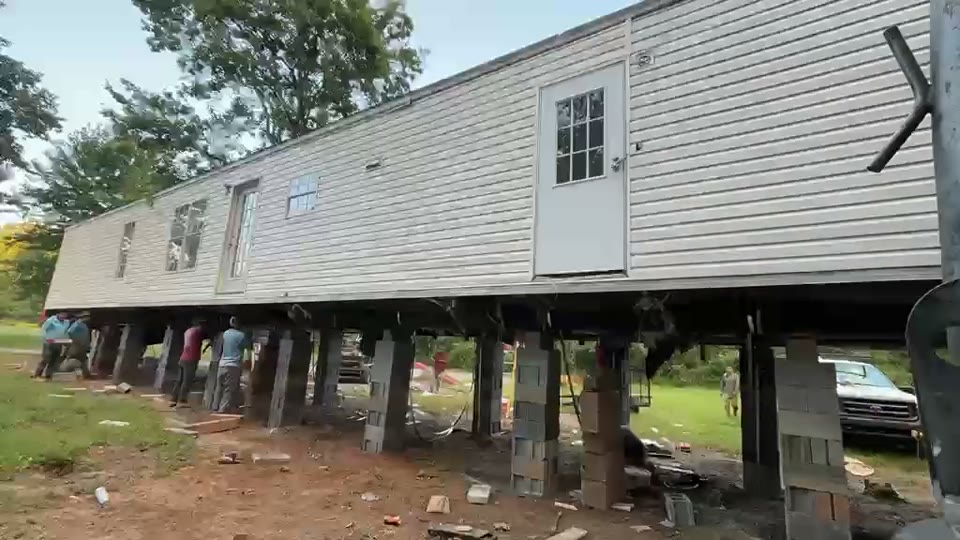
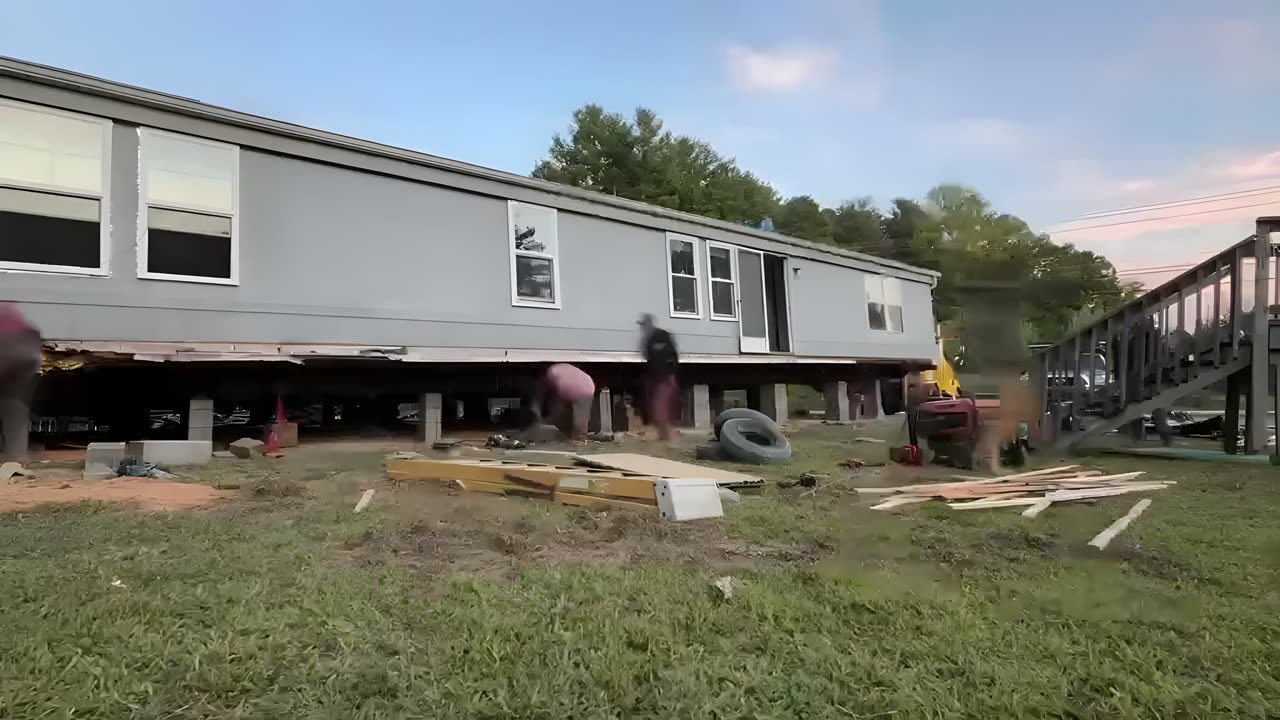
Before the excavator touches the structure, the anchoring system has to be disconnected. Buncombe County manufactured homes are required to meet HUD Zone I wind requirements (24 CFR 3280.305), which means the tie-down hardware is an engineered system of ground anchors, straps, and over-the-top ties. Removing it correctly is part of demolition prep, not an afterthought. For what the home's salvageable metal and materials are worth before you schedule the crusher, the NC scrap value guide breaks down the numbers.
Asbestos in older manufactured homes — what the rules require
The HUD construction and safety standards that now govern manufactured housing took effect June 15, 1976 (HUD Office of Manufactured Housing Programs). Homes built before that date commonly contain asbestos-containing materials: floor tile, duct tape, roof shingles, and certain pipe and duct insulation products.
The U.S. Environmental Protection Agency classifies demolition of structures containing regulated asbestos as a major source of air emissions under NESHAP — the National Emission Standards for Hazardous Air Pollutants. In practice, that means three things:
- Pre-1976 homes should be inspected by a licensed asbestos inspector before any mechanical demolition begins.
- If regulated materials are found, a licensed abatement contractor removes them before the excavator arrives.
- Those steps add $1,500 to $4,000 to the project cost, depending on what is found and how much there is.
Buncombe County's storm history makes this more than a formality. The county has seen 19 federally declared disaster events between 1973-2026, including hurricanes in 2020, 2021, and 2023 and a tropical storm in 2024. Repeated water intrusion accelerates asbestos fiber release when materials are disturbed. On a pre-1976 home that has taken in water across multiple storm seasons, the inspection is not optional — it is a cost line you budget for in advance, not a surprise you absorb mid-project.
Title, utilities, and permits — the steps before and after
Physical demolition is the middle of the process, not all of it. Several administrative steps run before and after the excavator.
Utility disconnects. Power, water, and gas must be disconnected at the meter or service point before demolition begins. The utility company — not the contractor — handles the final cut. In rural Buncombe County, the septic system is often a complicating factor: county health departments may require an evaluation when a structure is removed, and a site planned for rebuilding may need a new permit or a new drain field depending on when the original system was installed and what a soil evaluation shows. That step runs on a parallel timeline with the demolition permit and is not part of the contractor's quote.
The title. North Carolina treats most manufactured homes as personal property until a certificate of title is formally retired through NC DMV. When a home is demolished, the title still has to be resolved — an open title after demolition leaves a cloud on the land record that can block future sales or financing on the property. The NC Manufactured Housing Board (administered by the NC Office of State Fire Marshal) is the state reference for manufactured home ownership and titling rules.
Tax-paid moving permit. If any component is transported from the site — even hauling debris to a recycler — NC law under NCGS Chapter 105, Article 18 requires a tax-paid moving permit confirming that property taxes on the home are current. Budget the county tax office step into your timeline before work begins.
Demolition permit. Buncombe County requires a permit for structure removal. That permit triggers the NESHAP asbestos notification requirement for pre-1976 homes. Starting without one risks a stop-work order on a partially demolished structure — a situation that creates a hazard and a cost problem at the same time.
When moving it out intact costs less than demolition
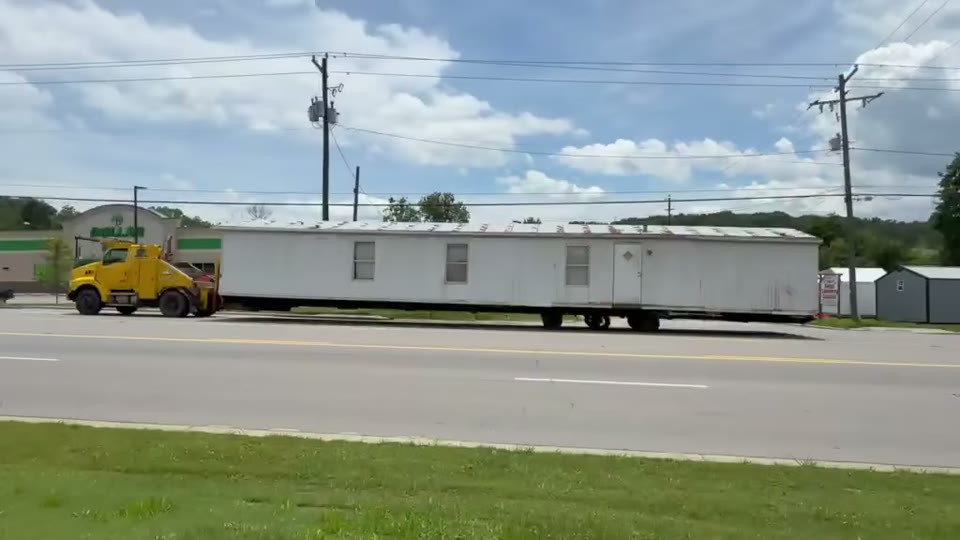
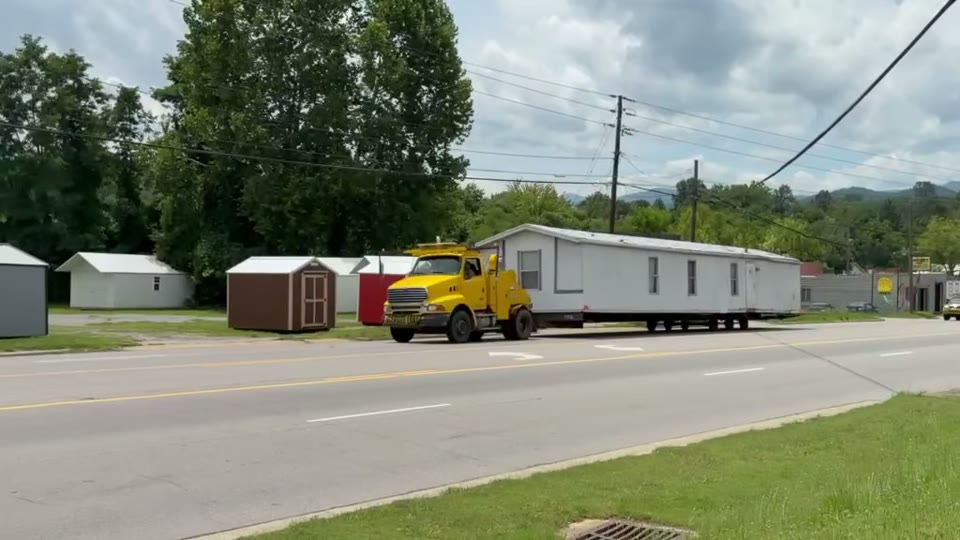
Not every end-of-life manufactured home needs to be torn apart on-site. If the structure is still transportable — floor system solid, frame not compromised by rot or storm damage — hauling it out in sections can cost less than full demolition because it eliminates most of the machine tear-down time and the bulk of the landfill tipping fees.
The math shifts based on haul distance. If the nearest certified C&D facility accepting mobile home debris is a long drive from the site, demolition becomes more expensive relative to a transport move. If the home is a pre-1976 single-wide with suspected asbestos and a rotten floor, the move option disappears entirely — you cannot safely transport a structurally compromised structure, and abatement must happen before demo regardless. This option works when the home is sound, when a recycler or buyer will take it, and when road access allows an oversized rig to get in and out. That last condition is the hardest to satisfy in Buncombe County: mountain roads that served when the home was originally placed often cannot accommodate today's transport equipment, and any move on a public road requires NCDOT oversize-load permitting under Publication MH-2. Our mobile home removal cost guide runs the move-versus-demolish comparison so you can make the call with actual numbers in front of you.