The Henderson County setup-permit stack, in the order it must be filed
Henderson County's ridged terrain — apple-orchard valleys near Edneyville, wooded slopes above Hendersonville, drainage basins feeding into the French Broad watershed — shapes every manufactured home placement in this county. The setup-permit process flows through the Henderson County Inspections department, and the steps are interdependent: zoning must confirm the lot first, Environmental Health must clear the septic system before the building permit is issued, and so on down the sequence. Arriving at the permit counter without the prior sign-offs sends you back to the beginning.
The permit center at hendersoncountync.gov lists what must be in hand before a setup permit is issued. Work through these in order:
| Step | What you file | Note |
|---|---|---|
| Zoning verification | Henderson County Planning or applicable municipality (Hendersonville, Flat Rock, Mills River) | Confirms the parcel permits manufactured or modular housing; checks setbacks and any minimum-acreage rules |
| Environmental Health approval | New septic design permit, or existing-system suitability affidavit | New lots require a soil evaluation first; the affidavit applies when a compliant system already exists on site |
| Water and sewer tap receipts | From the utility provider | Proves a connection exists or is scheduled; required before the building permit is issued |
| Setup / building permit application | Henderson County Inspections | Issued only after zoning and Environmental Health are cleared; triggers the inspection sequence |
| County Assessor moving permit | Henderson County Tax Assessor | Required only when both the origin site and the destination are within Henderson County |
| NCDOT oversize road permit (MH-2) | Filed with NCDOT before transport begins | Covers the road transport leg on NC roads; see the next section |
| Erosion and stormwater plan | Henderson County, if land disturbance meets the applicable threshold | Mountain grades accelerate runoff; sloped lots frequently trigger this requirement |
The 2019 NC Regulations for Manufactured Homes, effective for permits issued after 2020, updated site-preparation and blocking standards that local inspectors now apply to every new placement. For the installation requirements that follow once permits are in hand, see mobile home set-up and installation.
The NCDOT road permit — what stops the truck if it is missing
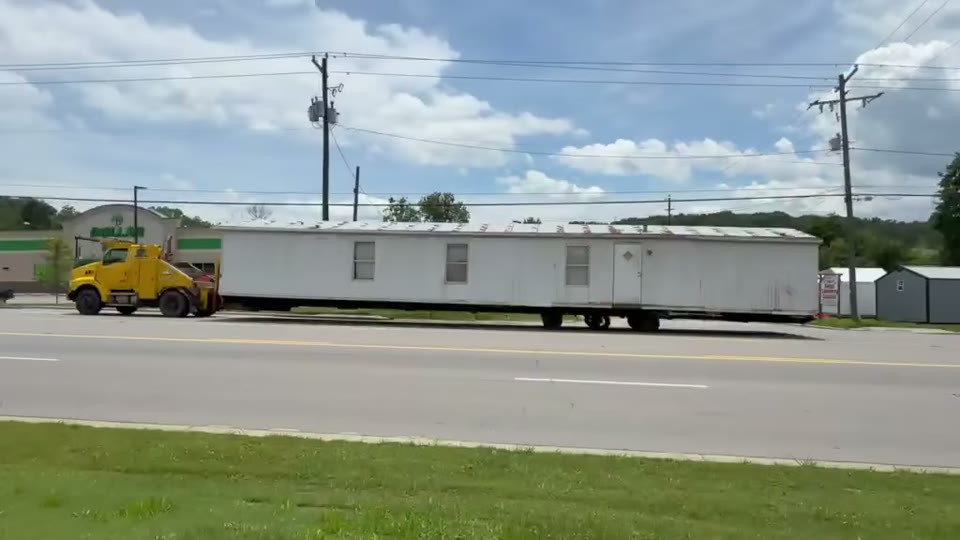
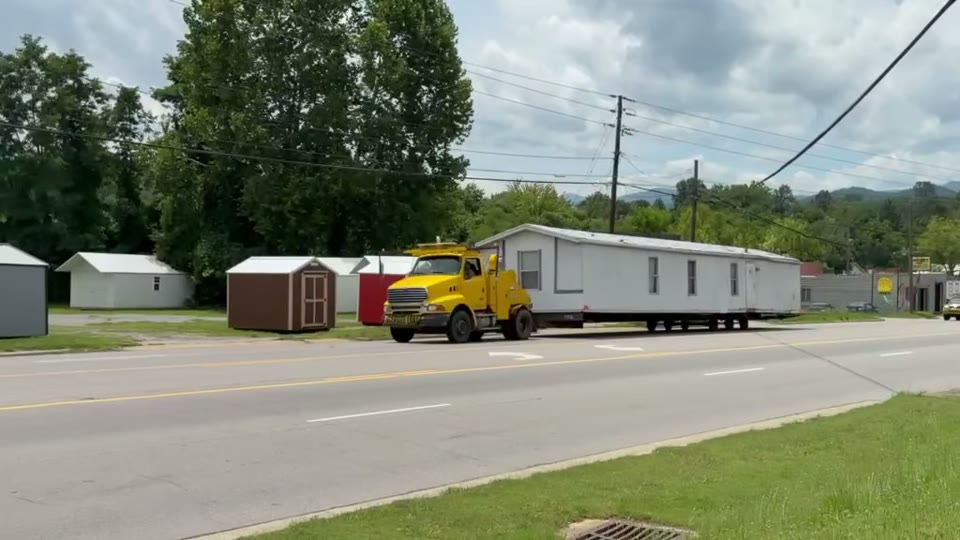
Before a manufactured home rolls on a North Carolina road, the transporter must hold a valid oversize/overweight permit from NCDOT. The agency's Publication MH-2 covers the permit form, routing requirements, and the specific conditions that apply to mobile and modular homes. This permit comes from NCDOT — not from Henderson County — so it runs on NCDOT's process and timeline, separate from anything the local inspections department issues.
Western NC roads add real routing constraints that a flat-county mover may not anticipate. Mountain curves, bridge weight limits on secondary roads off US 64 and US 25 south of Hendersonville, and clearance restrictions on older structures along common approach routes mean the transporter must plan the route before filing, not after. An experienced mobile home mover in Hendersonville NC will have worked through those routing questions many times on the same county roads and knows which corridors to avoid and which bridges to confirm in advance.
The permit travels with the load through every county the route crosses. When a home originates outside Henderson County — common when a buyer sources a unit from a dealer or a remote site — the transporter manages the permit across the entire transport corridor. For a move that begins and ends within Henderson County, the County Assessor moving permit is also required; the two documents are separate instruments and both must be in hand before the wheels roll. For a full walkthrough of what the road permit involves, see NC mobile home moving permit.
HUD Wind Zone I anchoring — what Henderson County inspectors verify on every job
Henderson County falls within HUD Wind Zone I under 24 CFR 3280.305, the federal standard that sets minimum wind-load anchoring requirements for every manufactured home placed in the county. Zone I is the base exposure category, but the county's federal disaster record gives that baseline real weight. With 16 federal disaster declarations logged across 1978-2026 — including Hurricanes in 2023, 2020, and 2019 and a Tropical Storm in 2024 — manufactured homes in Henderson County face documented wind and water stress. The National Weather Service tornado safety guidance specifically identifies manufactured homes as needing particular attention during severe weather; Zone I compliance sets the floor, not the ceiling.
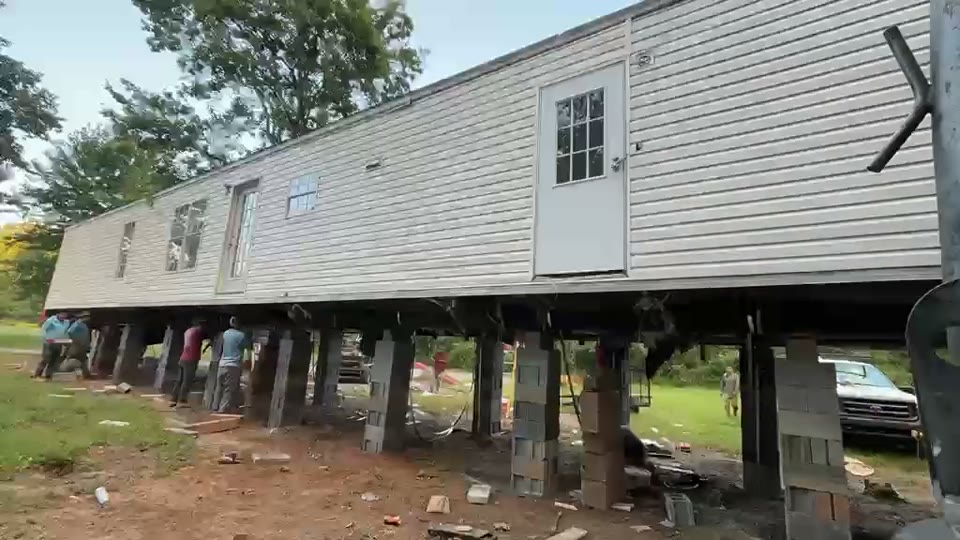
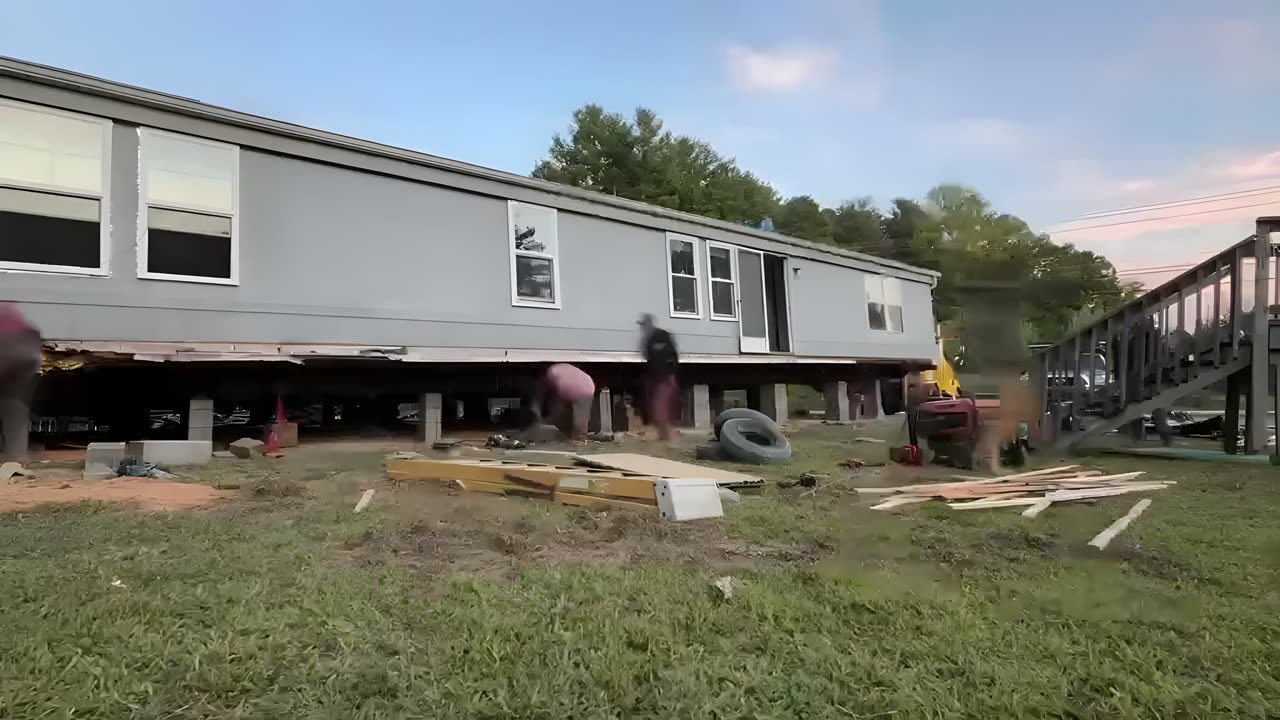
The tie-down installation — ground anchors and straps at spacings specified by the home manufacturer's installation manual and the state setup rules — must be in place and visible before the final inspection. Henderson County inspectors check both the blocking pattern and the anchoring installation before issuing the certificate of occupancy. Missing or improperly installed tie-downs fail the inspection and prevent occupancy sign-off, which can also block utility connections.
The NC Manufactured Housing Board, operating under the Office of State Fire Marshal, licenses the setup contractors who install and certify tie-down systems. Licensed installers work from the manufacturer's manual and the state-level rules that sit on top of the federal HUD floor. Both sets of requirements apply to every placement in Henderson County, and both are checked at inspection.
Who pulls the permit and who is licensed to do the work
In North Carolina, manufactured home setup contractors must hold a license from the NC Manufactured Housing Board. Unlike the general contractor licensing threshold that governs other residential construction — where a dollar-amount floor determines who must be licensed — the Board's setup licensing requirement applies regardless of job size. Blocking, anchoring, and utility connections on a manufactured home require a Board-licensed installer whether the job is a single-wide or a double-wide on a mountain lot outside Hendersonville.
A homeowner may pull a setup permit on their own primary residence, but the installation must still meet the same standards a licensed contractor would apply. Local inspectors know what compliant blocking and tie-down work looks like; owner-built work that diverges from the manufacturer's manual and the state rules fails the same inspection a contractor's work would fail. Contractors who work Henderson County regularly pull permits as a routine part of the job: they know the inspection schedule, which preliminary approvals must be in hand at submission, and how the county's inspectors handle edge cases on mountain-sloped lots.
Because the mover and the setup crew are frequently different companies, coordinating the NCDOT transport permit and the local building permit across two contractors and two timelines matters. A home that sits on wheels while approvals catch up costs money in mobilization and scheduling. Modular homes — built under the NC State Building Code rather than the HUD Manufactured Home Construction and Safety Standards — follow a different permit and inspection path than manufactured (HUD-code) homes, though both require a local permit and county inspections before occupancy.
What an unpermitted placement actually costs — the three places it surfaces
Three situations reliably expose an unpermitted manufactured home placement: resale, insurance claims, and FHA or VA financing. A buyer's inspector or a government-backed loan appraiser reviewing a manufactured home checks the permit record. No permit means no recorded inspection of the blocking, anchoring, and tie-down installation — precisely what a lender's appraiser scrutinizes in a mountain county with 16 federal disaster declarations across 1978-2026. The purchase negotiation reopens at the worst possible moment, or the loan falls apart entirely.
The permit record is also your leverage against the setup contractor. A failed inspection documents a deficiency that belongs on the contractor's dime to fix. Without a permit there is no inspection to fail, which means no documented baseline from which to demand a correction. The permit fee itself — set by Henderson County's fee schedule and listed publicly at the permit center — is typically a modest fraction of the full move-and-set cost and is the least expensive insurance in the project. Address any unpermitted prior work before listing the home for sale, not during due diligence when the clock is already running.